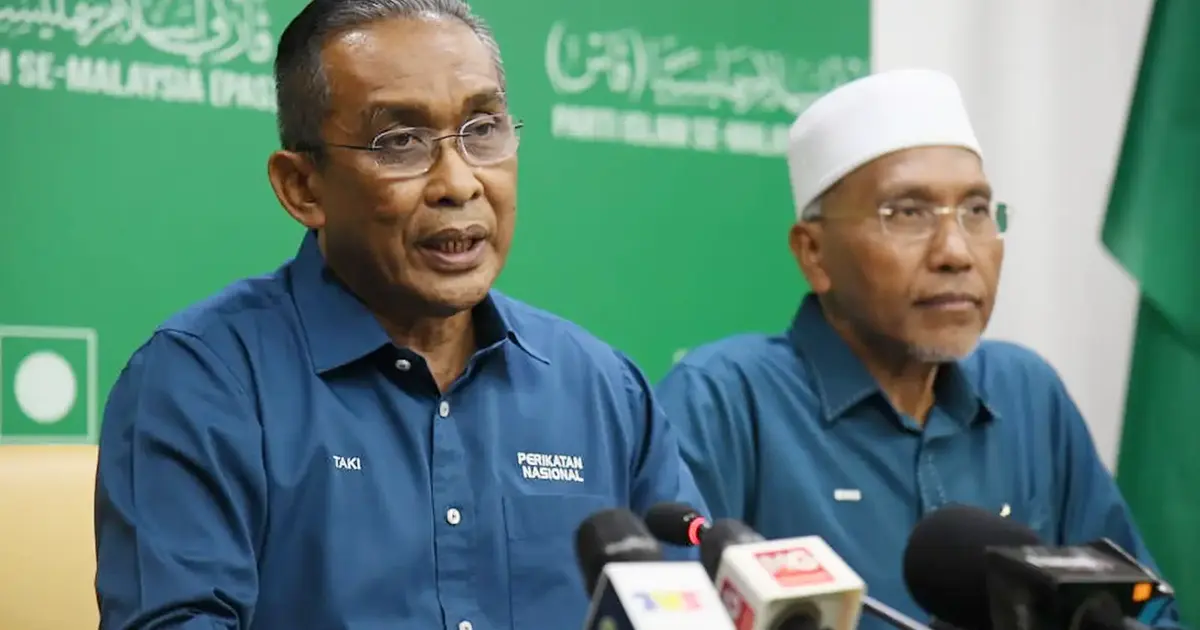
Perikatan Nasional's administrative machinery has reaffirmed strict procedural requirements governing internal assemblies, with the coalition's secretary-general issuing clarification that no meetings or organised activities can proceed without prior authorisation from the chairman's office. The statement emerged in response to suggestions that Bersatu party president Muhyiddin Yassin had initiated moves to arrange a Supreme Council session on a particular day, highlighting ongoing questions about hierarchical decision-making within the three-party alliance.
The enforcement of these governance rules reflects broader structural tensions within PN, which comprises Bersatu, PAS, and Perikatan Nasional itself as separate entities with distinct leadership chains. The requirement for centralised approval mechanisms indicates leadership concerns about unauthorised assemblies that might circumvent established protocols or generate internal discord. Such measures are typically implemented when coalitions face fractious periods or when senior officials seek to consolidate control over the agenda-setting apparatus.
Muhyiddin Yassin's apparent initiative to convene the PN Supreme Council underscores the complex interplay between individual party presidents and the coalition's overarching administrative structure. As Bersatu's leader, Muhyiddin occupies a significant position within PN's hierarchy, yet the secretary-general's intervention suggests that even senior figures cannot unilaterally call major assemblies. This distinction between party-level authority and coalition-level prerogatives has proven a recurring friction point in Malaysian political alliances.
The timing of these clarifications matters considerably for Malaysian political observers. PN has served as an important opposition coalition whilst simultaneously holding federal power through its previous role in government formation. Internal cohesion directly impacts the alliance's effectiveness in parliamentary dynamics, where disciplined voting blocs enhance negotiating power. Any suggestion of uncoordinated internal activity could be construed as weakness by rival coalitions or swing voters assessing political stability.
Procedural governance in Malaysian coalitions often masks substantive disagreements over policy direction, resource allocation, or electoral positioning. By requiring centralised approval, PN's leadership establishes a filtering mechanism that allows vetting of meeting agendas before assemblies occur. This approach prevents grassroots mobilisation within the coalition that might pressure leadership towards particular policy positions or leadership configurations. Such control mechanisms have historical precedent in Malaysian political alliances, particularly during periods of ideological or strategic flux.
The secretary-general's statement carries particular significance given recent political reconfiguration in Malaysia's landscape. With PKR, DAP, and Amanah forming alternative opposition groupings, and UMNO navigating its own internal fractures, PN's ability to present unified positions affects its electoral calculus in future contests. Unauthorised assemblies risk generating headlines suggesting internal instability, precisely what opposition coalitions are most vulnerable to during periods when voters assess political viability.
Bersatu's positioning within PN deserves closer examination. As the numerically smallest component yet led by a former prime minister, Bersatu occupies an unusual niche within Malaysian politics. Muhyiddin's international stature and political experience create gravitational influence that doesn't always align with formal constitutional position within PN structures. His efforts to convene Supreme Council meetings may reflect attempts to mobilise supportive factions or address issues he deems insufficiently prioritised by existing leadership channels.
The distinction between party autonomy and coalition discipline represents an enduring challenge for multi-party alliances in Malaysia's political system. Individual parties within coalitions retain membership, organisational capacity, and ideological identity, yet coalition success depends on coordinated behaviour. The secretary-general's clarification suggests PN leadership views unauthorised convening as a threat to coalition cohesion rather than legitimate party autonomy. This reflects a more centralised approach to alliance management than some stakeholders may prefer.
For Malaysian voters and analysts, these procedural questions illuminate deeper structural weaknesses or strengths in opposition coalition building. A coalition that requires such explicit controls might suggest leadership anxiety about internal consensus, or alternatively, the sort of disciplined structure necessary for complex multi-party coordination. The public visibility of these governance disputes, however, typically damages coalition credibility, as voters interpret internal procedural conflicts as proxies for lack of unified vision or persistent personality conflicts.
PAS, as PN's largest parliamentary component, maintains particular stakes in these governance protocols. The Islamist party's ability to ensure its perspectives receive consideration within coalition decision-making depends partly on how transparently meetings are convened and how decisions are made. Tightened control mechanisms could potentially marginalise PAS voices if implementation favours particular factions, or alternatively, might strengthen party positions if PAS leadership maintains strong relationships with PN's administrative apparatus.
The broader Southeast Asian context illuminates these dynamics further. Regional coalition politics frequently encounter similar tensions between component parties seeking autonomy and coalition structures requiring unified action. Thailand's recent political mergers and Indonesia's shifting coalition realignments demonstrate how governance protocols become focal points for alliance stability. PN's experience contributes to understanding how developing democracies manage multi-party governance in politically competitive environments.
Looking forward, PN's handling of internal procedures will affect its capacity to function effectively whether in opposition or returned to government. Clear, transparent governance mechanisms that balance party autonomy with coalition discipline tend to produce more durable alliances. Conversely, overly restrictive controls that suppress legitimate constituent party voices risk breeding resentment and defection. The secretary-general's statement represents a choice point in determining which trajectory PN follows, with implications extending beyond internal administration to electoral performance and governmental effectiveness.