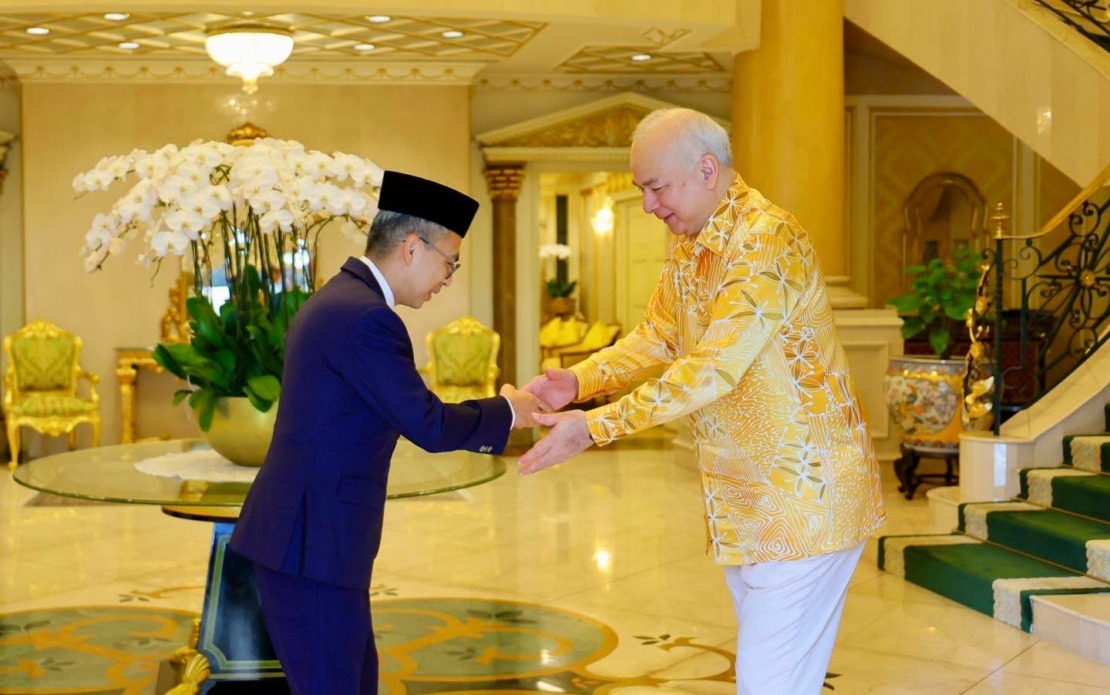
Communications Minister Datuk Fahmi Fadzil has updated the Sultan of Perak, Sultan Nazrin Shah, on the government's strategic initiatives aimed at bolstering communication infrastructure across the state and extending service availability to underserved areas. The briefing, delivered during a recent royal audience, provided the monarch with an overview of key projects and plans designed to modernise Malaysia's digital landscape in Perak.
The audience, held in Kuala Lumpur, represented an important opportunity for the minister to present progress on telecommunications development to the state's highest authority. Such engagements between government officials and royal institutions often underscore the significance of infrastructure initiatives and demonstrate commitment to regional development priorities.
Beyond the primary focus on infrastructure expansion, the discussion also touched on online safety—a concern that has grown increasingly prominent as digital adoption accelerates across Malaysia. The inclusion of this topic indicates recognition among policymakers that technological advancement must be accompanied by robust safeguards to protect citizens, particularly vulnerable populations including children and the elderly. Online safety frameworks remain critical as Malaysia continues its digital transformation journey.
Fahmi's remarks, shared through a Facebook post, reflected the respectful protocol typical of such royal engagements. His expression of prayers for the well-being of Sultan Nazrin and the broader Perak Royal Family demonstrated the customary deference accorded to Malaysia's constitutional monarchy while underscoring the collaborative nature of government-royal relations on matters of public importance.
The timing of this briefing aligns with broader national conversations about digital infrastructure. Malaysia has positioned itself as a regional digital hub, and consistent investment in communication networks outside major urban centres remains essential to bridging the urban-rural divide. Perak, as one of Malaysia's larger states by land area, faces particular challenges in achieving uniform service coverage, making such infrastructure initiatives particularly relevant to the state's developmental needs.
Communication infrastructure represents more than mere convenience; it underpins economic opportunity, educational advancement, and access to essential services. Rural and remote areas in Perak stand to benefit significantly from improved connectivity, potentially opening pathways for digital entrepreneurship, remote work, and enhanced access to government services. Such investments align with Malaysia's broader economic diversification strategies and the transition toward a knowledge-based economy.
The government's emphasis on expanding service coverage reflects acknowledgment that digital access has become foundational to modern development. In Southeast Asian context, nations competing for investment and talent recognition that telecommunications infrastructure quality directly influences competitiveness. Malaysia's efforts to ensure comprehensive coverage across all states, not merely commercial hotspots, differentiate its approach to digital development within the region.
Online safety considerations, highlighted during the audience, represent an evolving frontier in telecommunications policy. As more Malaysians, particularly in less densely populated areas, come online for the first time through expanded infrastructure, cybersecurity threats and digital literacy gaps become pronounced. Policymakers must balance infrastructure expansion with educational initiatives and regulatory frameworks that protect users from fraud, exploitation, and misinformation.
The briefing structure itself reflects Malaysia's governance model, wherein significant policy initiatives receive royal sanction and input. This consultative approach, rooted in constitutional monarchy principles, ensures that major development projects maintain legitimacy and alignment with state-level concerns and regional priorities. Sultan Nazrin's engagement signals royal support for the government's telecommunications agenda in Perak.
For Malaysian businesses and residents in Perak, improved communication infrastructure carries tangible implications. Enhanced broadband speeds and expanded 5G networks facilitate digital commerce, attract technology-focused enterprises, and improve quality of life through better access to online services. Startups and small-to-medium enterprises in particular benefit from reliable, high-speed connectivity that enables them to compete nationally and internationally.
The broader context of this briefing extends to Malaysia's commitment under various regional frameworks and development goals. Connectivity initiatives contribute to achieving the UN's Sustainable Development Goals, particularly those addressing inequality and economic opportunity. Southeast Asian nations increasingly recognise that bridging digital divides strengthens overall regional resilience and stability.
Moving forward, implementation of the infrastructure plans discussed will require coordination across multiple government agencies, private sector partners, and local stakeholders. The royal audience serves as a checkpoint in ensuring these plans receive appropriate oversight and maintain alignment with Perak's specific developmental priorities and the needs of its diverse communities.

%22%2F%3E%3C%2Fpattern%3E%3C%2Fdefs%3E%3Crect%20width%3D%22100%25%22%20height%3D%22100%25%22%20fill%3D%22url(%23ph2hy9vg)%22%2F%3E%3Crect%20width%3D%22100%25%22%20height%3D%22100%25%22%20fill%3D%22url(%23ph2hy9vp)%22%2F%3E%3Ctext%20x%3D%2250%25%22%20y%3D%2250%25%22%20text-anchor%3D%22middle%22%20dominant-baseline%3D%22central%22%20fill%3D%22rgba(255%2C255%2C255%2C0.95)%22%20font-family%3D%22Georgia%2C%20'Times%20New%20Roman'%2C%20serif%22%20font-weight%3D%22700%22%20font-size%3D%22272%22%20letter-spacing%3D%22-0.02em%22%3EAnwar%3C%2Ftext%3E%3C%2Fsvg%3E)