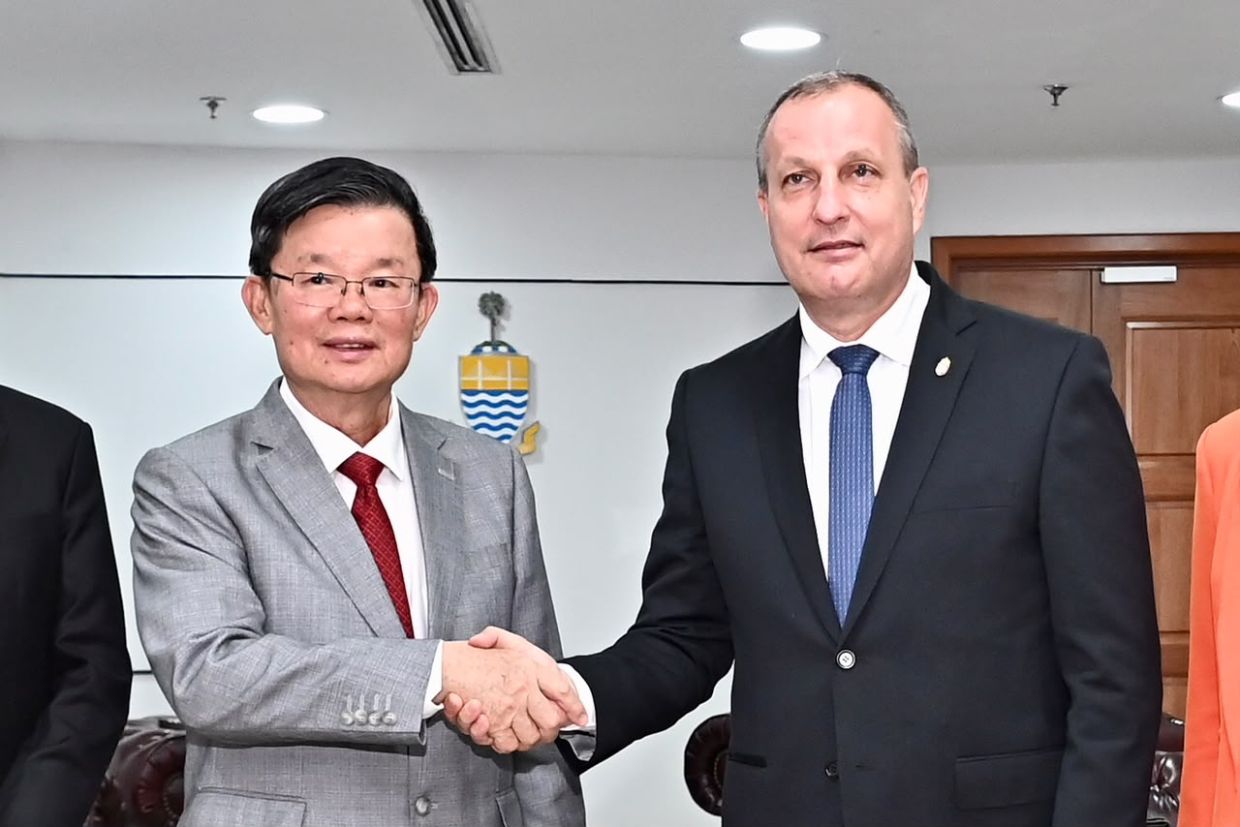
Penang is moving to strengthen its relationship with Hungary, eyeing collaboration across multiple strategic sectors including higher education, technological advancement, water security and environmental sustainability. The push comes after substantive discussions between state leadership and a Hungarian diplomatic delegation that visited the northern state recently, with both sides identifying substantial common ground and mutual benefit in expanding their engagement.
Chief Minister Chow Kon Yeow characterised Hungary as a significant European partner with deep institutional knowledge and proven capabilities across fields where Penang seeks development. During his meeting with Hungarian Ambassador to Malaysia Dr Sándor Sipos and his accompanying team, Chow outlined the state's enthusiasm for transforming these exploratory talks into tangible joint initiatives. The conversations ranged broadly across multiple domains—from heritage preservation and academic cooperation to commercial ties, renewable energy transition and cultural interaction—suggesting both parties view potential collaboration as multifaceted rather than narrowly sectoral.
The education dimension appears particularly promising. Hungary currently administers a scholarship initiative offering 40 fully funded annual places for Malaysian students, and the state government sees this programme as a valuable avenue for developing local talent while fostering people-to-people connections. Chow emphasised that educational and skills exchanges function as critical channels through which nations and regions construct enduring partnerships. He welcomed Hungary's continued commitment to the scholarship scheme and encouraged Penang-based students to apply, viewing the programme as opening doors for advanced research and professional development opportunities unavailable domestically.
Water management and environmental innovation figured prominently in the discussions, reflecting both jurisdictions' recognition of resource scarcity and climate vulnerability. Hungary possesses substantial technical expertise in water systems management and treatment technologies—areas of acute relevance to Malaysia as the region confronts growing freshwater pressures and environmental degradation. Similarly, renewable energy and green technology pathways emerged as domains where bilateral cooperation could yield practical benefits, aligning with Penang's own sustainability objectives and Malaysia's broader clean energy commitments under its climate action framework.
The research and development agenda extends beyond environmental concerns. Both Chow and Sipos signalled openness to institutional partnerships between academic centres, positioning universities and research bodies as vehicles for advancing technological innovation and scientific progress. This reflects a broader trend across Southeast Asia of states leveraging foreign partnerships to accelerate their transition toward knowledge-intensive economies and reduce dependence on lower-value manufacturing and extraction.
Simultaneously, the delegation engaged with other state officials, underscoring the breadth of potential cooperation frameworks. Executive Councillor Goh Choon Aik and Gooi Zi Sen participated in separate discussions touching on trade flows, investment pathways, community development and youth engagement. These conversations suggest the partnership framework extends beyond traditional diplomatic formality into practical commercial and social dimensions where tangible benefits might accrue relatively quickly.
Particularly noteworthy was the sports cooperation angle raised by Gooi, who committed to commissioning the Penang State Sports Council to identify athletic disciplines where Hungary and Penang could establish meaningful exchange programmes. This represents an often-overlooked but strategically important avenue for building mutual understanding and developing younger generations. Hungary possesses considerable sporting traditions and expertise, particularly in disciplines like athletics, equestrian sports and water sports, creating opportunities for technical training exchanges and competitive partnerships that benefit local athletes whilst strengthening bilateral cultural ties.
The timing of this diplomatic engagement reflects broader trends reshaping Southeast Asia's external relationships. As the region diversifies its partnerships beyond traditional powers, European nations including Hungary are increasingly positioning themselves as alternative partners offering technical expertise, educational pathways and investment opportunities without the geopolitical entanglements that characterise relationships with larger powers. For Penang specifically, Hungary's status as a Central European hub with strong European Union connections provides potential trade and investment springboards into broader European markets.
For Malaysian investors and entrepreneurs, strengthened Penang-Hungary cooperation opens channels for accessing European expertise and potentially establishing bridgeheads into Central European markets. Similarly, Malaysian students and researchers gain enhanced pathways to European education systems and collaborative research opportunities that could strengthen Malaysia's positioning in global knowledge networks. The emphasis on talent development and research cooperation suggests both sides understand that sustained competitive advantage in the 21st century flows increasingly from knowledge assets rather than resource extraction or low-cost manufacturing.
Chow's expression of shared commitment to sustainable development alongside cultural preservation indicates alignment on values beyond mere transactional interest. This framing suggests partnership aspiration rooted in complementary development philosophies rather than zero-sum competition, potentially creating more stable and enduring cooperation frameworks than purely commercial arrangements.
The discussions also reflect Penang's strategic positioning as Malaysia's primary international engagement hub outside Kuala Lumpur. The state government has consistently cultivated bilateral relationships independent of federal channels, and this Hungarian engagement exemplifies that approach. Such autonomy in external relations allows Penang to pursue partnerships aligned specifically with its development priorities—technology-driven economy, sustainability, heritage-led tourism—rather than adopting uniform national approaches.
For Hungary, deepening Malaysian engagement serves strategic purposes as well. The Central European nation seeks expanded footprints across Asia-Pacific amid shifting global alignments, and establishing substantive partnerships in growing Southeast Asian economies enhances its regional relevance. Malaysia's position as ASEAN's third-largest economy and bridge between South China Sea geopolitics and broader Asian commerce makes partnerships with Malaysian states particularly valuable.
Moving forward, concrete deliverables will determine whether these discussions translate into meaningful cooperation or remain diplomatic pleasantries. Specific collaborative projects, binding agreements between institutions, and measurable participation increases in scholarship programmes will serve as markers of partnership success. Both Chow and Sipos expressed determination to convert discussions into actionable outcomes, suggesting genuine commitment to progress beyond announcement stage.

%22%2F%3E%3C%2Fpattern%3E%3C%2Fdefs%3E%3Crect%20width%3D%22100%25%22%20height%3D%22100%25%22%20fill%3D%22url(%23ph2hy9vg)%22%2F%3E%3Crect%20width%3D%22100%25%22%20height%3D%22100%25%22%20fill%3D%22url(%23ph2hy9vp)%22%2F%3E%3Ctext%20x%3D%2250%25%22%20y%3D%2250%25%22%20text-anchor%3D%22middle%22%20dominant-baseline%3D%22central%22%20fill%3D%22rgba(255%2C255%2C255%2C0.95)%22%20font-family%3D%22Georgia%2C%20'Times%20New%20Roman'%2C%20serif%22%20font-weight%3D%22700%22%20font-size%3D%22272%22%20letter-spacing%3D%22-0.02em%22%3EAnwar%3C%2Ftext%3E%3C%2Fsvg%3E)