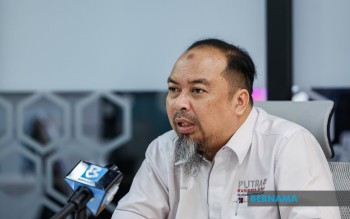
A leading business academic has cautioned that tomorrow's parliamentary discussion on the Royal Commission of Inquiry findings into Lembaga Tabung Haji should concentrate exclusively on safeguarding the institution from political meddling and ensuring its governance remains in the hands of qualified, independent professionals. Prof Dr Ahmed Razman Abdul Latiff, who directs the MBA programme at Putra Business School, has raised concerns that without clear commitment to this principle, the debate risks becoming merely another political exercise rather than a genuine reform initiative.
The timing of this parliamentary sitting assumes particular significance for Malaysia's Islamic fund management sector. The RCI's investigation uncovered numerous governance failures including substantial financial losses, unauthorised bonus distributions, apparent conflicts of interest, and investments that generated negative returns for the 2.7 million depositors whose life savings are held within TH's structures. These revelations have naturally prompted questions about how such lapses occurred across multiple management cycles and administrative layers.
Ahmed Razman's core contention centres on a fundamental structural problem that transcends the specific findings of the RCI. He argues that TH can never function optimally as a professional financial institution if its leadership positions remain subject to political patronage and factional influence. The academic emphasises that the board of directors and senior management must be composed entirely of individuals selected on merit and experience rather than political affiliation or connections to particular coalition partners or factions within the government.
This perspective reflects growing international recognition that government-linked institutions perform most effectively when insulated from day-to-day political pressure. Southeast Asian countries including Singapore and parts of Indonesia have demonstrated that sovereign wealth funds and religiously-affiliated financial entities achieve superior returns and governance outcomes when operated under professional stewardship with clear performance metrics and independent oversight rather than political direction. TH's mandate—serving Malaysian Muslims preparing for or undertaking the Hajj pilgrimage—demands precisely this kind of professional management.
The academic has specifically flagged the parliamentary debate as a critical juncture where legislators must demonstrate genuine commitment to structural reform rather than engage in partisan point-scoring. He notes that the quality of this discussion will signal to depositors, regulators, and international financial observers whether Malaysia is serious about rebuilding TH's credibility or simply performing a rhetorical exercise while maintaining the dysfunctional status quo. The debate's tone and substantive content will substantially influence public confidence in TH's recovery trajectory.
Ahmed Razman has highlighted the imperative for the discussion to remain grounded in factual analysis derived from the RCI's investigation rather than devolving into political blame allocation. While accountability remains crucial—particularly for individuals whose decisions directly contributed to losses—the broader conversation must address systemic vulnerabilities and governance architecture. The RCI's recommendations represent a road map for institutional transformation; parliament's role should be endorsing these corrections while establishing mechanisms to prevent recurrence rather than litigating historical decisions through partisan lenses.
Transparency in any subsequent investigations or enforcement actions emerges as another critical theme in Ahmed Razman's assessment. The academic cautioned that selective prosecution or differential treatment of individuals involved in TH's mismanagement could undermine confidence in the entire reform process. Should authorities determine that specific individuals warrant prosecution or dismissal, these actions must be pursued evenhandedly and documented publicly so that depositors perceive genuine accountability rather than politically-motivated targeting of certain figures while others escape consequences.
Depositors' anxieties about their accumulated savings have been amplified by the RCI's disclosures, yet Ahmed Razman offers reassurance grounded in legal reality. Unlike commercial banks, which face deposit insurance limitations under Bank Negara Malaysia's framework, TH savings benefit from comprehensive government guarantee protection by virtue of statutory legislation. This fundamental distinction provides genuine security that cannot be matched by conventional financial institutions, a point that deserves prominent articulation during tomorrow's debate to stabilise public sentiment.
The institutional progress already achieved provides grounds for measured optimism. TH's implementation of over 75 per cent of the RCI's improvement recommendations within months of the report's completion suggests that management has genuinely internalised the reform mandate. This execution rate, if sustained, indicates the organisation is transitioning toward sustainable operations rather than remaining mired in crisis management. Parliamentary endorsement of this recovery trajectory could accelerate institutional rebuilding and restore investor confidence among the Muslim community.
Minister in the Prime Minister's Department (Religious Affairs) Dr Zulkifli Hasan will initiate proceedings with a briefing before parliament, establishing the authoritative framework for subsequent questions and contributions from members. His remarks will substantially shape the debate's trajectory and parliamentary members' understanding of government priorities regarding TH's future governance structure. The minister's emphasis on depoliticisation versus rehabilitation of institutional reputation will communicate signals about the administration's genuine commitment to separating TH from factional politics.
For Malaysian stakeholders with TH deposits and interest in Islamic finance sector development, tomorrow's debate represents more than a procedural parliamentary event. It constitutes a defining moment when legislators must demonstrate whether they genuinely prioritise the financial security and institutional integrity of an institution serving millions of Muslim Malaysians, or whether traditional patterns of political patronage will persist. The academic community's intervention, through observers like Ahmed Razman, underscores that Malaysia's credibility as a regional Islamic finance hub depends substantially on governing institutions like TH according to professional and ethical standards rather than partisan convenience.

