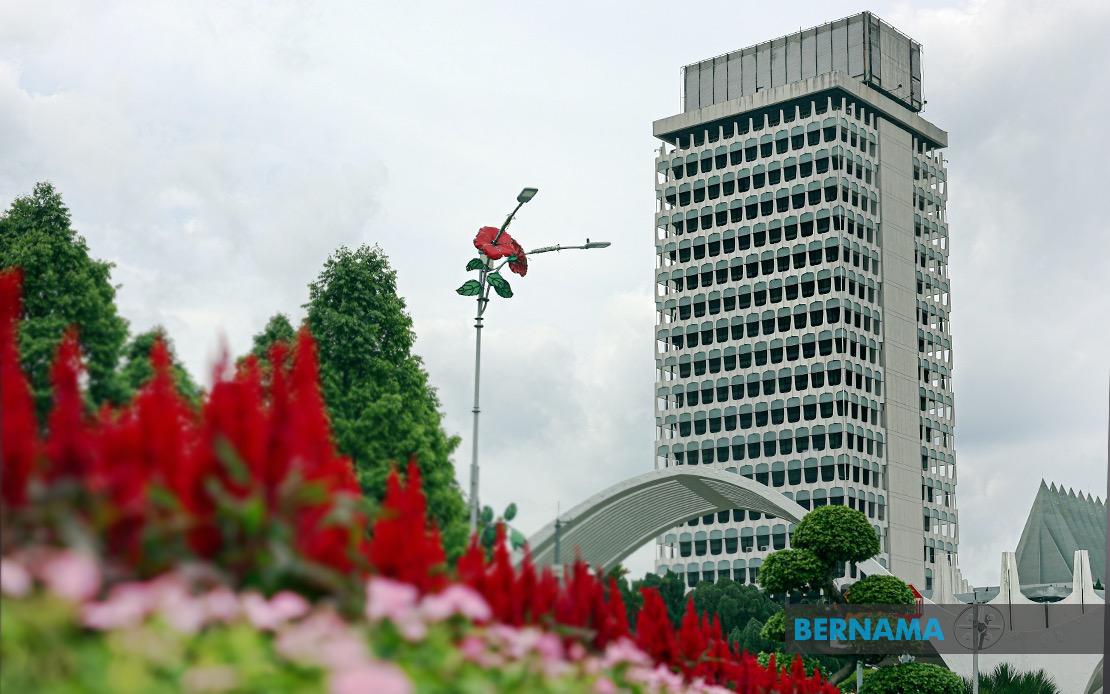
Parliament will reconvene on Monday for a 16-day sitting running until July 16, with a packed legislative agenda centring on constitutional reforms that failed to secure sufficient support in previous attempts. The Second Meeting of the Fifth Session of the 15th Parliament will revisit the Constitution (Amendment) Bill 2026, which proposes capping the prime minister's tenure at 10 years, a measure that previously fell short of the required two-thirds majority in the Dewan Rakyat. This restart signals renewed effort to advance what remains a contentious constitutional change, requiring the government to either build broader consensus or demonstrate shifted political arithmetic since the first reading.
Alongside the tenure limitation bill, lawmakers will reconsider the Constitution (Amendment) Bill (No. 2) 2026, designed to disentangle the roles of Attorney General and Public Prosecutor. This institutional separation has drawn scrutiny and debate, leading to its referral to the Parliamentary Special Select Committee for deeper examination. The decision to bring it back to the chamber suggests the committee has completed or substantially advanced its review, though the committee's findings and recommendations remain to be disclosed. For Malaysian observers, this institutional restructuring carries implications for prosecutorial independence and the balance between executive and judicial oversight.
The sitting opens with immediate legislative business, including the Road Transport Act 1987 (Amendment) Bill, scheduled for tabling on the opening day and debate the following day. Transport Minister Anthony Loke has framed the amendments as a direct response to the persistent danger posed by illegal street racing, emphasising that the 42-clause package spanning 11 distinct areas represents a comprehensive overhaul of enforcement capacity. Beyond the street racing menace, the bill targets the organised criminal networks known colloquially as 'tonto' syndicates, which have organised and profited from illegal racing operations across Malaysia. The minister's emphasis on toughening penalties and expanding enforcement mechanisms reflects government frustration with the failure of existing laws to deter dangerous driving behaviour that claims lives and destabilises communities.
Malaysia's energy security features prominently in the parliamentary agenda, with lawmakers expected to scrutinise the implications of the regional energy supply crisis triggered by ongoing conflict in West Asia. The disruptions to international energy supply chains have rippled across Southeast Asia, affecting fuel costs, electricity supply stability, and industrial competitiveness. Malaysia, despite its hydrocarbons wealth, remains interconnected with global energy markets through trade, investment, and strategic partnerships. The 16-day sitting provides a forum for detailed parliamentary examination of government contingency planning, renewable energy transition timelines, and economic measures to cushion citizens against energy-related price pressures.
Cybercrime legislation also features on the parliamentary docket, with the Cybercrime Bill 2026 poised for consideration. In an era of rapidly evolving digital threats—from ransomware attacks on critical infrastructure to online fraud targeting Malaysian households—modernised cybercrime legislation carries particular urgency. The bill's precise scope and enforcement mechanisms remain subjects of legitimate debate, balancing security imperatives against privacy safeguards and civil liberties concerns. Parliamentary scrutiny offers opportunity to examine whether the legislation adequately addresses emerging threats while maintaining proportional oversight measures.
The timing of this sitting coincides with the Johor State Election, creating a delicate political environment that Speaker Tan Sri Johari Abdul has explicitly flagged. In his pre-session guidance to MPs, Johari reminded legislators that their primary obligation remains parliamentary attendance and substantive engagement, regardless of concurrent electoral campaigns. The speaker's intervention underscores recurring tensions between MPs' roles as constituency representatives and state-level political actors, on one hand, and their duties in the national legislature on the other. Past sittings during concurrent elections have witnessed reduced attendance and heightened partisan rhetoric, risks Johari has cautioned against.
The speaker's broader call for elevated parliamentary conduct strikes at deeper institutional concerns. Johari explicitly asked MPs to ground debates in data, evidence, and constructive policy analysis rather than emotional appeals or partisan polemics disconnected from viable solutions. His invocation of Standing Orders and responsible discourse reflects concern that parliamentary sessions have sometimes deteriorated into theatrical political combat rather than serious policy deliberation. This appeal carries particular weight given public expectations around cost of living, healthcare access, educational quality, employment opportunity, and community services—domains where informed legislative debate can tangibly improve outcomes.
Government and opposition benches alike face scrutiny under Johari's framework. The speaker's emphasis on distinct roles for ruling and opposition lawmakers suggests he expects government members to present coherent policy positions and opposition members to offer substantive alternatives rather than blanket obstruction. This distinction matters for parliamentary efficacy; legislatures where opposition engagement focuses on detailed criticism and alternative proposals function more robustly than those characterised by purely adversarial posturing. Malaysia's constitutional democracy depends on productive legislative interchange, a principle Johari has underscored ahead of what promises to be a substantively and politically contested session.
The constitutional amendment bills warrant particular analytical attention. Term limits for prime ministers reflect global trends toward constraining executive power, seen across democracies from the United States to France. Malaysia's debate on this question intersects with arguments about executive stability, institutional continuity, and democratic accountability. Proponents contend that mandatory limits prevent personalised governance and encourage succession planning, while sceptics worry that strict term limits produce lame-duck leadership and empower bureaucratic continuity. The previous failure to achieve two-thirds support suggests the reform remains divisive even within the governing coalition, raising questions about whether Monday's re-tabling reflects genuine consensus building or tactical parliamentary manoeuvring.
The separation of Attorney General and Public Prosecutor roles addresses a longstanding governance question about whether prosecutorial independence can coexist with direct executive influence. Common law jurisdictions handle this arrangement differently; some concentrate both roles in single office holders while others separate them entirely. The Parliamentary Special Select Committee's examination has presumably weighed international practice, institutional capacity, and Malaysian constitutional tradition. The referral to committee rather than immediate passage suggests concern that the change warranted deeper investigation, though this delay also provides time for consensus building and technical refinement before the bill returns to the full chamber.
Dewan Negara will commence its own 10-day sitting from July 20 through August 4, meaning the upper house will begin deliberations shortly after the lower house concludes. This timing creates opportunity for government legislation to proceed through both chambers sequentially, though controversial bills may face extended scrutiny. The Dewan Negara's role as a house of review and representation of state interests means that bills emerging from the Dewan Rakyat often encounter different perspectives and questioning in the upper chamber, a feature that strengthens legislative deliberation even when it slows passage.
For Malaysian stakeholders and regional observers, the coming parliamentary session represents a test of whether the legislature can function as genuine forum for policy deliberation or whether it has become primarily a venue for recording pre-determined decisions reached elsewhere. The speaker's pre-session emphasis on responsibility, evidence-based discourse, and substantive engagement suggests institutional awareness that public confidence in parliament depends on visible legislative seriousness. How MPs respond to these expectations, particularly during a sitting that coincides with parallel electoral competition in Johor, will offer meaningful indicators of parliament's current health and functional capacity.

%22%2F%3E%3C%2Fpattern%3E%3C%2Fdefs%3E%3Crect%20width%3D%22100%25%22%20height%3D%22100%25%22%20fill%3D%22url(%23ph2hy9vg)%22%2F%3E%3Crect%20width%3D%22100%25%22%20height%3D%22100%25%22%20fill%3D%22url(%23ph2hy9vp)%22%2F%3E%3Ctext%20x%3D%2250%25%22%20y%3D%2250%25%22%20text-anchor%3D%22middle%22%20dominant-baseline%3D%22central%22%20fill%3D%22rgba(255%2C255%2C255%2C0.95)%22%20font-family%3D%22Georgia%2C%20'Times%20New%20Roman'%2C%20serif%22%20font-weight%3D%22700%22%20font-size%3D%22272%22%20letter-spacing%3D%22-0.02em%22%3EAnwar%3C%2Ftext%3E%3C%2Fsvg%3E)