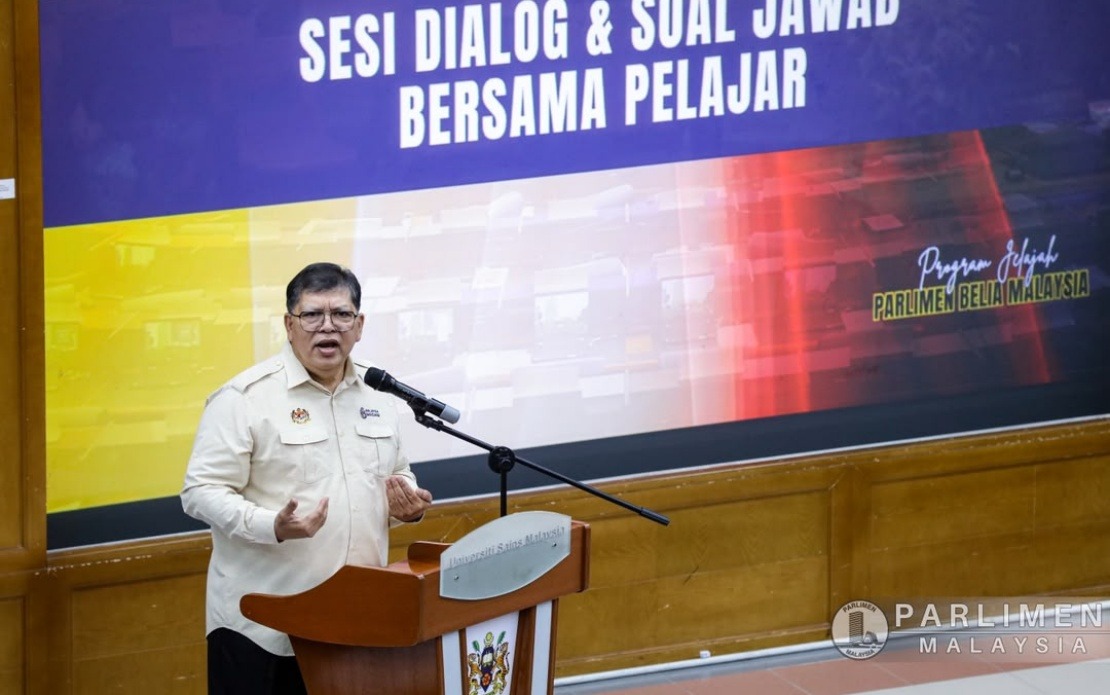
The Speaker of the Dewan Rakyat has underscored the crucial responsibility of parliament members to demonstrate the highest standards of democratic practice, recognising that the institution functions as a beacon for younger generations now preparing to engage in formal legislative processes. Tan Sri Johari Abdul's comments come as the Malaysian Youth Parliament gears up for its inaugural sitting under Parliament Malaysia's direct stewardship, with the opening ceremony scheduled for September 11. The intervention reflects growing awareness among parliamentary leadership that the conduct of sitting members carries profound educational implications for those observing from the gallery and through digital platforms.
At its core, the Speaker's message addresses a tension inherent in democratic systems: the gap between idealised principles of parliamentary conduct and everyday legislative practice. Members of Parliament must recognise that their deliberations no longer occur within the relative privacy of earlier decades. With live broadcasts and social media coverage enabling instant dissemination of parliamentary proceedings, every intervention, interruption, and rhetorical flourish reaches viewers instantly across the nation. This transparency cuts both ways, simultaneously holding legislators accountable while exposing impressionable young citizens to the realities of political debate—sometimes unflattering realities. The Speaker's appeal is essentially for members to close this gap, to ensure that what young people witness in the Dewan Rakyat aligns with what civics textbooks teach about reasoned democratic discourse.
The Malaysian Youth Parliament itself represents an ambitious institutional experiment in democratic engagement. Operating on a structure mirroring the actual parliament, the platform encompasses 222 seats corresponding to Malaysia's parliamentary constituencies, with participating youth organisations forming non-partisan parties within the framework. Currently, more than ten such parties exist, functioning as vehicles for youth participation rather than genuine political entities. This distinction matters significantly for Southeast Asia, where youth engagement in formal political processes remains variable. The structure allows young Malaysians to experience parliamentary procedure, debate conventions, and the mechanics of coalition-building without the partisan intensity that characterises actual electoral politics.
Parliament Malaysia is actively mobilising to attract participants, targeting 300,000 Malaysians aged between eighteen and thirty for registration before the Youth Parliament Election in August. This ambitious outreach underscores the institution's commitment to ensuring the initiative transcends urban, educated demographics and reaches young people across Malaysia's diverse regions and socioeconomic strata. The timeline established by parliament—with nomination day on July 8, candidate announcements on July 11, and a 27-day campaign period running from July 12 through August 7—mirrors standard electoral procedures while compressing the timeframe. Online voting on August 8-9 through the dedicated e-PBMy system represents a pragmatic choice for reaching geographically dispersed participants and removing logistical barriers to participation.
The transition of Youth Parliament management to Parliament Malaysia marks a significant institutional shift with implications for democratic development in the region. Previously operated under the Ministry of Youth and Sports since its introduction in 2015, the handover announced in October 2023 elevates the programme's status and resources. Parliament Malaysia's assumption of direct responsibility signals confidence in the initiative's maturity and integration into formal parliamentary structures. This transfer also carries subtle messaging about youth participation being a core parliamentary function rather than a peripheral youth ministry concern—a reframing that positions intergenerational dialogue at the centre of democratic legitimacy rather than treating it as an ancillary engagement exercise.
The Speaker's emphasis on fact-based, courteous and solution-oriented debate reflects disquiet about contemporary parliamentary culture in Malaysia and globally. Parliamentarians increasingly face criticism for rhetorical excess, personal attacks, and argumentativeness divorced from substantive policy engagement. By explicitly calling for procedural dignity and evidence-based discussion, the Speaker signals that parliament members recognise this problem and commit to addressing it—at least during proceedings that will be observed by youth participants. Whether this translates into sustained behavioural change across all parliamentary sittings remains an open question, but the public commitment establishes a benchmark against which future parliamentary conduct can be measured and critiqued.
For Malaysian youth, the Youth Parliament offers tangible exposure to legislative processes at a formative stage of civic development. Participants will experience how motions are drafted, how committees function, how majorities are formed and dissolved, and how debate translates into decision-making. These are not merely abstract constitutional concepts but lived democratic experiences. The two-year terms and three annual sittings of two days each provide sufficient continuity for participants to develop longitudinal understanding of parliamentary work. Many participants will subsequently pursue careers in law, public administration, journalism, business or civil society—domains where parliamentary literacy and democratic instincts prove invaluable. In this respect, Youth Parliament functions as a feeder mechanism for developing informed citizenship across Malaysia's professional classes.
The programme's structure and scope also address a broader regional concern about youth disconnection from formal political institutions. Southeast Asia has witnessed periods of youth alienation from parliamentary processes, partly owing to perceptions of parliamentary ineffectiveness and disconnect from youth priorities. By creating a dedicated institutional space where young people conduct parliamentary business on serious topics affecting their generation, the Malaysian Youth Parliament acknowledges and responds to this concern. The non-partisan framework prevents the initiative from being captured by particular parties or ideologies, preserving its educational integrity.
Looking ahead, the success of the Malaysian Youth Parliament will depend substantially on the quality of parliamentary conduct that young participants witness. If the actual parliament delivers on the Speaker's call for dignified, evidence-based debate, the initiative can credibly serve as a school for democratic citizenship. Conversely, if parliamentary sittings continue to exhibit polarisation, personal attacks, and rhetorical excess, the contrast between the ideal and the actual will undermine the programme's pedagogical purposes. The Speaker's intervention thus functions as both an appeal to colleagues and a warning that the institution's credibility increasingly depends on closing the gap between democratic aspiration and parliamentary reality, with an audience of 300,000 young citizens watching intently.

%22%2F%3E%3C%2Fpattern%3E%3C%2Fdefs%3E%3Crect%20width%3D%22100%25%22%20height%3D%22100%25%22%20fill%3D%22url(%23ph2hy9vg)%22%2F%3E%3Crect%20width%3D%22100%25%22%20height%3D%22100%25%22%20fill%3D%22url(%23ph2hy9vp)%22%2F%3E%3Ctext%20x%3D%2250%25%22%20y%3D%2250%25%22%20text-anchor%3D%22middle%22%20dominant-baseline%3D%22central%22%20fill%3D%22rgba(255%2C255%2C255%2C0.95)%22%20font-family%3D%22Georgia%2C%20'Times%20New%20Roman'%2C%20serif%22%20font-weight%3D%22700%22%20font-size%3D%22272%22%20letter-spacing%3D%22-0.02em%22%3EAnwar%3C%2Ftext%3E%3C%2Fsvg%3E)