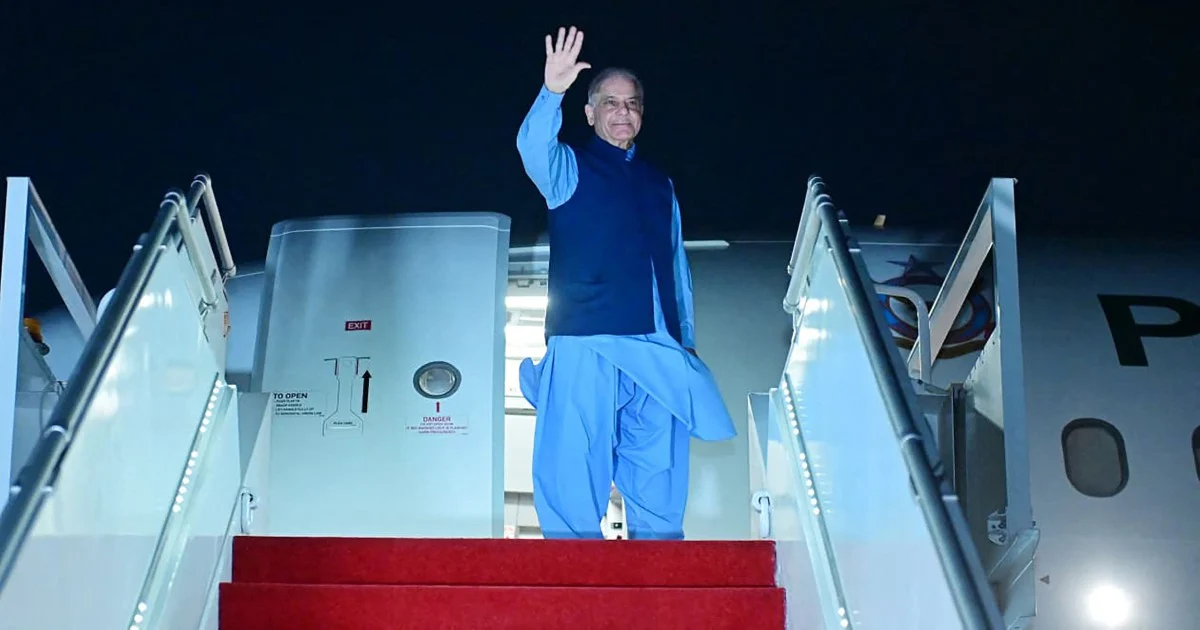
Pakistan's Prime Minister Shehbaz Sharif has arrived in Switzerland to engage in technical-level discussions between the United States and Iran, marking another instance of Islamabad's diplomatic engagement in Middle Eastern affairs. The premier's Sunday morning arrival underscores Pakistan's positioning as a potential mediator in efforts to reduce armed hostilities affecting the broader region, a role that carries particular significance given Islamabad's historical relationships with both Washington and Tehran.
The talks represent a delicate diplomatic initiative aimed at narrowing the gap between two major regional powers whose tensions have periodically escalated into direct military confrontation. By hosting such discussions at a neutral venue, Switzerland continues its established tradition of facilitating dialogue between adversaries. Pakistan's presence at these technical discussions suggests Islamabad may be offering support or mediation services, reflecting broader strategic interests in regional stability.
For Pakistan, engagement in US-Iran diplomacy carries multiple dimensions. Islamabad maintains complex relationships with both powers—strategic partnership with the United States while managing significant trade and energy interests with Iran, including crucial natural gas supplies. Any escalation between Washington and Tehran inevitably impacts Pakistan's economic and security calculations, making active participation in de-escalation efforts a rational strategic choice.
The technical nature of these talks indicates discussion of specific, implementable measures rather than broader political positioning. Such discussions typically address procedural mechanisms, verification frameworks, and confidence-building measures that can gradually build trust between parties. Pakistan's involvement in this phase suggests Islamabad may contribute expertise from its own experience navigating complex bilateral relationships in a volatile neighbourhood.
Regionally, Pakistan's diplomatic footprint in Middle Eastern negotiations reflects growing recognition of Islamabad's role in bridging different actors. The country has previously attempted mediation between Saudi Arabia and Iran, hosting high-level visits and facilitating back-channel communications. This pattern demonstrates Pakistan's ambition to position itself as a constructive force in regional diplomacy despite its own internal security challenges.
The timing of Sharif's visit carries implications for South Asian stability as well. Diplomatic engagement by Pakistani leadership in international forums reinforces Islamabad's credentials as a responsible nuclear power committed to conflict resolution. This contrasts with periodic regional tensions with India and domestic security concerns that sometimes dominate headlines about Pakistan.
US-Iran hostilities have periodically created spillover effects across the broader Middle East and South Asia. Previous escalations triggered missile strikes, military posturing, and disruptions to maritime commerce in vital shipping lanes. Pakistan's maritime trade and energy security depend partly on stable conditions in the Persian Gulf region, making the country a stakeholder in reducing US-Iran tensions.
Switzerland's role as the venue reflects its established neutrality in international disputes. Hosting technical discussions there signals to all parties that the forum is impartial and secure. Pakistan's willingness to travel to Switzerland rather than hosting talks domestically indicates Islamabad is supporting rather than leading this particular diplomatic initiative, a calculated positioning that allows influence without overcommitting politically.
The involvement of technical experts rather than political principals at this stage suggests serious intent to identify workable solutions. Technical discussions often precede higher-level political negotiations, establishing common ground on specific issues before leaders invest political capital. Pakistan's participation suggests these discussions may address tangible concerns like maritime incidents, military communication channels, or incident prevention mechanisms.
For Malaysia and Southeast Asian states more broadly, Pakistan's diplomatic activism in Middle Eastern affairs reflects interconnected regional stability. Many Southeast Asian nations maintain significant trade relationships with both Iran and the United States. Reducing tensions between them creates more predictable conditions for commerce and investment flows that benefit the entire Asian region.
Pakistan's positioning in these talks also demonstrates how countries beyond the immediate US-Iran dyad can facilitate dialogue. This principle applies elsewhere in global diplomacy—smaller nations often play crucial roles in creating space for adversaries to communicate. Islamabad's participation validates this model and reinforces its relevance in international mediation efforts despite its own complex internal and bilateral challenges.
The success or failure of these technical discussions remains uncertain, but Pakistan's presence signals that multiple regional actors view de-escalation as preferable to continued military posturing. Whether these talks produce concrete agreements or merely establish procedural frameworks for future negotiations will become clearer in coming weeks.
%22%2F%3E%3C%2Fpattern%3E%3C%2Fdefs%3E%3Crect%20width%3D%22100%25%22%20height%3D%22100%25%22%20fill%3D%22url(%23ph46wn1g)%22%2F%3E%3Crect%20width%3D%22100%25%22%20height%3D%22100%25%22%20fill%3D%22url(%23ph46wn1p)%22%2F%3E%3Ctext%20x%3D%2250%25%22%20y%3D%2250%25%22%20text-anchor%3D%22middle%22%20dominant-baseline%3D%22central%22%20fill%3D%22rgba(255%2C255%2C255%2C0.95)%22%20font-family%3D%22Georgia%2C%20'Times%20New%20Roman'%2C%20serif%22%20font-weight%3D%22700%22%20font-size%3D%22226%22%20letter-spacing%3D%22-0.02em%22%3EHamzah%3C%2Ftext%3E%3C%2Fsvg%3E)
%22%2F%3E%3C%2Fpattern%3E%3C%2Fdefs%3E%3Crect%20width%3D%22100%25%22%20height%3D%22100%25%22%20fill%3D%22url(%23ph14kuwg)%22%2F%3E%3Crect%20width%3D%22100%25%22%20height%3D%22100%25%22%20fill%3D%22url(%23ph14kuwp)%22%2F%3E%3Ctext%20x%3D%2250%25%22%20y%3D%2250%25%22%20text-anchor%3D%22middle%22%20dominant-baseline%3D%22central%22%20fill%3D%22rgba(255%2C255%2C255%2C0.95)%22%20font-family%3D%22Georgia%2C%20'Times%20New%20Roman'%2C%20serif%22%20font-weight%3D%22700%22%20font-size%3D%22170%22%20letter-spacing%3D%22-0.02em%22%3ETambirat%3C%2Ftext%3E%3C%2Fsvg%3E)