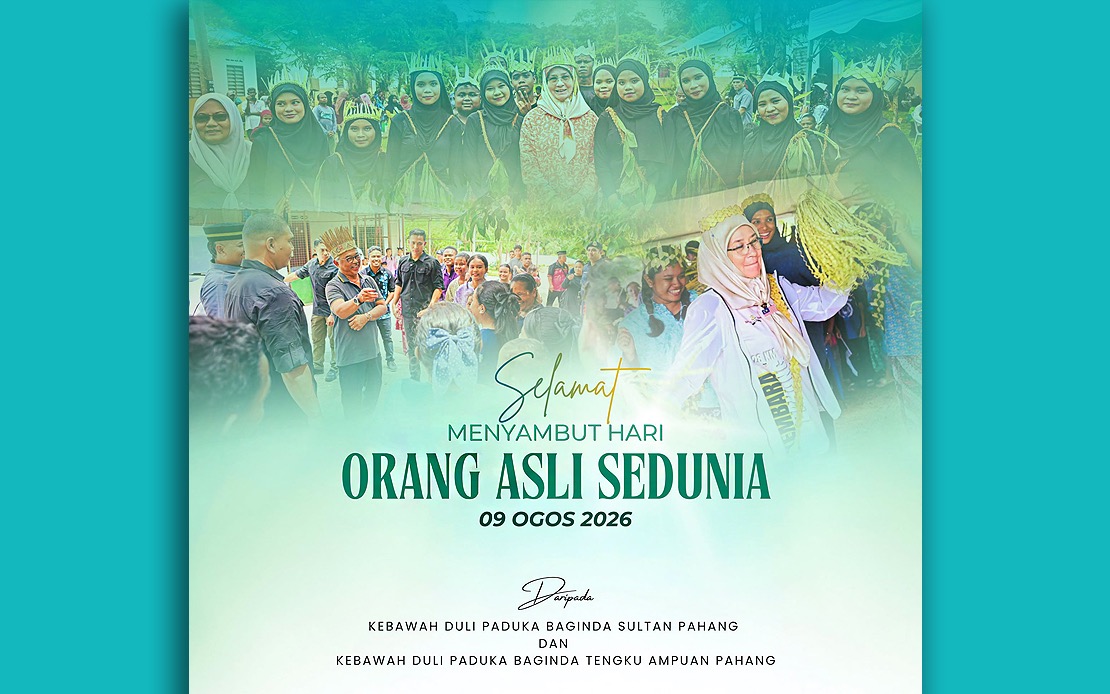
The Sultan of Pahang, Al-Sultan Abdullah Ri'ayatuddin Al-Mustafa Billah Shah, and Tengku Ampuan Pahang Tunku Azizah Aminah Maimunah Iskandariah have formally recognised the Orang Asli community's central role in shaping Pahang's distinctive cultural identity, acknowledging their custodianship of traditions and customs that define the state's heritage. The recognition, conveyed through an official statement on the Kesultanan Pahang's Facebook platform, underscores the growing importance placed by Malaysia's royalty on indigenous communities and their preservation within the modern nation-state context.
Beyond ceremonial appreciation, the royal couple have articulated a substantive vision for advancing Orang Asli welfare across multiple dimensions. Their statement specifically identifies education, economic opportunity generation, and human capital development as priority areas requiring meaningful intervention and resource allocation. This nuanced positioning suggests awareness that cultural preservation alone, without accompanying socioeconomic advancement, risks relegating indigenous communities to peripheral status in broader development narratives.
The emphasis on safeguarding cultural identity whilst simultaneously pursuing development opportunities reflects a delicate balancing act increasingly central to indigenous policy discourse across Southeast Asia. Malaysian policymakers and state leadership have grappled with the tension between modernisation imperatives and the protection of traditional knowledge systems and practices. The Pahang royals' framing acknowledges this complexity, insisting that progress must not come at the expense of heritage erosion, a position that resonates with international indigenous rights frameworks and UNESCO conventions on intangible cultural heritage.
The timing of this statement, coinciding with the 2026 International Day of the World's Indigenous Peoples, carries symbolic weight extending beyond Pahang's borders. The observance has become an increasingly significant platform for state and federal governments across Malaysia to reaffirm commitments to Orang Asli welfare and rights protection. For Malaysian readers, particularly those in Peninsular Malaysia where Orang Asli populations represent a historically marginalised demographic, such royal patronage carries material implications for policy direction and budgetary considerations at the state level.
Educational access remains among the most persistent challenges facing Orang Asli communities throughout Malaysia. Geographic remoteness, economic constraints, and structural inequities within formal education systems have historically limited enrolment and completion rates among indigenous youth. The Sultan and Tengku Ampuan's explicit prioritisation of educational opportunity thus addresses a concrete, measurable gap where royal advocacy can theoretically translate into ministerial action and resource reallocation at state and potentially federal levels.
Economic development initiatives targeting Orang Asli communities have expanded considerably over the past decade, encompassing ecotourism ventures, agroforestry enterprises, and skills training programmes. Yet implementation remains inconsistent, with significant variation between states in programme uptake, effectiveness, and cultural appropriateness. Pahang's royal statement potentially signals receptiveness to expanded business development support mechanisms and cooperative frameworks that could enhance market access for Orang Asli entrepreneurs and producers whilst maintaining community agency in development pathways.
The reference to human capital development extends beyond conventional job training to encompass capacity-building for community leadership and governance. Increasingly, indigenous communities throughout the region seek meaningful participation in decisions affecting their lands, resources, and futures—a principle increasingly recognised in Malaysian policy discourse, particularly following heightened international attention to indigenous land rights and environmental stewardship. Royal endorsement of human capital development may facilitate greater space for community-led initiatives in Pahang.
The broader context of this statement reflects Malaysia's navigation of multiple pressures: international indigenous rights advocacy, domestic pluralism and constitutional frameworks recognising Orang Asli status, and development imperatives. Pahang, as a state with significant Orang Asli populations concentrated in interior regions, occupies particular importance in this calculus. The royal couple's positioning of Orang Asli heritage as "shared legacy" suggests an inclusive framing whereby cultural preservation becomes a collective state asset rather than marginal minority concern.
For Southeast Asian observers, the Pahang royalty's statement exemplifies evolving approaches to indigenous governance and representation across the region. Unlike some neighbouring jurisdictions where indigenous populations face greater marginalisation, Malaysia's constitutional recognition of Orang Asli and repeated royal affirmations of their significance creates institutional anchors—however imperfectly implemented—for advocacy and policy advancement. The question remaining concerns whether such statements translate into sustained budgetary commitments and programmatic expansion, or remain largely ceremonial expressions of goodwill.
The appeal to "unity, respect and cooperation" in the statement's conclusion, whilst conventional in Malaysian royal discourse, carries particular resonance when directed toward inter-community relations and resource-sharing arrangements. Orang Asli communities often navigate complex relationships with majority Malay-Muslim populations and with immigrant settler populations in their traditional territories. Royal emphasis on harmony and prosperity framed as collective endeavour potentially reframes Orang Asli rights and development not as special interest concerns but as integral to Pahang's broader wellbeing and social cohesion.
Moving forward, the significance of this statement may be measured not merely by its rhetoric but by subsequent policy action. Whether Pahang's state government translates royal prioritisation into concrete budgetary allocations, legislative reforms, or programmatic expansions will determine whether this expression of appreciation catalyses material improvements in Orang Asli educational access, economic opportunity, and participatory governance. For indigenous advocacy organisations and Orang Asli communities themselves, such royal statements provide valuable leverage points in ongoing negotiations with state bureaucracies regarding resource distribution and policy direction.

