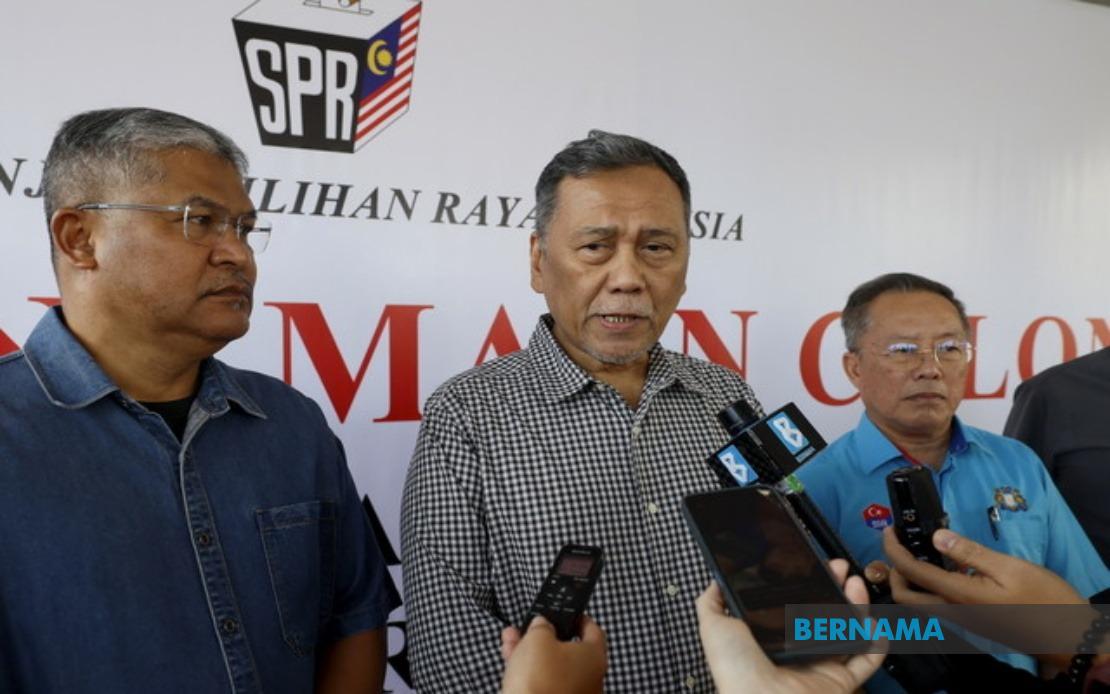
The Johor state election campaign is entering its critical registration phase, with the Election Commission reporting a measured pace of candidate confirmations ahead of tomorrow's nomination proceedings. As of Wednesday morning, the electoral body had sold 593 nomination forms across returning officer offices throughout the state, yet this enthusiasm has not fully translated into formal commitments—only 133 prospective candidates have advanced to the next stage by submitting the mandatory deposit that signals their serious intent to contest.
Election Commission chairman Datuk Seri Ramlan Harun acknowledged the disparity between form distribution and deposit payments, but remained optimistic that the final count would climb substantially before the nomination window closes. He emphasised that candidates still possessed several crucial hours to complete their paperwork, with nomination day itself beginning Thursday morning. The chairman's confidence appears grounded in the typical pattern of late submissions, where prospective contenders often complete administrative formalities only as deadlines approach, a phenomenon observed across Malaysian electoral cycles at both federal and state levels.
The logistics supporting this electoral exercise have been thoroughly stress-tested, according to Ramlan's assurances. The Election Commission conducted two consecutive days of trial runs across all 56 nomination centres distributed throughout Johor, ensuring that returning officers and support staff possess the operational readiness necessary to process potentially hundreds of submissions within the compressed timeframe of a single day. This preparation reflects lessons learned from previous elections and demonstrates institutional capacity-building within Malaysia's electoral apparatus, a consideration of particular importance given Johor's status as the nation's second-largest state by population.
Security protocols have been meticulously designed to prevent the confrontations that occasionally mar nomination proceedings in highly contested elections. The Maharani constituency's returning officer, Zainal Eran, outlined a carefully structured system whereby candidate delegations would be strictly limited—only the nominee, proposer, and a single supporter would gain entry to the nomination centre itself. This restrictive approach acknowledges the potential for tensions when multiple political parties converge on the same venue simultaneously, a valid concern given Malaysia's increasingly polarised political environment.
The broader campaign battleground reveals a fragmented opposition landscape confronting a relatively cohesive government coalition. Pakatan Harapan has committed to fielding candidates across all 56 seats, distributing candidacies according to its component structure: PKR will contest 20 seats, Amanah 19, and DAP 17. This unified front approach demonstrates the three-party coalition's determination to present a comprehensive alternative government, even in a state where it faces structural disadvantages. Meanwhile, Barisan Nasional maintains its traditional stronghold posture, also contesting all 56 seats with UMNO providing 36 candidates, MCA 16, and MIC four—a composition reflecting the historic communal basis of BN's political architecture.
Perikatan Nasional's strategy presents a starkly different approach, with its participating parties adopting selective rather than comprehensive contestation. PAS will contest 11 seats, Bersatu 16, the Malaysian Indian People's Party five, and Pejuang just one. This targeted deployment suggests PN may be calibrating its Johor campaign around state-specific calculations of electoral viability and coalition mathematics, potentially reserving resources and political capital for constituencies where internal polling indicates competitive potential. The strategy underscores the reality that Malaysian state elections often function as laboratories for coalition partnerships, with formations tested in one state informing national political alignments.
Smaller political entities have seized the opportunity presented by electoral dissolution to advance their ambitions. The Malaysian United Democratic Alliance will contest four seats, Parti Sosialis Malaysia one, while Parti Bersama Malaysia is preparing for its electoral debut by contesting 15 state seats. These entrants illustrate the relative openness of Malaysia's electoral architecture to new political formations, though the electoral system's mechanics typically favour established parties with organisational infrastructure and voter recognition.
The compressed electoral calendar reflects the urgency surrounding Johor's political circumstances. The state legislative assembly was dissolved on June 1, initiating a sequence culminating in polling day on July 11. Early voting has been scheduled for July 7, providing a necessary mechanism for civil servants and essential workers unable to vote on the primary election day. This tight timeline means candidates and party machinery must mobilise with considerable speed, particularly for parties lacking deep organisational networks or substantial financial reserves.
Johor's significance within Malaysian politics cannot be overstated. As the nation's gateway to Singapore and a crucial economic hub, the state's political direction influences not only regional governance but also reflects broader currents within national politics. The election outcome will provide important signals regarding the durability of current coalition arrangements, the resilience of Barisan Nasional's traditional voter base, and whether Pakatan Harapan possesses sufficient organisational capacity to challenge entrenched incumbencies. The final candidate tally, once nomination formally closes, will offer preliminary indication of electoral competitiveness across different constituencies.
Ramlan's final appeal to political actors underscored the Commission's commitment to orderly proceedings. He urged all parties, candidates, and supporters to respect regulations and refrain from provocative conduct, acknowledging that peaceful nomination processes are themselves foundational to electoral legitimacy. The designation of separate supporter zones at nomination centres represents a practical acknowledgment that political intensity requires structural management—a reality reflecting the stakes candidates perceive in Johor's competitive electoral environment.

