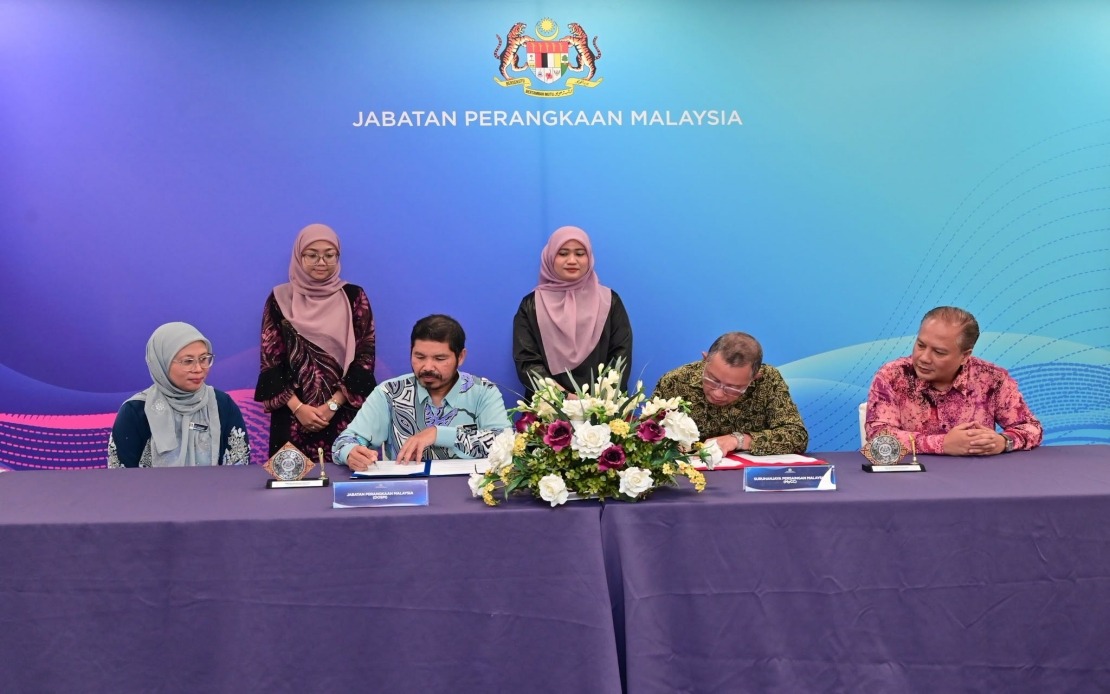
The Malaysia Competition Commission and the Department of Statistics Malaysia have forged a strategic partnership designed to leverage the country's statistical capabilities and competition expertise in tandem, signalling a shift towards data-driven regulatory oversight. Tan Sri Idrus Harun, MyCC chairman, and Datuk Seri Dr Mohd Uzir Mahidin, Malaysia's Chief Statistician, inked the memorandum of understanding at DOSM headquarters in Putrajaya, with the signing witnessed by senior officials from both agencies including MyCC chief executive officer Datuk Iskandar Ismail.
The collaborative framework represents a deliberate move to embed quantitative analysis into competition enforcement at a time when policymakers globally recognize data as a fundamental economic resource. Rather than operating in silos, the two agencies now commit to pooling administrative records, economic datasets and technical knowledge to construct a more sophisticated understanding of market dynamics across Malaysia's diverse economic sectors. This integration proves particularly timely given the increasing complexity of modern supply chains and the emergence of digital markets that require real-time monitoring capabilities.
Under the agreement, both organizations will establish mechanisms for continuous data exchange covering administrative information and related economic indicators. This reciprocal access enables MyCC to examine market structures, competitive pressures and pricing trends with greater precision, while allowing DOSM to incorporate competition-related insights into its broader economic analysis frameworks. The partnership effectively creates a shared institutional memory around sectoral developments, allowing both bodies to identify emerging competition concerns more rapidly and respond with better-informed policy recommendations.
Capacity building constitutes a substantial pillar of the cooperation, with structured programmes for training, expertise exchanges and knowledge-sharing initiatives binding the agencies together. Staff from MyCC gain exposure to advanced statistical methodologies and data management practices, whilst DOSM personnel develop competency in competition economics and market analysis techniques. This reciprocal investment in human capital strengthens institutional capabilities across the competition and statistics ecosystem, reducing Malaysia's dependence on external expertise for complex economic investigations.
Mohd Uzir emphasized that the collaboration extends beyond passive data sharing into active joint monitoring of strategically significant economic sectors and the effectiveness of government policies themselves. By combining MyCC's competition lens with DOSM's statistical rigor, the partnership can evaluate whether policy interventions achieve intended outcomes and whether competitive conditions remain healthy across food, energy, logistics, telecommunications and other critical sectors. This monitoring function provides government with real-time feedback on whether its economic strategies are working as designed.
For Malaysian businesses and consumers, the arrangement holds tangible implications. Enhanced competition oversight grounded in reliable data reduces the likelihood that cartels or anti-competitive conduct persist undetected, whilst greater transparency around pricing factors and supply chain dynamics builds market confidence. Small and medium enterprises operating across regulated or concentrated sectors benefit from more consistent enforcement standards, whilst consumers gain protection against predatory pricing or market manipulation backed by sophisticated economic evidence rather than anecdotal complaints.
The initiative reflects broader international trends wherein competition authorities increasingly recognize that data analytics and statistical modelling provide crucial investigative tools. Jurisdictions from the European Union to Singapore have substantially upgraded their data capabilities to detect collusion, abuse of dominance and merger risks more effectively. Malaysia's partnership demonstrates domestic regulatory institutions positioning themselves alongside global best practices, recognizing that competing in the regional and global economy requires competition frameworks grounded in empirical rigor.
Mohd Uzir's statement underscored that improved market structure analysis and supply chain transparency emerge as concrete deliverables from the collaboration. By jointly examining how materials and goods flow through Malaysia's economy, both agencies can identify bottlenecks, concentration points and pricing pressures that merit investigation. This deeper comprehension of market architecture enables more targeted interventions that address root causes rather than symptoms, ultimately supporting more resilient and efficient economic functioning.
The partnership also signals commitment to safeguarding consumer and business interests through institutional mechanisms that embed competition principles into economic governance more broadly. Rather than relegating competition matters to enforcement actions alone, the MoU positions fair competition as a foundational consideration informing how government evaluates policies, reviews statistical outputs and monitors economic performance. This mainstreaming of competition thinking across statistical and regulatory institutions represents a philosophical shift towards treating market contestability as integral to economic health and inclusive growth.
Looking forward, the collaboration potentially serves as a template for deeper integration between other Malaysian government agencies managing related economic mandates. Finance, trade, investment, technology and consumer protection bodies each generate data and insights relevant to competition dynamics, yet coordination mechanisms remain underdeveloped. The MyCC-DOSM partnership demonstrates that formal institutional arrangements can overcome operational silos and enable public agencies to function as a more coherent ecosystem supporting competitive markets. This approach ultimately enhances government's capacity to navigate complex economic challenges whilst protecting Malaysia's competitive positioning within Southeast Asia's increasingly interconnected digital and physical economies.

%22%2F%3E%3C%2Fpattern%3E%3C%2Fdefs%3E%3Crect%20width%3D%22100%25%22%20height%3D%22100%25%22%20fill%3D%22url(%23ph2hy9vg)%22%2F%3E%3Crect%20width%3D%22100%25%22%20height%3D%22100%25%22%20fill%3D%22url(%23ph2hy9vp)%22%2F%3E%3Ctext%20x%3D%2250%25%22%20y%3D%2250%25%22%20text-anchor%3D%22middle%22%20dominant-baseline%3D%22central%22%20fill%3D%22rgba(255%2C255%2C255%2C0.95)%22%20font-family%3D%22Georgia%2C%20'Times%20New%20Roman'%2C%20serif%22%20font-weight%3D%22700%22%20font-size%3D%22272%22%20letter-spacing%3D%22-0.02em%22%3EAnwar%3C%2Ftext%3E%3C%2Fsvg%3E)