Malaysia's Queen, Raja Zarith Sofiah, has underscored the pivotal role that mutual respect plays in sustaining the nation's social cohesion and collective well-being. Speaking through a statement posted on Sultan Ibrahim Sultan Iskandar's official Facebook page on June 19, Her Majesty drew attention to how respect for one another has long been woven into the fabric of Malaysian society, serving as a unifying force that transcends cultural and religious boundaries.
The Queen's remarks come at a time when societies worldwide grapple with polarisation and social fragmentation. Her emphasis on mutual respect resonates particularly in a multi-ethnic, multi-religious nation like Malaysia, where harmonious coexistence depends on citizens acknowledging and valuing the dignity of those from different backgrounds. By framing respect as a foundational value rather than merely a courtesy, the Queen positioned it as essential infrastructure for maintaining national stability and fostering genuine unity among Malaysians of all communities.
To anchor her message in spiritual and moral authority, Raja Zarith Sofiah referenced Islamic teachings, specifically drawing upon a hadith recorded by Al-Bukhari. The statement conveyed the words of Prophet Muhammad as narrated by Abu Hurairah, emphasising three interconnected principles: that believers should refrain from harming their neighbours, should extend honour to guests, and should either communicate with kindness or maintain silence. This particular hadith, which has resonated across Islamic scholarship for centuries, encapsulates a comprehensive approach to interpersonal conduct that extends beyond Muslims to encompass universal principles of neighbourliness and civil discourse.
The Queen's invocation of Islamic teachings carried particular significance as she specifically addressed Muslims in Malaysia, encouraging them to reflect on these principles. By grounding her message in religious text, she lent theological weight to the secular concept of mutual respect, demonstrating how spiritual traditions and social harmony reinforce one another. This approach acknowledges the central role Islam plays in Malaysian public life while promoting values that transcend religious identity and appeal to the nation's broader commitment to peaceful coexistence.
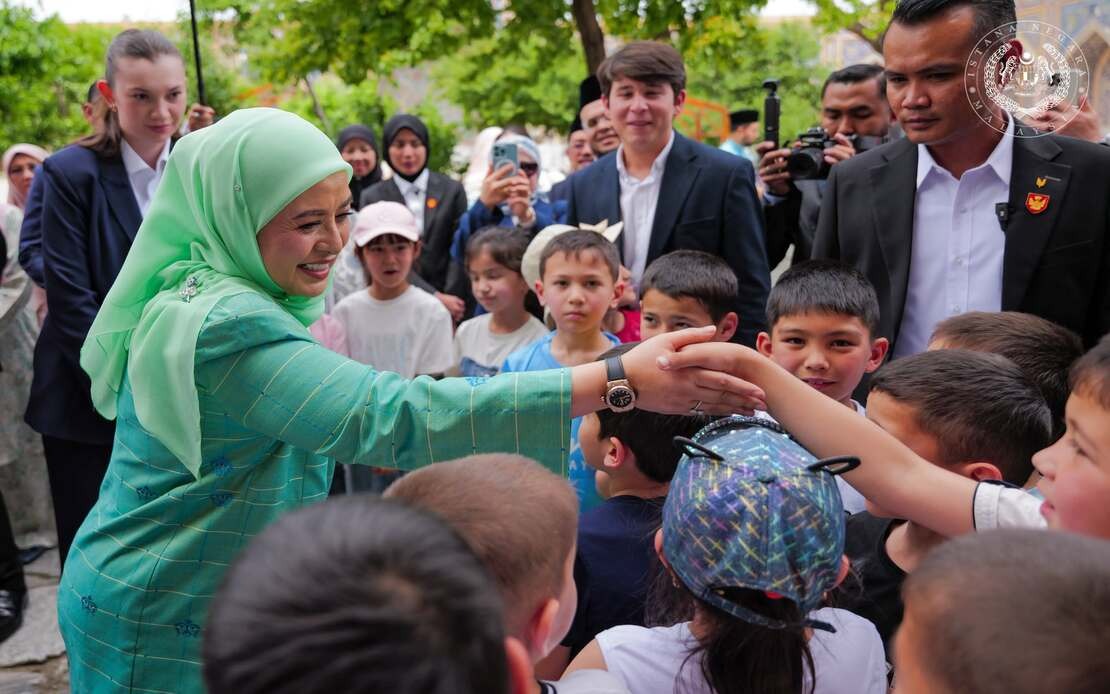
The statement further illustrated Her Majesty's commitment to these ideals through a concrete example of gracious conduct. In February, the Queen engaged warmly and directly with more than 100 tourists representing various nationalities who visited the main entrance of Istana Negara. Rather than remaining distant from visitors, she chose personal interaction, demonstrating through her actions the very respect and courteous engagement she was advocating. This hands-on approach to statecraft modelled the behaviour she was encouraging among ordinary Malaysians.
The significance of this engagement extends beyond mere protocol. By actively welcoming international visitors at the royal palace, the Queen sent a message about Malaysia's openness and the value the nation places on cross-cultural dialogue. For tourists encountering Malaysia through such interactions, the experience likely reinforced positive perceptions of the country and its people. In an era when perceptions of nations significantly influence tourism, investment, and diplomatic relationships, such gestures have measurable consequences for Malaysia's international standing.
The Queen's statement also implicitly addressed the challenges of maintaining social harmony in an increasingly interconnected world. Contemporary Malaysia faces pressures from global polarisation, competing ideologies, and tensions that can easily be amplified through social media. By emphasising time-honoured values of mutual respect, Her Majesty offered an antidote to divisiveness—a reminder that Malaysians possess indigenous frameworks for managing diversity that predate modern conflict. This grounding in historical practice lends credibility to calls for respect and unity.
Furthermore, the timing of the Queen's remarks reflected an awareness of contemporary social dynamics. The statement stressed the importance of practicing courteous behaviour both domestically and internationally, acknowledging that Malaysia's harmony depends not only on internal relations but also on how Malaysians represent their nation abroad and how they welcome outsiders at home. This dual focus recognises that in a globalised world, national identity and international reputation are interconnected.
The Queen's emphasis on respect carries implications for Malaysian governance and civic life more broadly. When the nation's highest-ranking female figure articulates respect as a foundational value, she legitimises it as a priority for institutional behaviour and public policy. Government agencies, educational institutions, and corporate entities might interpret such messaging as a cue to embed respect-focused approaches into their operations, from customer service to conflict resolution mechanisms.
The message also serves as a counterpoint to occasional reports of communal tensions or inflammatory rhetoric that periodically surface in Malaysian public discourse. By asserting that mutual respect has always been central to Malaysian identity, the Queen reframes such incidents as departures from established norms rather than emergent problems, potentially encouraging Malaysians to see reconciliation and return to respectful engagement as natural and achievable.
For Southeast Asia more broadly, the Queen's statement carries relevance beyond Malaysia's borders. Regional stability depends significantly on mutual respect among nations, and cultural respect within diverse societies. As the region navigates complex geopolitical transitions and economic interdependencies, such reminders of shared values become increasingly important. Malaysia, as a respected regional voice on interfaith and intercultural matters, projects influence through such articulations of harmony-centred principles.
The invocation of classical Islamic jurisprudence alongside contemporary civic conduct also demonstrates how traditional knowledge systems remain applicable to modern challenges. Rather than treating respect and harmony as recent inventions or Western imports, the Queen positioned them as time-tested Malaysian and Islamic values, grounding contemporary appeals to unity in historical authenticity. This rhetorical move strengthens the persuasive power of her message, particularly among communities who value cultural and religious continuity.

%22%2F%3E%3C%2Fpattern%3E%3C%2Fdefs%3E%3Crect%20width%3D%22100%25%22%20height%3D%22100%25%22%20fill%3D%22url(%23ph2hy9vg)%22%2F%3E%3Crect%20width%3D%22100%25%22%20height%3D%22100%25%22%20fill%3D%22url(%23ph2hy9vp)%22%2F%3E%3Ctext%20x%3D%2250%25%22%20y%3D%2250%25%22%20text-anchor%3D%22middle%22%20dominant-baseline%3D%22central%22%20fill%3D%22rgba(255%2C255%2C255%2C0.95)%22%20font-family%3D%22Georgia%2C%20'Times%20New%20Roman'%2C%20serif%22%20font-weight%3D%22700%22%20font-size%3D%22272%22%20letter-spacing%3D%22-0.02em%22%3EAnwar%3C%2Ftext%3E%3C%2Fsvg%3E)