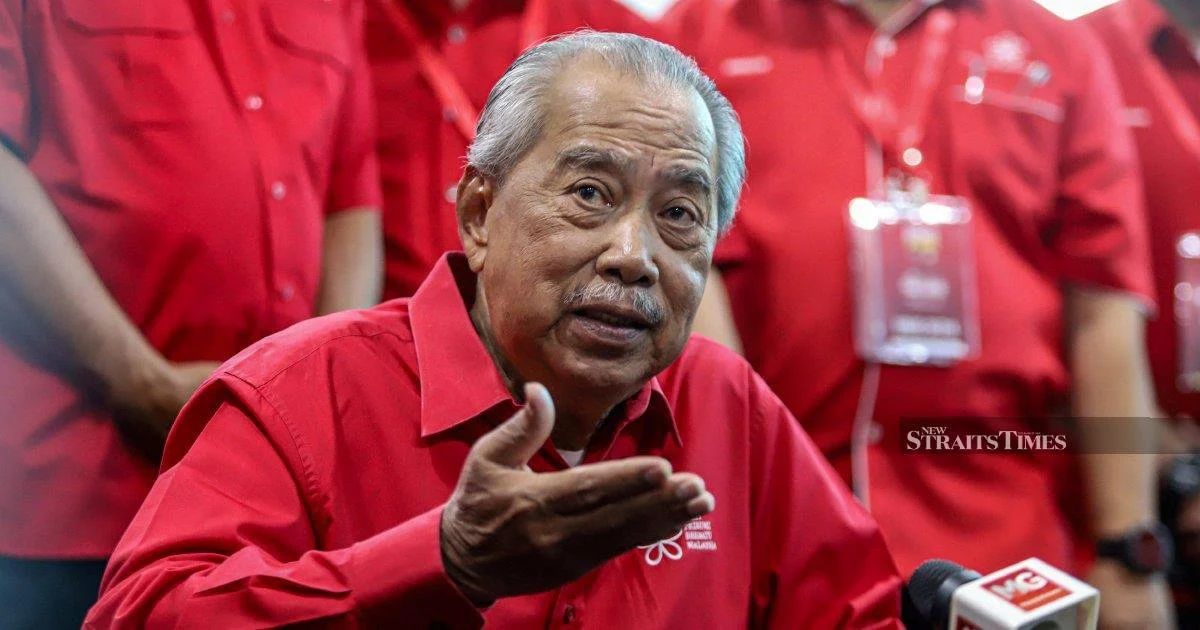
Tan Sri Muhyiddin Yassin, leading the Bersatu party, has moved to settle persistent questions about Perikatan Nasional's durability by announcing that his organisation intends to maintain its alignment with the coalition on a permanent footing. The declaration comes amid an intensifying climate of speculation regarding potential shifts in Malaysia's fractious political landscape, where coalition dynamics have proven notoriously unpredictable.
Muhyiddin's forthright statement addresses what has become an increasingly common refrain among political observers: will Bersatu eventually pivot toward different partnerships or abandon the PN structure altogether? By employing unambiguous language about permanence, the Bersatu chief has attempted to inject certainty into discussions that typically characterise Malaysian coalition politics. Such emphatic reassurances, however, often signal underlying anxieties about stability rather than resolve deeper concerns.
The Perikatan Nasional coalition, which emerged as a significant political force in recent years, comprises multiple parties with sometimes divergent interests and rival leaders. Bersatu's position within this structure remains strategically important given its considerable parliamentary representation and influence, particularly in certain state governments. The coalition's ability to maintain cohesion directly affects its viability as a counterbalance to other major political groupings in the national arena.
Muhyiddin's commitment reflects calculations about Bersatu's political interests. The party has invested substantially in PN's framework, and any departure would necessitate finding alternative political homes—a potentially risky undertaking in Malaysia's competitive environment where party-hopping frequently attracts electoral backlash from voters concerned about principled governance. Remaining within PN, despite its challenges, may therefore represent a pragmatic choice.
Yet political pledges of permanence in Malaysian politics warrant scrutiny. Historical precedent suggests that coalition relationships often prove fluid, with actors repositioning themselves in response to electoral results, leadership disputes, or shifts in electoral advantage. The very act of issuing such reassurances can paradoxically indicate fragility, suggesting that leadership felt compelled to counter doubts circulating within party ranks or among external observers.
The coalition's broader vulnerability stems from the persistent competition among its constituent parties for prominence and political resources. PAS, which holds significant influence within PN's structure, maintains its own strategic calculations about partnership durability. Any recalibration of PAS's political positioning could create cascading effects throughout the coalition. Similarly, smaller parties within PN often evaluate their participation against potential benefits from alternative alignments.
For Malaysian politics more generally, coalition stability matters considerably. The country has experienced multiple shifts in government and coalition composition over the past five years, creating voter uncertainty and institutional instability. Parties that can project consistency about partnership arrangements contribute, however marginally, to predictability. Conversely, coalition volatility undermines governance continuity and complicates long-term policy development.
Bersatu's particular circumstances warrant consideration. The party has experienced internal tensions, including leadership disputes and membership fluctuations. Muhyiddin's reassurance about PN commitment may partly address anxieties among party members concerned about Bersatu's trajectory and future electoral viability. For grassroots supporters and state-level structures, clarity about coalition direction provides operational guidance for organising and campaign preparation.
Regionally, Malaysia's coalition dynamics have implications extending beyond domestic political theatre. Investors, international observers, and neighbouring governments monitor governmental stability as an indicator of policy consistency and institutional strength. Coalition realignments occasionally trigger concerns about continuity in foreign policy, economic management, or security arrangements. Declarations supporting coalition coherence, therefore, serve diplomatic purposes alongside domestic political functions.
The timing of Muhyiddin's statement merits consideration given Malaysia's evolving political calendar. State elections and potential parliamentary developments could reshape the relative positioning of coalition members. By establishing clear rhetoric about permanent commitment now, Bersatu's leadership may be attempting to preempt speculation that could otherwise accelerate if upcoming electoral contests produce unexpected results.
Nonetheless, observers should distinguish between stated intentions and actual political behaviour. Malaysian politicians across multiple parties have issued comparable permanence declarations that did not survive subsequent developments. The distinction between rhetorical commitment and practical durability often becomes apparent only when circumstances change materially or when immediate political pressures shift participants' calculations.
Ultimately, Muhyiddin's assertion represents a current positioning statement rather than an immutable commitment. Political partnerships in Malaysia remain conditional arrangements shaped by evolving circumstances, electoral performance, and leadership interests. Bersatu's presence within PN may prove durable, but this will depend upon whether mutual benefits continue accruing to coalition participants—a proposition that remains contingent rather than guaranteed.

%22%2F%3E%3C%2Fpattern%3E%3C%2Fdefs%3E%3Crect%20width%3D%22100%25%22%20height%3D%22100%25%22%20fill%3D%22url(%23ph16ar0g)%22%2F%3E%3Crect%20width%3D%22100%25%22%20height%3D%22100%25%22%20fill%3D%22url(%23ph16ar0p)%22%2F%3E%3Ctext%20x%3D%2250%25%22%20y%3D%2250%25%22%20text-anchor%3D%22middle%22%20dominant-baseline%3D%22central%22%20fill%3D%22rgba(255%2C255%2C255%2C0.95)%22%20font-family%3D%22Georgia%2C%20'Times%20New%20Roman'%2C%20serif%22%20font-weight%3D%22700%22%20font-size%3D%22151%22%20letter-spacing%3D%22-0.02em%22%3EBezzecchi%3C%2Ftext%3E%3C%2Fsvg%3E)