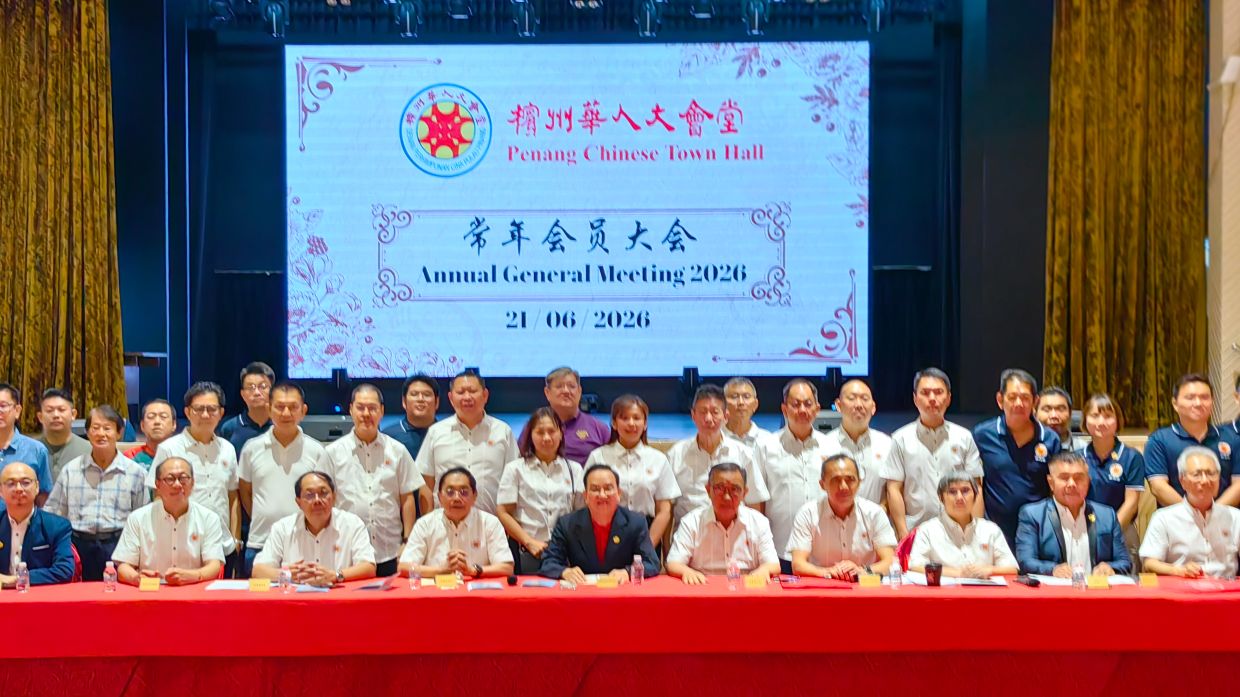
Penang Chinese Town Hall has concluded its 2025 financial year with modest but stable performance, recording total income of RM12.61mil against operating costs of RM12.55mil, yielding a surplus of RM59,191. The results, presented at the organisation's annual general meeting on June 21 attended by roughly 200 members, reflect steady operations across the community institution's diverse activities and revenue streams.
Donations form the financial backbone of the organization, contributing RM11.24mil or approximately 89% of total income, while secondary revenue sources reveal the organization's multipurpose role within Penang's Chinese community. Rental and maintenance fees generated RM439,671, auditorium rental brought in RM361,245, and anniversary-related events yielded RM222,498. This diversified income profile demonstrates how cultural and community institutions have adapted their business models to maintain financial viability beyond traditional patronage.
On the expenditure side, the organization similarly concentrated spending on donations to community causes and beneficiaries, allocating RM11.12mil or 88.6% of total disbursements for charitable purposes. This figure declined from RM12.35mil in the previous year, suggesting either more selective allocation of charitable resources or changes in community needs assessment. However, operational costs showed inflationary pressures, with salaries and allowances climbing to RM502,625 from RM452,761 in 2024, reflecting the rising cost of maintaining professional staff and administrative operations.
Chairman Tan Sri Prof Tan Khoon Hai used the annual gathering as an opportunity to address broader civic concerns, particularly ahead of state elections scheduled for Johor and Negri Sembilan. His remarks emphasized the responsibility of voters to engage thoughtfully with electoral processes, urging members to evaluate candidates and party platforms based on rational assessment of performance records and policy proposals. His message transcended immediate local elections, framing voting as a fundamental mechanism through which citizens shape national development trajectories and institutional stability.
The emphasis on civic participation reflects growing discourse within Malaysia's civil society about quality of governance and informed electoral engagement. By connecting community organization leadership to public affairs awareness, Tan positioned PCTH not merely as a cultural venue but as an institution concerned with the broader health of democratic processes. His call for voters to prioritize candidates capable of promoting unity, driving economic expansion, and maintaining social cohesion speaks to anxieties about fragmentation and the need for stabilizing leadership across Malaysia's diverse political landscape.
A significant infrastructure development featured prominently in proceedings: the newly renovated Ping Zhang Hall represents a substantial capital investment in the organization's physical assets. The upgraded facility now incorporates professional-grade sound, lighting, and LED systems, alongside enhanced spatial comfort and contemporary design standards. This modernization positions the venue competitively within Penang's events market, enabling PCTH to attract corporate dinners, association celebrations, anniversary functions, and charitable gatherings that generate rental income while serving community purposes.
Beyond venue improvements, PCTH's leadership announced an ambitious initiative linking the organization to regional technological development. The organization will jointly organize the 2026 China-Asean Artificial Intelligence Cooperation Forum, scheduled for November in Penang, partnering with business and technology entities from China and across Southeast Asia. This positioning reflects deliberate strategy to align PCTH with forward-looking technological trends and regional cooperation frameworks.
Penang's historical identity as the Silicon Valley of the East and its established concentration of electrical and electronics manufacturing provide tangible foundations for the AI initiative. The state has accumulated decades of expertise, infrastructure, and talent in technology-intensive industries, creating genuine competitive advantages for hosting high-level discussions about artificial intelligence applications and cross-border collaboration. The forum concept positions Penang not as a passive recipient of technological spillovers but as an active intellectual hub capable of convening regional experts and industry leaders.
Tan articulated the forum's scope as encompassing cutting-edge AI technologies, practical industrial applications, and cross-border cooperation mechanisms. By framing the event as a platform for technological exchange and business development rather than purely academic discussion, organizers signal intent to generate concrete partnerships and investment opportunities. The invitation extended to PCTH members with relevant expertise to participate reflects understanding that success depends on mobilizing local human capital and facilitating networking among participants.
The announcement carries implications extending well beyond PCTH's immediate institutional interests. Organizations rooted in Malaysia's Chinese communities have historically served economic and social functions beyond their explicit cultural mandates. By leveraging its community networks, venue facilities, and convening capacity to host a China-Asean AI forum, PCTH demonstrates how such institutions can evolve to address contemporary strategic priorities. Regional cooperation in artificial intelligence remains underdeveloped relative to its economic importance, particularly regarding practical applications in manufacturing, logistics, and services sectors where Southeast Asian economies compete globally.
The timing of PCTH's expansion into AI cooperation reflects broader Malaysian and Southeast Asian positioning within global technological competition. As developed economies intensify AI capabilities and competition for regional influence, Southeast Asian nations including Malaysia face pressure to develop coherent strategies for technological development and industrial application. Penang's established electronics sector provides natural advantages, but realizing them requires platforms for knowledge sharing, policy coordination, and business networking across national boundaries.
Looking ahead, PCTH's financial stability, improved facilities, and regional technological ambitions position the organization as more than a traditional community hall. The organization's ability to maintain balanced finances while investing in infrastructure and planning significant regional events demonstrates institutional resilience and forward-thinking leadership. For Malaysian observers monitoring developments in community organizations, technological positioning, and Asean cooperation, PCTH's trajectory offers instructive lessons about how culturally rooted institutions can adapt to contemporary economic and technological imperatives while maintaining community focus.
The modest RM59,191 surplus from 2025 operations, though numerically small, represents successful stewardship of community resources during economically complex times. Combined with infrastructure modernization and announced regional initiatives, PCTH's recent developments suggest an organization positioning itself as a bridge between traditional community functions and emerging regional technological cooperation frameworks—a positioning increasingly valuable as Southeast Asia navigates artificial intelligence's transformative potential.
%22%2F%3E%3C%2Fpattern%3E%3C%2Fdefs%3E%3Crect%20width%3D%22100%25%22%20height%3D%22100%25%22%20fill%3D%22url(%23ph4kz1yg)%22%2F%3E%3Crect%20width%3D%22100%25%22%20height%3D%22100%25%22%20fill%3D%22url(%23ph4kz1yp)%22%2F%3E%3Ctext%20x%3D%2250%25%22%20y%3D%2250%25%22%20text-anchor%3D%22middle%22%20dominant-baseline%3D%22central%22%20fill%3D%22rgba(255%2C255%2C255%2C0.95)%22%20font-family%3D%22Georgia%2C%20'Times%20New%20Roman'%2C%20serif%22%20font-weight%3D%22700%22%20font-size%3D%22320%22%20letter-spacing%3D%22-0.02em%22%3EIran%3C%2Ftext%3E%3C%2Fsvg%3E)
%22%2F%3E%3C%2Fpattern%3E%3C%2Fdefs%3E%3Crect%20width%3D%22100%25%22%20height%3D%22100%25%22%20fill%3D%22url(%23ph4ir7ag)%22%2F%3E%3Crect%20width%3D%22100%25%22%20height%3D%22100%25%22%20fill%3D%22url(%23ph4ir7ap)%22%2F%3E%3Ctext%20x%3D%2250%25%22%20y%3D%2250%25%22%20text-anchor%3D%22middle%22%20dominant-baseline%3D%22central%22%20fill%3D%22rgba(255%2C255%2C255%2C0.95)%22%20font-family%3D%22Georgia%2C%20'Times%20New%20Roman'%2C%20serif%22%20font-weight%3D%22700%22%20font-size%3D%22272%22%20letter-spacing%3D%22-0.02em%22%3ETrump%3C%2Ftext%3E%3C%2Fsvg%3E)
%22%2F%3E%3C%2Fpattern%3E%3C%2Fdefs%3E%3Crect%20width%3D%22100%25%22%20height%3D%22100%25%22%20fill%3D%22url(%23ph4qq4yg)%22%2F%3E%3Crect%20width%3D%22100%25%22%20height%3D%22100%25%22%20fill%3D%22url(%23ph4qq4yp)%22%2F%3E%3Ctext%20x%3D%2250%25%22%20y%3D%2250%25%22%20text-anchor%3D%22middle%22%20dominant-baseline%3D%22central%22%20fill%3D%22rgba(255%2C255%2C255%2C0.95)%22%20font-family%3D%22Georgia%2C%20'Times%20New%20Roman'%2C%20serif%22%20font-weight%3D%22700%22%20font-size%3D%22320%22%20letter-spacing%3D%22-0.02em%22%3EIran%3C%2Ftext%3E%3C%2Fsvg%3E)