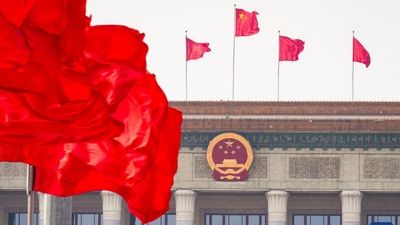
China's top anti-corruption watchdog has initiated a formal investigation into Zhu Changjie, the former vice-chairman of the Xinjiang Uygur Autonomous Region, over allegations of serious violations of Communist Party discipline and breaches of national law. The announcement came from the Central Commission for Discipline Inspection and the National Commission of Supervision on Saturday, signalling another significant development in Beijing's sustained campaign against official misconduct across its provinces and autonomous regions.
Zhu, now 69 years old, represents a significant figure in Xinjiang's administrative apparatus over the past four decades. Born in Dongming county within Heze, Shandong province, he pursued agronomy as his primary field of study and formally joined the Communist Party of China in 1985. His career trajectory spans multiple decades of service within state institutions, beginning in 1976 and carrying him through numerous positions within Xinjiang's local government structure.
Throughout his professional trajectory, Zhu accumulated considerable influence across multiple administrative jurisdictions within the autonomous region. His early assignments included roles in the Bayingolin Mongol Autonomous Prefecture and Aksu Prefecture, where he built experience in regional governance. These positions provided him with deep institutional knowledge of Xinjiang's political and administrative landscape, positioning him for more senior roles within the regional hierarchy.
His most prominent appointment came when he assumed leadership of Xinjiang's regional public security department, a position he held throughout the nine-year period from 2009 to 2017. Control of the security apparatus in any Chinese province carries substantial authority and responsibility, particularly in a region as strategically significant as Xinjiang. Simultaneously, from 2011 onwards, Zhu also served as vice-chairman of the Xinjiang regional government, maintaining this dual role until 2018, allowing him to wield considerable influence across both security and broader administrative matters.
The investigation into Zhu reflects the continuing vigour of China's anti-corruption machinery under the central leadership's direction. The dual involvement of both the Party's internal discipline commission and the state supervision authority indicates the seriousness with which the allegations are being treated. Such coordinated investigations typically suggest concerns spanning both Party conduct standards and potential criminal violations under national law, though the authorities have released no additional details regarding the specific nature of the alleged breaches.
Zhu's case carries particular significance given his long tenure in Xinjiang's public security apparatus. The region has been at the centre of considerable international scrutiny regarding governance practices and security operations, making any investigation into senior security officials subject to heightened attention both domestically and globally. His years directing the public security department during a period of intensified security measures place him at the intersection of policy implementation and potential accountability concerns.
The timing and scope of anti-corruption investigations in China often reflect broader patterns within the central government's priorities. High-level cases involving provincial and autonomous region officials typically indicate sustained efforts to consolidate discipline within regional administrations and reinforce the supremacy of central authority. Zhu's investigation continues this established pattern of holding senior regional figures accountable for alleged deviations from Party standards.
For observers tracking governance developments across western China, Zhu's case exemplifies ongoing institutional accountability mechanisms at work within the Chinese state system. The investigation demonstrates that even officials who have completed their tenure and transitioned from active service remain subject to scrutiny if allegations of misconduct emerge. This retroactive accountability approach reflects the Communist Party's institutional memory and its willingness to pursue historical cases alongside contemporary ones.
The absence of detailed public information regarding specific allegations is typical of early-stage investigations under Chinese procedure. Typically, comprehensive details emerge only when cases reach formal adjudication stages or when authorities determine that broader public disclosure serves institutional or deterrent purposes. The current announcement serves primarily as formal notification of the investigation's initiation rather than a comprehensive accounting of alleged violations.
Zhu's investigation also underscores the importance of scrutiny within China's internal security establishment. Regional security apparatus leaders occupy sensitive positions overseeing law enforcement, intelligence, and security operations that demand exceptional integrity and adherence to Party directives. Any deviation from these standards potentially undermines the Party's governance model and invites corrective intervention from central authorities.
The implications for Xinjiang's administrative continuity appear limited, as Zhu has been separated from active duty for several years. His roles have likely been assumed by successors, and the investigation's focus appears concentrated on historical conduct rather than disrupting current operations. Nevertheless, the case reinforces broader patterns of institutional accountability that ripple through regional administrations whenever senior figures face formal investigation.
As China continues emphasizing anti-corruption as a central governance priority, cases involving former officials like Zhu maintain symbolic significance for demonstrating the regime's commitment to party discipline. The investigation signals that historical positions and seniority offer no protection from accountability mechanisms, a message likely intended for both current officials and the broader bureaucratic establishment across China's administrative hierarchy.
%22%2F%3E%3C%2Fpattern%3E%3C%2Fdefs%3E%3Crect%20width%3D%22100%25%22%20height%3D%22100%25%22%20fill%3D%22url(%23ph16ar0g)%22%2F%3E%3Crect%20width%3D%22100%25%22%20height%3D%22100%25%22%20fill%3D%22url(%23ph16ar0p)%22%2F%3E%3Ctext%20x%3D%2250%25%22%20y%3D%2250%25%22%20text-anchor%3D%22middle%22%20dominant-baseline%3D%22central%22%20fill%3D%22rgba(255%2C255%2C255%2C0.95)%22%20font-family%3D%22Georgia%2C%20'Times%20New%20Roman'%2C%20serif%22%20font-weight%3D%22700%22%20font-size%3D%22151%22%20letter-spacing%3D%22-0.02em%22%3EBezzecchi%3C%2Ftext%3E%3C%2Fsvg%3E)
%22%2F%3E%3C%2Fpattern%3E%3C%2Fdefs%3E%3Crect%20width%3D%22100%25%22%20height%3D%22100%25%22%20fill%3D%22url(%23ph2mp32g)%22%2F%3E%3Crect%20width%3D%22100%25%22%20height%3D%22100%25%22%20fill%3D%22url(%23ph2mp32p)%22%2F%3E%3Ctext%20x%3D%2250%25%22%20y%3D%2250%25%22%20text-anchor%3D%22middle%22%20dominant-baseline%3D%22central%22%20fill%3D%22rgba(255%2C255%2C255%2C0.95)%22%20font-family%3D%22Georgia%2C%20'Times%20New%20Roman'%2C%20serif%22%20font-weight%3D%22700%22%20font-size%3D%22226%22%20letter-spacing%3D%22-0.02em%22%3EPenang%3C%2Ftext%3E%3C%2Fsvg%3E)