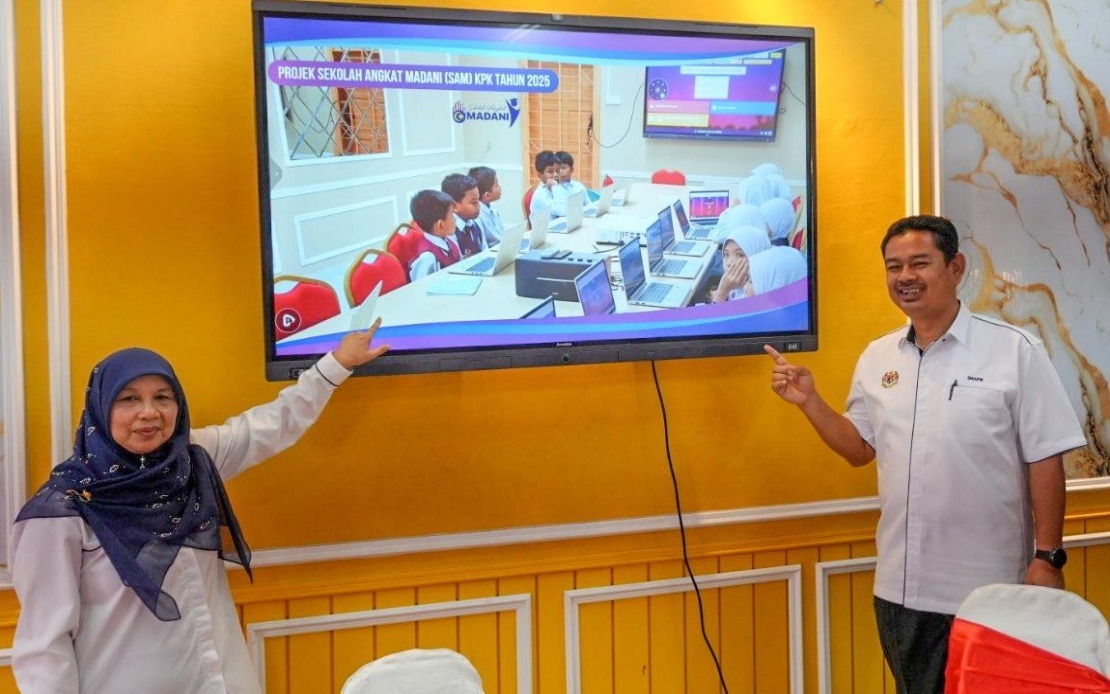
The Ministry of Plantation and Commodities has dedicated RM100,000 towards a comprehensive modernisation programme at Sekolah Kebangsaan Bendang Kering in Kuala Kangsar, Perak, marking an expansion of government efforts to elevate educational standards in rural communities. The financial injection, formalised through a handover ceremony conducted by the ministry's deputy secretary-general for Strategic Planning and Management, Shafie Taib, represents part of a broader school adoption scheme designed to bridge infrastructure gaps between urban and rural learning environments.
The Malaysian Rubber Board has been designated as the implementing agency for this educational initiative, working in coordination with the Ministry of Plantation and Commodities to oversee the deployment of allocated resources. This partnership reflects a strategic approach to channelling sectoral expertise towards national educational development, positioning the adoption scheme as a tangible manifestation of government commitment to human capital expansion across Malaysia's diverse geographic regions.
Physical infrastructure improvements at SK Bendang Kering have already commenced, with the RM100,000 allocation directed towards upgrading the school's assembly area and main hall—spaces essential for student gatherings, assemblies, and community events. Simultaneously, the ministry has prioritised learning spaces by establishing dedicated reading corners and refurbishing preschool classrooms, recognising that foundational early-year education requires appropriately designed and resourced environments to maximise developmental outcomes.
Technology integration has emerged as a cornerstone of the modernisation effort, with interactive smartboards installed across teaching spaces to facilitate more engaging and dynamic instruction. These tools enable educators to move beyond conventional chalk-and-talk pedagogies, allowing for multimedia presentations, real-time student interaction, and access to digital learning resources that reflect contemporary educational best practices increasingly common in urban schools.
Complementary facility enhancements include the installation of air conditioning units throughout the school, a practical investment that addresses tropical climate challenges affecting concentration and comfort during Malaysia's humid months. Educational signage has been strategically deployed to support campus navigation and reinforce learning messages, whilst new classroom furniture has replaced worn fixtures, creating a more conducive physical environment for sustained academic engagement.
Beyond infrastructure, the adoption scheme introduces a comprehensive academic improvement framework centred on four critical subject areas: Malay, English, Science, and Mathematics. This targeted approach recognises these disciplines as foundational to student competitiveness in examinations and future employment pathways, with incentive structures built in to recognise and reward exceptional academic achievement.
The initiative extends into character and leadership development through structured programmes including the Student Leadership Motivation Camp and the Student Talent Development Camp. These initiatives reflect growing recognition within Malaysian educational policy that academic credentials alone prove insufficient; schools must cultivate resilience, interpersonal skills, and civic consciousness alongside subject mastery to prepare students for increasingly complex professional and social environments.
Official statements emphasise that SK Bendang Kering's selection under this adoption programme demonstrates governmental resolve to ensure rural students access educational quality comparable to their urban counterparts. This framing addresses a persistent concern within Malaysian education discourse: the perception that resource constraints and geographic remoteness disadvantage rural learners, perpetuating achievement gaps that carry lifelong economic consequences.
The programme design suggests awareness that educational equity requires more than financial transfer; it demands deliberate infrastructure investment, technological modernisation, and pedagogical enhancement supported by targeted student motivation schemes. By combining facility upgrades with academic incentives and leadership development, the scheme attempts to create holistic improvement rather than piecemeal interventions.
For rural Perak communities, the initiative offers tangible benefits extending beyond individual student outcomes. Improved school facilities typically increase community engagement with educational institutions, potentially strengthening social cohesion and parental investment in their children's academic progress. Schools functioning as functional community hubs become vehicles for broader rural development.
The adoption scheme's emphasis on producing "a knowledgeable, skilled, and competitive generation" reflects Malaysia's ongoing aspirations within the upper-middle-income education ladder, where human capital development represents a strategic economic imperative. Rural areas possess significant demographic potential that remains underutilised if educational infrastructure and opportunity gaps persist.
Looking forward, the success of SK Bendang Kering's transformation may serve as a replicable model for other rural institutions seeking similar support, potentially expanding the adoption scheme's footprint across Malaysian states. Monitoring student performance trajectories before and after the intervention will provide empirical evidence regarding the effectiveness of this integrated approach to rural educational enhancement, information valuable for policymakers designing future rural development initiatives.