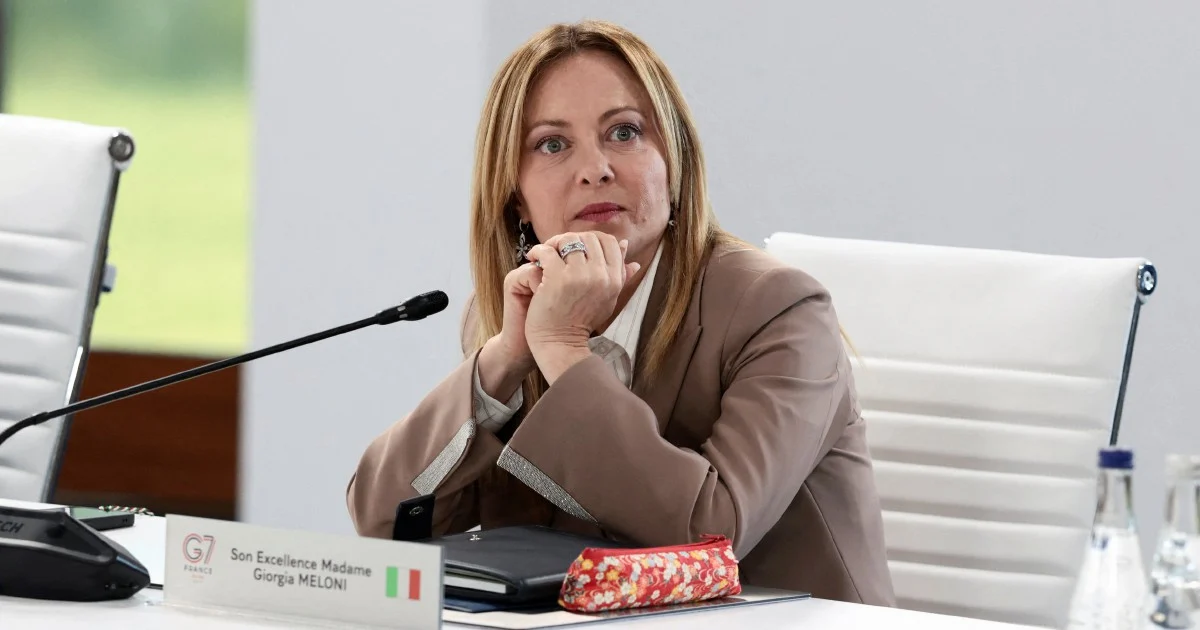
The trajectory of Italian Prime Minister Giorgia Meloni's relationship with Donald Trump tells a remarkable story of political realignment in Europe. When Trump was inaugurated for his second presidential term in 2025, Meloni stood alone among European leaders in receiving a personal invitation to Washington, signalling what many observers believed would usher in an unprecedented period of warmth and collaboration between the United States and Italy. That display of presidential favour appeared to validate months of careful diplomatic positioning by Rome and suggested a fundamental recalibration of transatlantic ties under Trump's return to power.
Yet the honeymoon has proven startlingly brief. The Italian premier, who had cultivated an image as a reliable Trump confidante capable of bridging European and American interests, has increasingly adopted a more adversarial public posture toward the American president. What began as subtle disagreements has escalated into open criticism across key policy areas, forcing European observers to reconsider the nature and durability of the Trump-Meloni alliance. The pivot reflects not merely a change in tone but a fundamental clash between Meloni's stated vision for Italy and Europe and the substance of Trump's policy agenda as it has begun to crystallise during his second term.
Meloni's initial positioning as Trump's favoured interlocutor reflected calculated choices she and her government had made over the preceding years. As leader of the right-wing Brothers of Italy party, she had cultivated relationships with Trump's orbit and positioned herself as a counterweight to the more cautious stances adopted by other major European governments. Italy's previous centre-left administrations had maintained cooler relations with Trump, making Meloni's openness to his brand of nationalism and his scepticism toward traditional multilateral institutions appear refreshingly aligned with American interests. The exclusive invitation to the inauguration represented the apotheosis of this strategy, a visible confirmation of Rome's newfound prominence in Trump's thinking about Europe.
However, the reality of governing has exposed tensions that were always latent in this relationship. Meloni operates within the constraints of the European Union framework, NATO obligations, and the expectations of Italy's traditional allies. As Trump has pursued policies that increasingly conflict with core European interests—whether regarding trade, climate action, or the nature of the Atlantic alliance—Meloni has found herself in an increasingly untenable position. Public support from the Trump administration provides limited political benefit if it comes at the cost of Italy's standing within Europe or its long-term strategic interests in a rules-based international order that the United States is actively challenging.
The shift also reflects Meloni's evolution as a political figure. While she campaigned partly on themes of national sovereignty and criticism of supranational institutions, she has discovered that governing Italy requires maintaining functional relationships with Brussels, Berlin, and Paris. Trump's transactional approach to alliances, his willingness to abandon traditional partners, and his protectionist economic policies pose genuine challenges for Italian industry and employment. A Mediterranean nation with a large export-oriented manufacturing sector cannot simply absorb the consequences of American trade wars or industrial policy shifts without serious economic pain.
Moreover, Meloni faces domestic political pressures that constrain her ability to remain an outlier within Europe. Her coalition government includes parties with varying degrees of Atlanticism, and public opinion within Italy, while containing substantial Trump sympathisers, remains divided on whether Italy's interests are served by appearing too closely aligned with American policy positions that much of the continent opposes. European solidarity, however strained at times, remains a significant factor in Italian domestic politics, particularly regarding economic concerns that touch working families.
The trajectory of Meloni's relationship with Trump also illuminates broader questions about how far-right and populist European leaders can genuinely align with American interests when those interests diverge from European consensus positions. Meloni shares Trump's scepticism toward bureaucratic internationalism and his appeal to nationalist constituencies, yet she must ultimately govern within European structures and alongside European partners. This fundamental tension was never likely to produce the durable partnership that the inauguration invitation seemed to promise.
Looking forward, the Meloni case suggests that Trump's approach to allied relationships may struggle in practice more than the initial enthusiasm suggested. Building functional partnerships with European governments requires accepting their constraints and interests, which often lie in maintaining European institutional frameworks that Trump views with suspicion. For Italy specifically, the question becomes whether Meloni can somehow thread the needle between American pressure and European obligation, or whether she will ultimately be forced to choose.
The transformation from Trump whisperer to Trump critic within months of his inauguration reveals the inherent fragility of relationships built on personal rapport and ideological affinity rather than aligned strategic interests. Meloni's initial gambit of proximity to Trump promised enhanced Italian influence in Washington; the emerging reality suggests that such proximity brings limited advantage when broader geopolitical and economic interests diverge. As Trump's second term progresses and policies move from campaign rhetoric to implementation, other European leaders will be watching carefully to determine whether Meloni's trajectory represents an isolated case or a preview of how European governments will increasingly position themselves relative to an America pursuing a more unilateralist course.