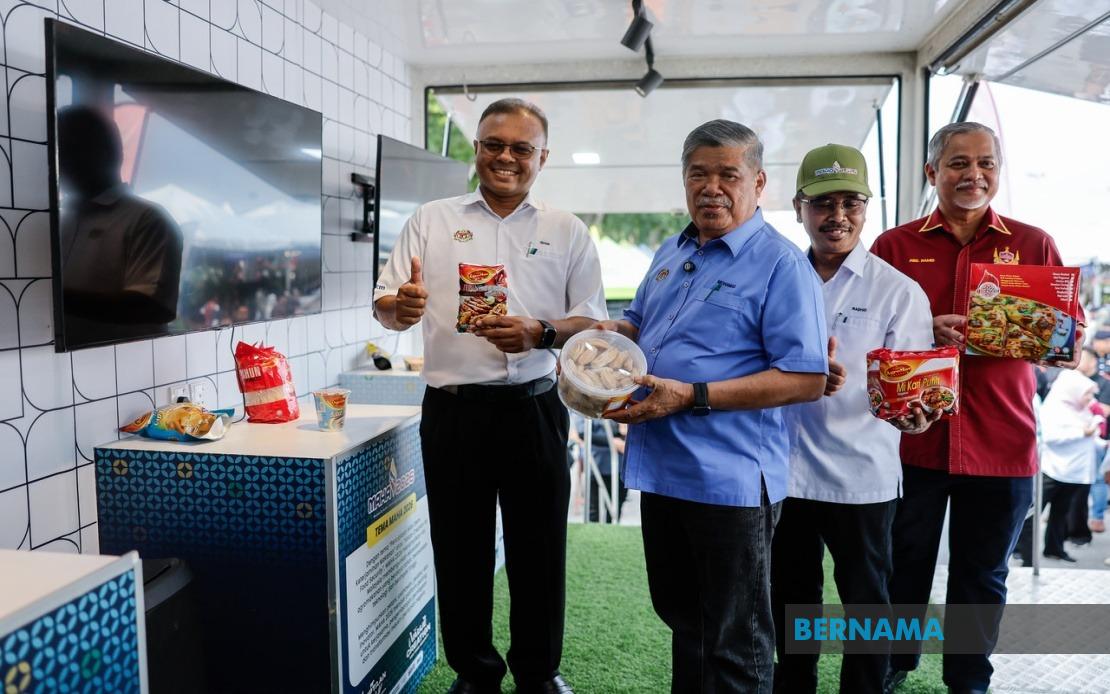
The Malaysia Agriculture, Horticulture and Agrotourism Show (MAHA) 2026 is set to become a genuinely international marketplace, marking a significant departure from its previous iterations. For the first time in the biennial event's history, the agricultural showcase will welcome exhibitors from beyond Malaysia's borders, fundamentally transforming how local farmers, agribusinesses and visitors can engage with global agricultural innovation and trade opportunities.
Agriculture and Food Security Minister Datuk Seri Mohamad Sabu announced that seven countries and regions have already committed to participating in the 2026 edition. The confirmed participants are Brazil, China, the United States, Japan, South Korea, Hungary, and China's Guangxi region. Additionally, Uzbekistan has signalled its intention to join, with further confirmations anticipated from other nations, signalling robust international interest in the event.
The inclusion of foreign exhibitors represents far more than symbolic diversity. These international participants will bring cutting-edge agricultural technologies, innovative farming practices, and novel products that can directly benefit Malaysian farmers and agribusiness operators seeking to modernise their operations and increase competitiveness. The presence of exhibitors from major agricultural powerhouses like Brazil and the United States will provide valuable benchmarks for local stakeholders to understand global best practices and emerging trends shaping the industry.
Minister Mohamad contextualised this development within a broader philosophy about food security and international cooperation. He emphasised that no nation can tackle food security challenges in isolation, and that cross-border collaboration becomes essential when crises strike any region. This perspective underpins the decision to internationalise MAHA, framing it as a practical expression of shared responsibility in ensuring stable food supplies across economies.
Beyond the exhibitions themselves, the ministry has planned comprehensive business engagement mechanisms to maximise commercial value for all participants. Structured business matching sessions will facilitate direct negotiations between Malaysian exhibitors and their international counterparts, creating platforms where local producers can explore export opportunities or secure partnerships with foreign companies. Conversely, Malaysian buyers will gain direct access to international suppliers, potentially reducing costs and diversifying their sourcing options.
Datuk Isham Ishak, secretary-general of the Agriculture and Food Security Ministry, highlighted the dual benefit for both participants and ordinary visitors. Educational opportunities abound for farmers and industry professionals keen to stay abreast of the latest technological developments and agronomic innovations. Simultaneously, the general public will experience a dramatically expanded range of agricultural products and services, offering glimpses into farming practices and food production systems operating in different climatic and economic contexts.
The timing of this international expansion coincides with the ministry's launch of a sophisticated new surveillance and management system called SISDA — the Surveillance and Intervention Supply Demand Agrofood platform. This technology deployment underscores the government's commitment to modernising how it monitors and responds to agricultural sector dynamics. SISDA harnesses advanced data analytics, machine learning algorithms, and predictive warning mechanisms to give policymakers real-time visibility into supply chains, demand patterns, and price movements across Malaysia's food system.
The strategic value of SISDA extends across multiple stakeholder groups. For consumers, the system's ability to track price trends and identify supply bottlenecks before they materialise helps government intervene proactively to maintain affordability of essential foodstuffs. For farmers and agribusiness operators, SISDA provides early signals about market conditions, enabling them to make better-informed decisions about what to plant, when to harvest, and where to direct their produce. By integrating comprehensive monitoring with precise intervention capabilities, the platform promises to deliver more stable returns for agricultural sector participants while shielding consumers from price volatility.
For Malaysian agribusinesses and farmers, the convergence of MAHA's internationalisation and SISDA's deployment represents a turning point in sectoral competitiveness. Access to international markets, technologies, and partnerships will become more achievable precisely when government-level market intelligence and supply chain visibility have reached unprecedented sophistication. This combination positions Malaysia's agricultural sector to compete more effectively in regional and global contexts.
The influx of foreign exhibitors also carries symbolic weight for Malaysia's regional standing. By hosting a significantly expanded international agricultural marketplace, Malaysia positions itself as a hub for Southeast Asian agricultural commerce and innovation exchange. Neighbouring economies will likely view participation as valuable, further elevating the event's profile and attracting higher-calibre international representation in subsequent editions.
Looking ahead, the success of MAHA 2026's internationalisation will partly depend on effective promotion among foreign agricultural businesses and on translating the enthusiasm from government announcements into sustained business engagement. The scope of participation — potentially reaching eight countries and regions with further confirmations pending — already suggests considerable international appetite, particularly from leading agricultural nations seeking to expand their global footprints and establish connections in growing Southeast Asian markets.