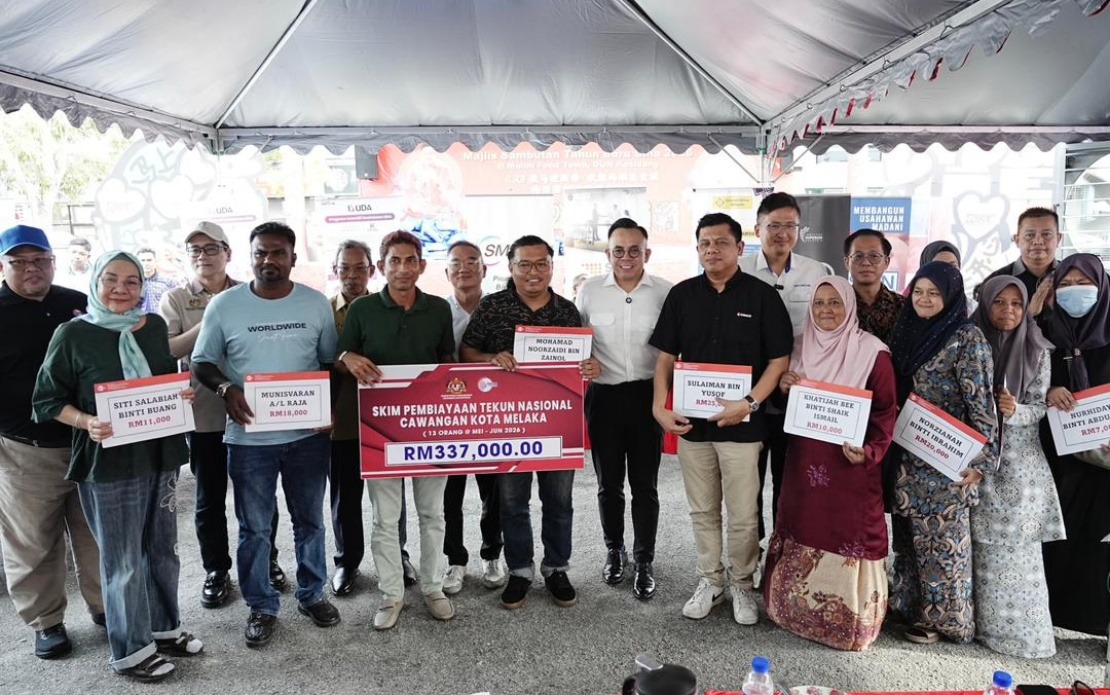
Over 4,300 entrepreneurs in Melaka have accessed nearly RM100 million in financing through the Ministry of Entrepreneur Development and Cooperatives (KUSKOP) as of May 31, marking significant progress in the state's push to develop a robust ecosystem of micro, small and medium enterprises. This injection of capital reflects the government's determination to place affordable financing within reach of business operators across various sectors, from food and beverages to construction and professional services, thereby catalysing growth at the grassroots level.
The financial support being extended to Melaka's entrepreneurial community forms part of a broader national strategy to stimulate economic activity through strategic capital deployment. When entrepreneurs gain access to the funding they need to expand operations, the ripple effects extend well beyond individual business owners. Employees gain employment security and advancement opportunities, suppliers benefit from increased demand for goods and services, and local communities witness tangible economic development through higher consumer spending and improved livelihoods.
Minister Steven Sim emphasised during his three-day working visit to Melaka from June 19 to 21 that sustained financing channels are essential for nurturing Malaysia's business landscape. He articulated a vision wherein capital flows continuously through the economy, supporting enterprises at every tier and scale. This approach recognises that MSME growth directly contributes to national economic resilience by diversifying the business base and reducing dependence on a narrow set of large corporations.
During his visit, Sim attended the Hebatkan Perniagaan Malaysia Carnival, a platform designed to foster direct engagement between government officials and business operators. The event included a notable meet-and-greet session at Malim Food Town, where approximately 50 local entrepreneurs gathered to network and learn about available support programmes. This interactive format allows policymakers to understand ground-level challenges faced by business owners while simultaneously making financing opportunities more tangible and accessible.
A particular highlight involved the distribution of nearly RM1 million in financing to 18 entrepreneurs through TEKUN Nasional and SME Corp Malaysia. The recipients operate across diverse sectors, demonstrating the government's commitment to supporting varied economic activities rather than picking winners or favouring particular industries. This inclusive approach helps ensure that entrepreneurial talent flourishes across the economy, regardless of sector focus or business model.
Melaka's achievement sits within a much larger national context. Across Malaysia, KUSKOP approved RM5 billion in financing during the first five months of the year alone, benefiting nearly 180,000 entrepreneurs nationwide. These figures underscore the scale and scope of the government's capital allocation initiative, suggesting that financing availability has significantly improved for business operators seeking to establish or expand operations.
The ministry has set an ambitious target through its PowerUp10K initiative, aiming to channel RM15 billion to MSMEs throughout the current year. Reaching this goal would represent a substantial increase in accessible financing and would enable tens of thousands of additional entrepreneurs to pursue growth opportunities. The programme's scale indicates that the government views MSME development not as a peripheral concern but as central to achieving broader economic objectives.
Sim highlighted an often-overlooked dimension of Malaysia's economic competitiveness: the country's demographic and cultural diversity. In an increasingly globalised marketplace, this diversity translates into tangible advantages. The talent pool becomes wider and more varied, offering businesses access to multilingual staff, cross-cultural expertise, and networks spanning different communities. Simultaneously, local businesses gain inherent advantages in reaching diverse domestic markets and leveraging cultural insights when expanding internationally, particularly within Southeast Asia where Malaysia's position as a multicultural nation carries significant weight.
From an investor perspective, Malaysia's combination of multicultural dynamism with business-friendly policies creates genuine appeal. Foreign companies recognise that establishing operations in Malaysia provides exposure to diverse talent while positioning them to serve broader regional markets. This virtuous cycle—where foreign investment creates jobs and business opportunities for locals, which in turn attracts more investment—depends partly on the robustness of the domestic MSME sector, as larger enterprises often rely on local suppliers and service providers.
For Malaysian entrepreneurs and small business operators, particularly those in states like Melaka, the availability of nearly RM100 million in financing signals genuine commitment from the government to reduce financial barriers to growth. Access to affordable capital historically represented one of the most significant obstacles facing small businesses in Malaysia, particularly for operators in interior regions or those without established relationships with traditional banks. Programmes like TEKUN have progressively addressed this gap, though continued expansion remains important as demand for financing consistently exceeds available supply.
The significance of the Malim Food Town initiative extends beyond immediate financial disbursement. Gathering 50 entrepreneurs in a single venue creates networking opportunities, enables peer learning, and facilitates organic knowledge transfer among business operators. Such informal interactions often prove as valuable as the financing itself, as entrepreneurs exchange practical insights about navigating regulatory requirements, managing cash flow, and overcoming operational challenges.
Moving forward, the success of these financing programmes will likely depend on how effectively recipient entrepreneurs transform capital into sustainable business growth. Financing availability is necessary but insufficient for long-term business success; entrepreneurs must also access business advisory services, training in financial management, and market intelligence. The government has increasingly recognised this requirement, with some financing schemes now bundled with capacity-building components.
Melaka's robust uptake of KUSKOP financing—with over 4,300 businesses accessing support—demonstrates that demand for such programmes remains strong. The challenge ahead involves scaling these successes, ensuring equitable distribution of financing across all regions and demographic groups, and measuring the long-term impact on employment creation and economic growth. As Malaysia positions itself for post-pandemic recovery and deeper integration within Southeast Asian markets, the health and dynamism of its MSME sector will prove increasingly critical to achieving national economic ambitions.


%22%2F%3E%3C%2Fpattern%3E%3C%2Fdefs%3E%3Crect%20width%3D%22100%25%22%20height%3D%22100%25%22%20fill%3D%22url(%23ph1u89ng)%22%2F%3E%3Crect%20width%3D%22100%25%22%20height%3D%22100%25%22%20fill%3D%22url(%23ph1u89np)%22%2F%3E%3Ctext%20x%3D%2250%25%22%20y%3D%2250%25%22%20text-anchor%3D%22middle%22%20dominant-baseline%3D%22central%22%20fill%3D%22rgba(255%2C255%2C255%2C0.95)%22%20font-family%3D%22Georgia%2C%20'Times%20New%20Roman'%2C%20serif%22%20font-weight%3D%22700%22%20font-size%3D%22136%22%20letter-spacing%3D%22-0.02em%22%3EParliament%3C%2Ftext%3E%3C%2Fsvg%3E)