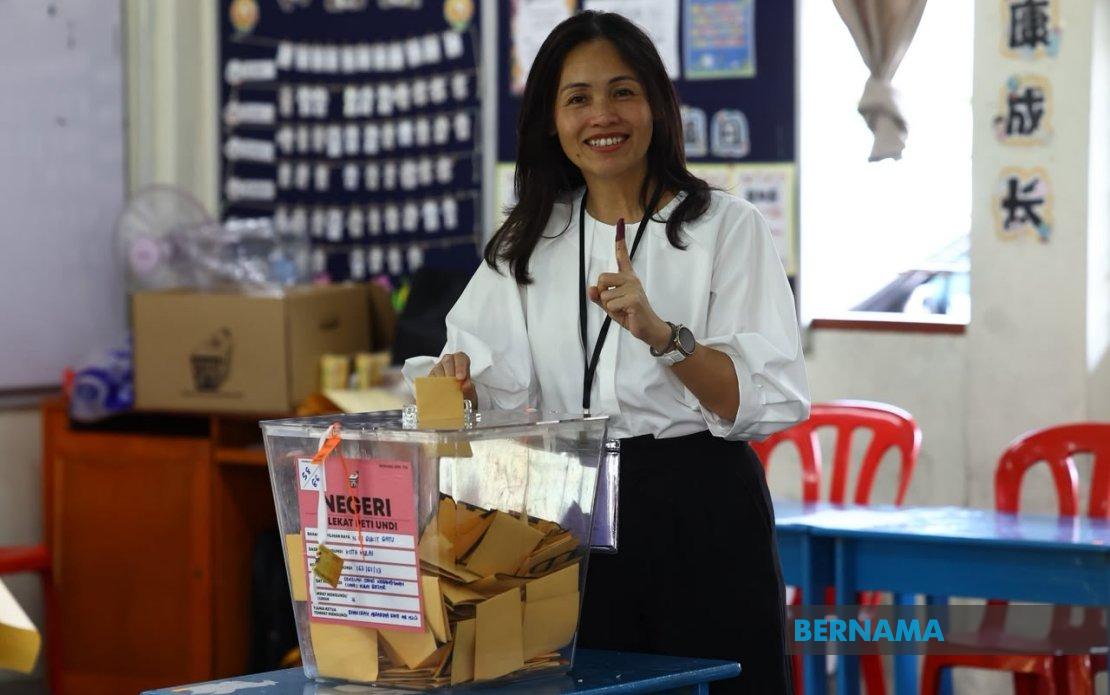
The Malaysian Communications and Multimedia Commission documented 29 complaints centring on problematic online material during the recent campaign for Johor's 16th state election, according to Deputy Communications Minister Teo Nie Ching. The regulatory body's findings underscore the persistent challenges facing election processes across Malaysia as digital platforms become increasingly influential in shaping voter perceptions and behaviour.
Breaking down the complaints, Teo revealed that false information accounted for the majority of reported incidents, with 17 cases involving the dissemination of fake news across social media and messaging platforms. An additional 11 complaints targeted content deemed to constitute hate speech, while a single report addressed the creation of fraudulent accounts and impersonation tactics. The data illustrates how election periods intensify online manipulation attempts, transforming digital channels into contested political terrain where accuracy competes with inflammatory or misleading narratives.
The composition of hate speech violations reveals particularly sensitive fault lines within Malaysian society. Nine instances involved racial content, topics that have historically triggered considerable tension across Malaysia's multiethnic landscape. The remaining cases targeted religious messaging and content relating to the monarchy, both falling within the framework of 3R restrictions—race, religion and royalty—that form part of Malaysia's approach to regulating sensitive discourse. This distribution reflects how electoral campaigns can weaponise identity-based grievances, exploiting digital networks to amplify divisive narratives.
Speaking after casting her ballot at SJK (C) Kulai Besar, Teo called on voters and the general public to exercise greater caution when encountering unverified claims online. She stressed the importance of digital literacy as a foundational skill for modern citizenship, particularly during elections when misinformation campaigns operate at peak intensity. The deputy minister's intervention highlights an emerging recognition within government circles that regulating content supply must be complemented by demand-side efforts to cultivate more discerning audiences capable of interrogating source credibility and identifying propaganda techniques.
The appeal for heightened vigilance carries practical significance for Malaysian voters, who increasingly rely on social media and messaging apps for political information. The concentration of young, urban voters on platforms like TikTok, Instagram and WhatsApp creates environments where sensational falsehoods often propagate faster than factual corrections. During election campaigns, this dynamic becomes particularly pronounced, as competing political factions deploy coordinated inauthentic behaviour—fake accounts, bot networks, and algorithmically-optimised content—to shape electoral narratives without accountability.
Teo's emphasis on exercising voting rights wisely represents a broader strategic shift within Malaysian governance toward individual responsibility for information consumption. Rather than positioning the state as sole arbiter of truth, this approach distributes responsibility across the entire digital ecosystem, empowering citizens to act as verification nodes within their social networks. Such an approach aligns with international best practices, where resilience against misinformation increasingly depends on distributed critical thinking rather than centralised fact-checking.
The Johor state election itself presented a substantial electoral undertaking, with 56 State Legislative Assembly seats contested by 172 candidates across a registered voter base exceeding 2.6 million people. The scale of this electoral exercise, combined with the volume of online activity surrounding it, created conditions conducive to coordinated misinformation campaigns. Multi-candidate contests in particular generate opportunities for disinformation, as competing camps attempt to undermine rivals through character assassination, policy distortion, and sensationalised claims designed to provoke emotional rather than rational responses.
The MCMC's documented complaints likely represent only a fraction of actual problematic content circulating online. Many users never formally report violations, instead silently spreading dubious information within closed groups or deleting posts after recognition of their falsity. Platform moderation systems similarly catch only a portion of violations, particularly content in Malay and other regional languages that often receives less attention from international tech companies' predominantly English-speaking moderation teams. This gap between recorded complaints and actual violation incidence suggests the true scale of the challenge exceeds official statistics.
For Malaysian policymakers, the Johor election data illuminates the vulnerability of electoral processes to digital interference. Unlike traditional campaign fraud—ballot stuffing or voter intimidation—online manipulation operates at scale with minimal cost and reduced risk of detection. Foreign actors, domestic opposition parties, and commercial interests can all theoretically exploit this vulnerability, creating scenarios where election outcomes reflect not genuine voter preferences but successful information warfare campaigns. This reality necessitates evolving regulatory frameworks that balance press freedom with election integrity.
The incident also highlights the uneven geography of digital regulation within Malaysia. Urban areas with higher internet penetration and digital literacy may be better equipped to resist misinformation, while rural constituencies with lower educational attainment and less diverse information sources remain particularly vulnerable to coordinated falsehood campaigns. This creates a structural advantage for whichever actors most effectively mobilise online infrastructure, potentially distorting representation and undermining democratic legitimacy across state and federal elections.
Moving forward, Malaysia's approach to electoral integrity will likely require multi-stakeholder collaboration extending beyond government agencies. Technology platforms, civil society organisations, educational institutions, and media outlets must collectively raise barriers against coordinated disinformation while preserving space for legitimate political discourse. The MCMC's complaint documentation represents a necessary first step, but sustainable progress demands investment in digital literacy programmes, transparent platform policies, and enforcement mechanisms that consistently apply standards across all political competitors without partisan bias.

