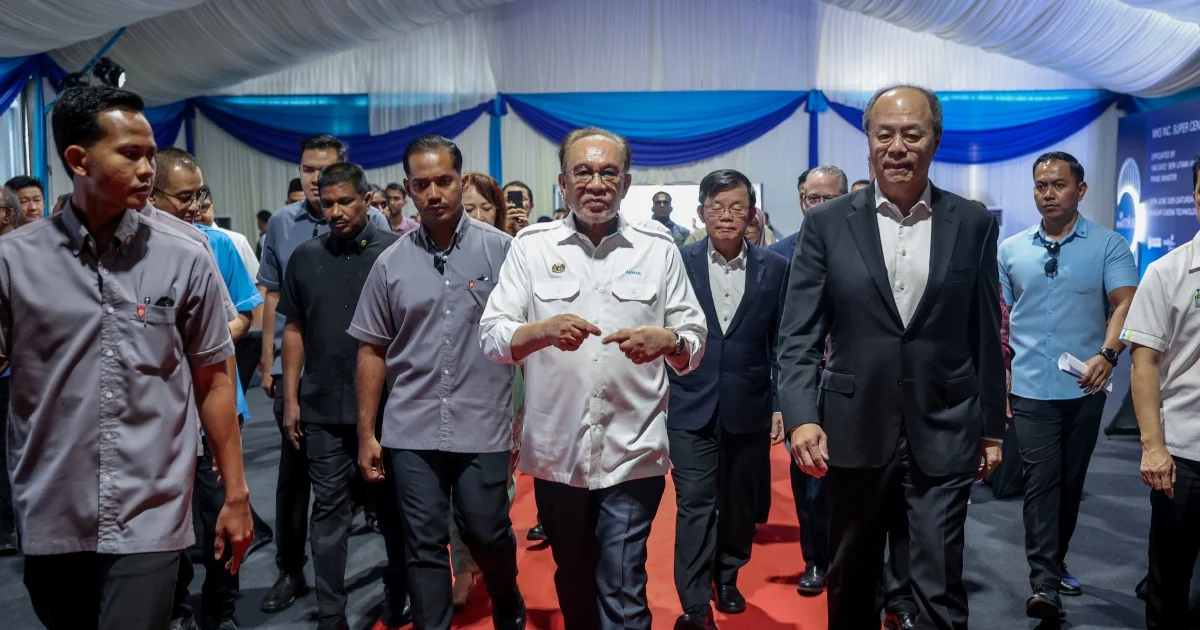
Prime Minister Datuk Seri Anwar Ibrahim has attributed Malaysia's growing appeal to international investors to the nation's carefully balanced diplomatic approach, which prioritises engagement with all major powers while safeguarding the country's independence and neutrality. The remarks underscore how geopolitical positioning has become a tangible economic asset in an increasingly polarised global environment where foreign direct investment flows often follow the path of stable governance and predictable foreign relations.
Anwar's emphasis on Malaysia's non-aligned stance reflects a strategic positioning that distinguishes the country from many regional peers facing pressure to choose sides in great-power rivalries. By deliberately avoiding exclusive alignment with any single superpower or bloc, Malaysia presents itself as an open market attractive to investors from the United States, China, Europe, and other regions simultaneously. This approach allows multinational corporations to establish operations without navigating geopolitical constraints that might otherwise complicate supply chains or market access.
The government's commitment to neutrality carries particular weight in Southeast Asia, where China-United States strategic competition has intensified significantly over the past decade. Malaysia's ability to maintain cordial relations with Beijing while deepening ties with Washington and other Western democracies creates a favourable environment for companies seeking to diversify their operations away from economies caught in structural tensions. This diplomatic flexibility effectively becomes a comparative advantage in attracting manufacturing hubs, research facilities, and regional headquarters from multinational enterprises.
Investor confidence depends substantially on predictability, and Malaysia's consistent pursuit of pragmatic diplomacy demonstrates a long-term commitment to stability rather than ideological realignment. Companies making multi-year capital investments require assurance that political volatility will not suddenly alter a nation's international standing or create unforeseen regulatory barriers. Malaysia's track record of engagement across ideological divides provides this reassurance, suggesting that investment decisions made today will not become liabilities due to diplomatic upheaval tomorrow.
The economic implications extend beyond foreign direct investment flows. A reputation for neutrality and independence enhances Malaysia's soft power in regional trade negotiations, allows the country to participate productively in multiple trade arrangements and diplomatic forums, and positions Malaysian companies as credible partners to international counterparts who value vendors without geopolitical baggage. This positioning becomes increasingly valuable as global supply chains fragment and companies explicitly seek geographic and political diversification.
Anwar's statement also addresses concerns among Malaysia's business community about the country falling behind neighbours in attracting premium investments. Singapore, for instance, has leveraged its pro-Western stance and financial hub credentials, while Vietnam has successfully marketed itself as a manufacturing alternative to China. Malaysia's distinction lies in offering Western investors access to Chinese markets and vice versa, effectively positioning the nation as a bridge economy rather than a regional contestant.
The neutrality framework also facilitates Malaysia's participation in ASEAN-centric arrangements and multilateral forums where consensus-building is essential. By avoiding entanglement in bilateral disputes between major powers, Malaysia can contribute to regional stability and inclusive growth strategies that benefit member economies. This diplomatic capital indirectly supports investment by fostering an environment where regional disputes do not escalate into economic disruptions that deter foreign capital.
However, maintaining genuine neutrality in an era of intensifying great-power competition presents genuine challenges that often go unacknowledged in public statements. Trade disputes, technology restrictions, and strategic competition increasingly force countries toward de facto choices even when formal policy remains non-aligned. Malaysia must continuously calibrate its engagement with all parties while managing risks that inevitable tensions between major powers might generate.
The government's strategic messaging also reflects awareness that investor surveys consistently rank political stability, institutional strength, and predictable regulatory environments as primary factors in location decisions. By emphasising Malaysia's diplomatic maturity and commitment to engagement across blocs, Anwar effectively communicates that the country offers both openness to international business and resilience against external pressures that might destabilise other emerging markets.
For Malaysia's economic trajectory, this positioning carries implications extending well beyond immediate investment figures. The ability to maintain stable relationships with all major economic powers provides optionality during economic downturns or regional crises, allowing the country to access multiple sources of capital, technology, and trade opportunities. When global financial conditions tighten, as they periodically do, nations perceived as geopolitically risky often experience capital flight, while those maintaining broad international appeal retain access to investment flows.
The emphasis on neutrality and universal engagement also speaks to Malaysia's self-perception as a nation with sufficient economic fundamentals and strategic location that it need not compromise independence to attract capital. This differs markedly from messaging in countries that adopt strongly aligned stances, which often frame such choices as necessary to access capital or technology from like-minded allies. Malaysia's approach suggests confidence in the intrinsic value of its market, labour force, and geographic position.
Looking forward, maintaining investor confidence through consistent non-aligned diplomacy will require disciplined execution, transparent communication about policy constraints, and careful management of inevitable tensions arising from geopolitical competition. The government appears committed to this approach, recognising that in an increasingly fragmented global economy, neutrality and broad engagement have become competitive advantages rather than liabilities.

%22%2F%3E%3C%2Fpattern%3E%3C%2Fdefs%3E%3Crect%20width%3D%22100%25%22%20height%3D%22100%25%22%20fill%3D%22url(%23ph2hy9vg)%22%2F%3E%3Crect%20width%3D%22100%25%22%20height%3D%22100%25%22%20fill%3D%22url(%23ph2hy9vp)%22%2F%3E%3Ctext%20x%3D%2250%25%22%20y%3D%2250%25%22%20text-anchor%3D%22middle%22%20dominant-baseline%3D%22central%22%20fill%3D%22rgba(255%2C255%2C255%2C0.95)%22%20font-family%3D%22Georgia%2C%20'Times%20New%20Roman'%2C%20serif%22%20font-weight%3D%22700%22%20font-size%3D%22272%22%20letter-spacing%3D%22-0.02em%22%3EAnwar%3C%2Ftext%3E%3C%2Fsvg%3E)