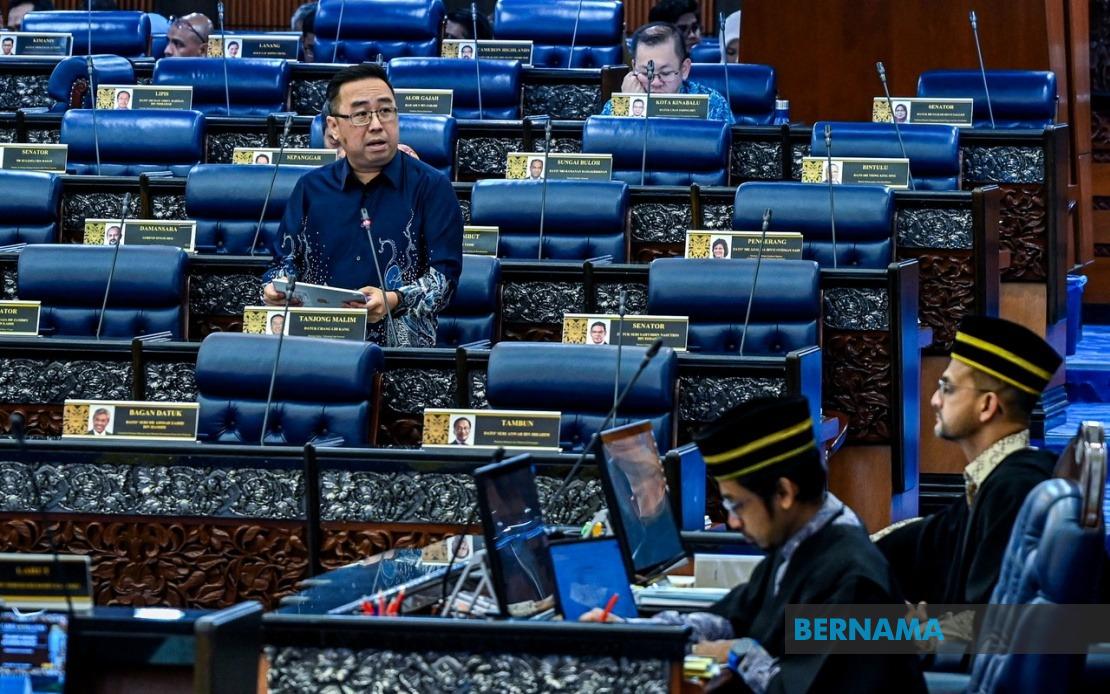
Malaysia is banking on a substantial government-backed push to transform its semiconductor industry by bringing homegrown advanced packaging technology to market within two years, Science, Technology and Innovation Minister Datuk Chang Lih Kang revealed in Parliament this week. The strategy hinges on transitioning the technology through critical development phases before handing control entirely to private industry partners, marking a deliberate shift away from continued government dependency in the commercialisation phase.
The ambitious initiative, anchored by the Malaysia Science Endowment (MSE), mobilises RM185 million in direct grants toward a consortium of five domestic companies and government research institutions. This coordinated approach reflects strategic thinking about how to build sustainable technological competitiveness rather than pursuing isolated research breakthroughs. By pooling resources across both the public and private sectors, Malaysian policymakers aim to create the institutional knowledge and manufacturing readiness necessary to compete in semiconductor packaging—a critical but often overlooked component of the global chip supply chain.
Central to the initiative is the concept of Technology Readiness Level progression, a framework that measures how far a technology has advanced from laboratory concept toward practical commercial deployment. The MSE-backed programme specifically targets lifting the technology from TRL 5, where applications are validated in relevant environments, to TRL 9, where the system is fully operational in its intended commercial setting. This structured approach contrasts with earlier models where research successes sometimes stalled at the laboratory stage, unable to scale into viable businesses.
The two-year capacity-building window is deliberately designed as a transition period rather than indefinite support. During this timeframe, the participating local companies will develop operational expertise in sophisticated advanced packaging processes—a technically demanding field requiring substantial investment in specialised equipment and skilled personnel. The deliberate handoff to industry after achieving TRL 9 status reflects confidence that Malaysian companies can eventually secure their own commercial customers and investment capital once the technical foundation is solid. This approach acknowledges the reality that perpetual government funding creates distorted market incentives and prevents genuine entrepreneurship from taking root.
Understanding the strategic context makes this initiative particularly significant for Malaysia's economic trajectory. The semiconductor packaging sector represents a higher-value manufacturing niche that Southeast Asia has barely penetrated, with most advanced packaging concentrated in Taiwan, South Korea, and increasingly in parts of mainland China. By developing indigenous capabilities in this space, Malaysia positions itself to capture greater value from its existing semiconductor assembly and testing ecosystem whilst reducing dependency on foreign technology providers and multinationals for critical manufacturing steps.
The technology roadmap explicitly connects advanced packaging capabilities to emerging applications that will define the next decade of global electronics—artificial intelligence processing, hyperscale data centres, high-performance computing systems, intelligent automotive platforms, fifth-generation mobile networks, and quantum computing infrastructure. Each of these domains demands increasingly sophisticated chip packaging solutions that manage heat dissipation, signal integrity, and miniaturisation at unprecedented scales. Malaysian companies that master these techniques early will find themselves positioned as valuable suppliers within global technology supply chains seeking geographic diversification.
The consortium structure underlying the programme merits examination as a model for how Malaysia might approach other technology development priorities. Rather than supporting individual champions or betting on single companies, the collaborative framework encourages knowledge-sharing whilst maintaining competitive dynamics. This reduces the risk that government backing will accidentally create monopolistic positions or protect inefficient operators from market discipline. The involvement of government institutions alongside private firms also ensures that research insights can be systematically documented and disseminated across the broader Malaysian innovation ecosystem.
Semantically, the shift from a grants-based model to eventual commercial self-sufficiency represents a fundamental difference from traditional industrial policy approaches. Rather than subsidising ongoing operations indefinitely, the MSE investment explicitly aims to eliminate the need for government support by creating a genuinely competitive technology offering that attracts private investment. This requires confidence that Malaysian firms can eventually compete against established international players, and that the technology itself possesses real commercial value beyond government procurement.
The programme's ambitions extend beyond simple technology transfer or manufacturing capability building. Policymakers frame this as a catalyst for broader semiconductor industry transformation toward high-value-added activities. Malaysia has long struggled with the challenge that most semiconductor activity here remains concentrated in relatively low-margin assembly and testing, with advanced design, materials science, and next-generation manufacturing techniques remaining concentrated elsewhere. Developing advanced packaging competence at home would represent meaningful progress toward upgrading the country's position within global technology value chains.
The timing of this initiative aligns with accelerating global interest in supply chain resilience and geographic diversification of semiconductor manufacturing. Following semiconductor shortages and geopolitical supply chain disruptions, multinational companies actively seek manufacturing partners outside of concentrated production zones. If Malaysian companies can demonstrate competence in advanced packaging within the two-year window, they position themselves favourably for long-term partnerships and subcontracting opportunities from major technology firms.
Successful execution of this programme will likely determine whether Malaysia can credibly pursue ambitions in more advanced semiconductor manufacturing segments. Failure to deliver commercially viable technology within the specified timeframe, or inability of local companies to secure customers and private funding post-TRL 9, would suggest that Malaysia's comparative advantages lie primarily in labour-intensive assembly rather than sophisticated manufacturing innovation. These outcomes would carry implications for broader technology development strategy and resource allocation decisions in coming years.
The fiscal commitment of RM185 million represents substantial but not unprecedented government investment in technology development. What distinguishes this initiative is the explicit deadline, the defined handoff point, and the requirement that industry ultimately prove commercial viability in open markets. These constraints impose accountability that sometimes remains absent from longer-term government research funding. As Malaysia navigates increasingly complex technological competition, this structured approach to transitioning research into commerce may offer lessons extending far beyond semiconductor packaging alone.

