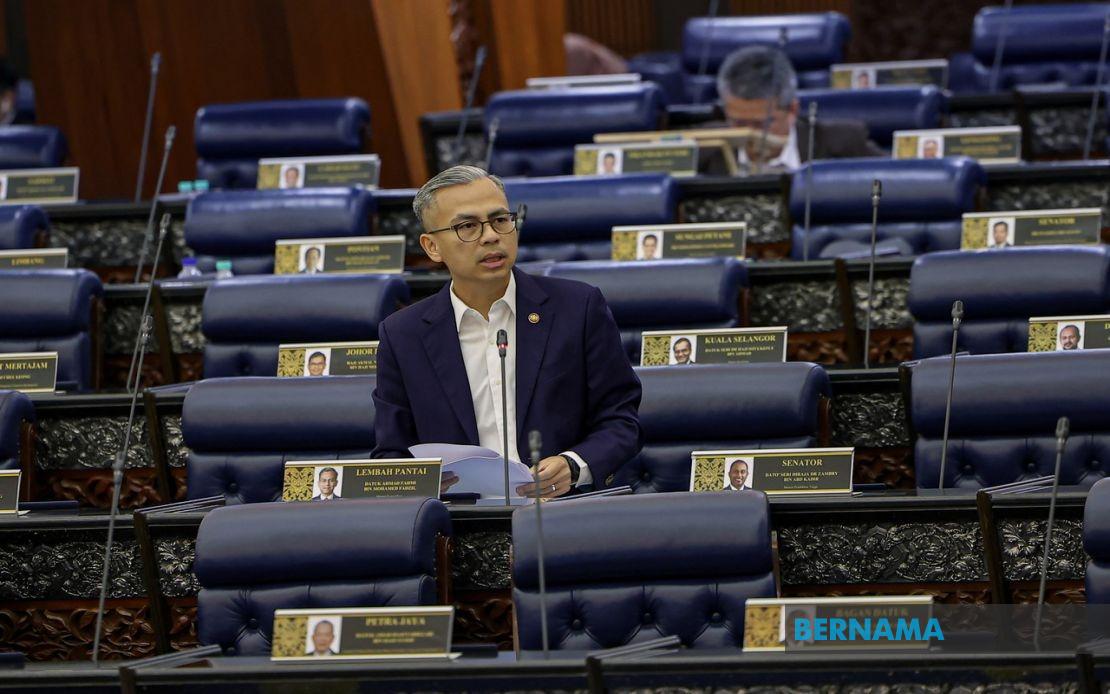
Communications Minister Datuk Seri Fahmi Fadzil introduced the Communications and Multimedia (Amendment) Bill 2026 for its first reading in Parliament on July 13, marking a significant shift in how Malaysia's regulatory framework approaches digital infrastructure and services. The legislation represents an important evolution in balancing universal service obligations with modern security imperatives, reflecting how telecommunications policy has matured beyond traditional connectivity concerns to encompass broader national defence considerations.
The Bill directly amends Section 202 of the Communications and Multimedia Act 1998 through the introduction of new subsections 202(1A) and 202(1B). These provisions grant the Communications Minister explicit authority to instruct the Malaysian Communications and Multimedia Commission (MCMC) to support universal service initiatives related to network services or application services whenever national security interests warrant such action. This represents a meaningful expansion of the Minister's toolkit for managing critical communications infrastructure during periods of heightened security concern or strategic vulnerability.
Under the proposed framework, the government gains flexibility to encourage network facility installation and provision of services specifically designed to protect national security interests. Significantly, the determination of what constitutes a national security matter is delegated to the National Security Council operating under Section 4 of the National Security Council Act 2016. This institutional arrangement ensures that security assessments remain within established governmental structures rather than being made unilaterally by the communications regulator, maintaining a degree of checks within the policy-making process.
The amendment acknowledges the rapidly evolving telecommunications landscape and the imperative to update legislation accordingly. As technology advances and new communication platforms emerge, Malaysia's regulatory framework must accommodate scenarios that the original 1998 Act could not have envisioned. The rise of cloud-based services, undersea cable infrastructure, and cross-border data flows presents novel security dimensions that traditional universal service obligations were not designed to address. This Bill represents an acknowledgement that the communications sector now carries strategic significance beyond merely ensuring service availability to underserved populations.
Proposed subsection 202(1B) contains an important safeguard by requiring that any national universal service provision initiative must align with the broader objectives of the Communications and Multimedia Act 1998 itself. This consistency requirement prevents security considerations from completely overwhelming the Act's foundational principles of promoting competition, consumer protection, and service quality. The provision suggests Parliament's intention to prevent security arguments from being deployed to justify anticompetitive conduct or market distortion.
Subclause 2(b) of the Bill enables the Communications Minister to promulgate regulations through Section 16 of the 1998 Act specifically governing national universal service initiatives. This regulatory delegation provides operational flexibility, allowing detailed implementation rules to be established without requiring future parliamentary amendments. The ability to adapt regulations swiftly becomes particularly valuable when responding to emerging security threats or technological developments, though it also concentrates significant discretionary power in executive hands.
For Malaysia's digital infrastructure sector, this legislation carries implications for both telecommunications operators and application service providers. Companies may face new expectations or obligations to support government-designated security initiatives, potentially affecting their operational planning and investment strategies. Network operators, in particular, should prepare for possible directives to prioritise or expand certain infrastructure regardless of immediate commercial returns, viewing such obligations as a cost of maintaining their operating licenses and regulatory approvals.
The Bill's passage through Parliament will come at no additional cost to government finances, according to official statements. This fiscal neutrality suggests the intent is to leverage existing infrastructure investments and redirect regulatory authority rather than fund substantial new projects. Nevertheless, individual service providers may incur costs implementing security-related initiatives, creating indirect fiscal consequences even if the government budget itself remains untouched. This distinction between government expenditure and broader economic costs warrants careful monitoring as implementation proceeds.
Regionally, Malaysia's move reflects broader Southeast Asian trends toward integrating security considerations into digital governance frameworks. Neighbouring countries have similarly adjusted their telecommunications regulations to address national security priorities, particularly regarding critical infrastructure protection and data sovereignty. This Bill positions Malaysia within an emerging regional consensus that communications networks constitute strategic assets requiring explicit security safeguards alongside competitive and consumer-protection objectives.
The second reading stage will prove crucial for parliamentary scrutiny of the Bill's language and practical implications. Opposition lawmakers and civil society observers may raise concerns about potential scope for regulatory overreach or inadequate transparency in how security directives are issued and implemented. The distinction between legitimate national security needs and possible regulatory capture or anticompetitive abuse remains a legitimate focus for legislative debate and media analysis.
Implementing this framework will require clear communication from the National Security Council and MCMC regarding when national security considerations justify intervention in universal service planning. Operators and application providers need transparent guidance on obligations and timelines to plan effectively. Ambiguity in these areas could generate costly disputes and regulatory uncertainty precisely when national security purposes would be better served by industry cooperation and compliance.
Longer-term, this legislation may prompt discussions about whether additional safeguards are warranted to ensure security considerations are deployed appropriately rather than as disguised protectionism. Malaysia's business community and investor base will likely monitor implementation closely to assess whether the regime functions as a genuine security tool or evolves into a mechanism for preferential treatment. International observers and potential infrastructure investors may also calibrate their Malaysia strategies based on how transparently and predictably this framework operates after passage.
The Communications and Multimedia (Amendment) Bill 2026 reflects Malaysia's attempt to modernise its regulatory approach for an era where telecommunications networks carry profound security significance. Its success will depend on whether implementation remains tethered to genuine national security imperatives or expands into broader regulatory objectives, making the coming parliamentary debate and subsequent administrative practice equally important as the legislation's formal language.

