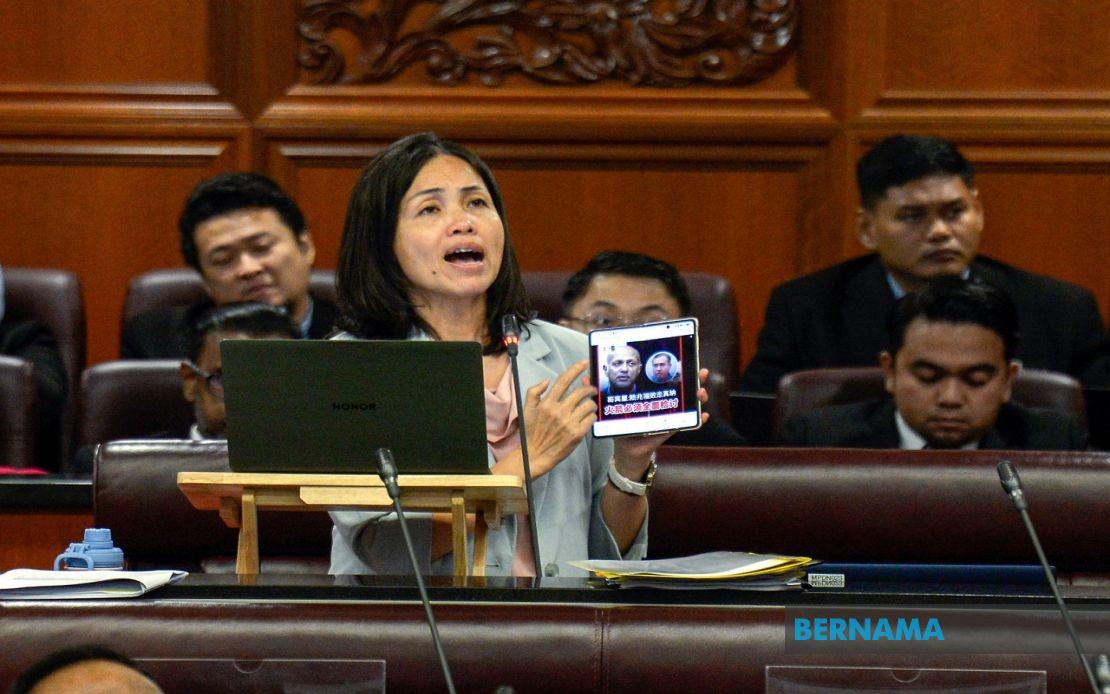
Malaysia's ongoing battle against online fraud has intensified dramatically, with nearly 100,000 scam-related content items purged from social media platforms in just the first seven months of 2026. Deputy Communications Minister Teo Nie Ching disclosed that as of July 31, authorities had removed 99,693 pieces of fraudulent content, a figure that already surpasses the 98,503 items taken down throughout the entirety of 2025. This striking acceleration underscores the scale of the digital deception problem confronting the nation and the escalating resources being devoted to combating it.
The trajectory of removals reveals a troubling pattern of growth in online scam proliferation. In 2024, approximately 63,652 content items were eliminated, marking a significant jump from the 6,297 removed in 2023 and merely 242 in 2022. This exponential increase suggests that while detection and enforcement mechanisms have improved, the underlying volume of fraudulent activity continues to expand at an alarming rate. For Malaysian consumers and businesses increasingly dependent on digital platforms, the statistics paint a sobering picture of an environment where scammers are adapting their tactics faster than regulatory authorities can respond.
Teo articulated her concerns during parliamentary proceedings on the Communications and Multimedia (Amendment) Bill 2026, which received overwhelming support in the Dewan Negara after deliberation by 15 senators. The legislative initiative represents a concerted effort to strengthen the regulatory framework governing Malaysia's communications sector, introducing mechanisms designed to protect both citizens and national interests. The bill had previously cleared the Dewan Rakyat on July 15, demonstrating cross-chamber consensus on the urgency of enhanced digital governance.
Central to the amendments is the establishment of the National Universal Service Provision (NUSP) initiative, conceived as a safeguarding measure for national security within the digital ecosystem. This framework grants the Communications Minister explicit authority to direct the Malaysian Communications and Multimedia Commission (MCMC) to execute directives related to network services and applications under the NUSP umbrella. For Malaysia's digital economy—a sector increasingly vital to economic growth and employment—this institutional architecture seeks to balance security imperatives with the need for a thriving, functional communications environment.
The legislative package delivers clearer legal authorization for MCMC to enforce these national security initiatives, closing potential ambiguities that had previously complicated enforcement actions. By explicitly amending Section 202 of the Communications and Multimedia Act 1998, parliament has furnished regulators with more robust statutory tools. This represents a pragmatic recognition that the fast-moving nature of online threats frequently outpaces the specific language of existing legislation, leaving enforcement agencies operating on uncertain legal ground.
Teo also emphasized the procedural safeguards embedded within the amendment framework, addressing concerns from senators about government overreach. Any party believing themselves adversely affected by MCMC determinations or ministerial directives retain the right to petition an Appeals Tribunal, an independent body chaired by a High Court judge. This appellate mechanism permits aggrieved parties to challenge regulatory decisions on substantive or procedural grounds. Furthermore, those dissatisfied with tribunal decisions may escalate matters to the courts for judicial review, ensuring that executive actions remain subject to independent scrutiny and constitutional constraints.
Senator Datuk Seri Prof Dr Noor Inayah Ya'akub raised a fundamental concern during the parliamentary debate: that determinations affecting national security must rest upon clearly articulated criteria and parameters rather than discretionary judgments. Her intervention highlights the delicate tension between governmental effectiveness in addressing genuine threats and the requirement for transparent, predictable decision-making that respects the rule of law. For Malaysian businesses operating across borders and citizens navigating digital platforms, this demand for clarity reflects legitimate concerns about regulatory unpredictability and potential misuse of security justifications.
Senator Sheikh 'Umar Bagharib Ali contextualized the communications sector as foundational strategic infrastructure underlying both digital economic development and public safety. His characterization invokes the reality that telecommunications networks and digital platforms now constitute the circulatory system of modern economies and societies. Disruption to these systems or inadequate governance invites not merely commercial consequences but broader social instability. His assertion that government power exercised fairly and transparently generates citizen cooperation in security endeavors reflects an understanding that regulatory legitimacy depends substantially on perception of procedural justice and proportionality.
The exponential growth in scam content removals carries significant implications for Southeast Asian regionalism and Malaysia's positioning within the digital ecosystem. Online fraud increasingly operates across borders, with syndicates leveraging regional regulatory fragmentation and technical jurisdictional ambiguities. Malaysia's strengthened regulatory architecture potentially establishes a regional benchmark, though effective enforcement ultimately requires coordination with neighboring authorities and international platforms themselves, which host the bulk of fraudulent content. The NUSP initiative signals Malaysian determination to establish clearer boundaries around digital conduct, though translating this intention into tangible protections for ordinary users demands sustained institutional capacity and genuine platform cooperation.
For Malaysian consumers, the practical significance of these enforcement efforts and legislative changes remains mixed. Removing scam content represents necessary defensive measures, yet genuine protection requires public awareness, financial literacy, and platform accountability mechanisms that extend beyond content deletion. The removal figures, while substantial, likely represent only a fraction of fraudulent activity occurring across encrypted messaging applications, peer-to-peer marketplaces, and localized digital channels where detection remains difficult. Legislators and regulators confront the perpetual challenge that scammers continuously evolve their methodologies, generating new content faster than removal teams can process it.
Looking forward, Malaysia's amendments attempt to position MCMC as a more nimble, empowered regulator capable of responding to emerging threats without constant legislative intervention. The trade-off involves expanding executive discretion—necessarily constrained by appeal mechanisms and judicial review but nonetheless broader than previous arrangements. This recalibration reflects global regulatory trends toward delegating technical decision-making to specialized agencies while maintaining judicial oversight, though application within the Malaysian context raises questions about institutional capacity, potential political interference, and the government's commitment to respecting appellate verdicts.
The passage of the Communications and Multimedia (Amendment) Bill 2026 by majority voice vote indicates parliamentary confidence that the security benefits justify the governance adjustments. Yet the rapid escalation in scam content removal statistics suggests that regulatory measures alone may prove insufficient without complementary initiatives addressing the underlying economic motivations driving sophisticated fraud operations and the platform design features enabling fraudulent conduct at scale. Malaysian policymakers and digital stakeholders will face ongoing pressure to demonstrate that enhanced regulatory authority translates into meaningful improvements in online safety and user protection.

