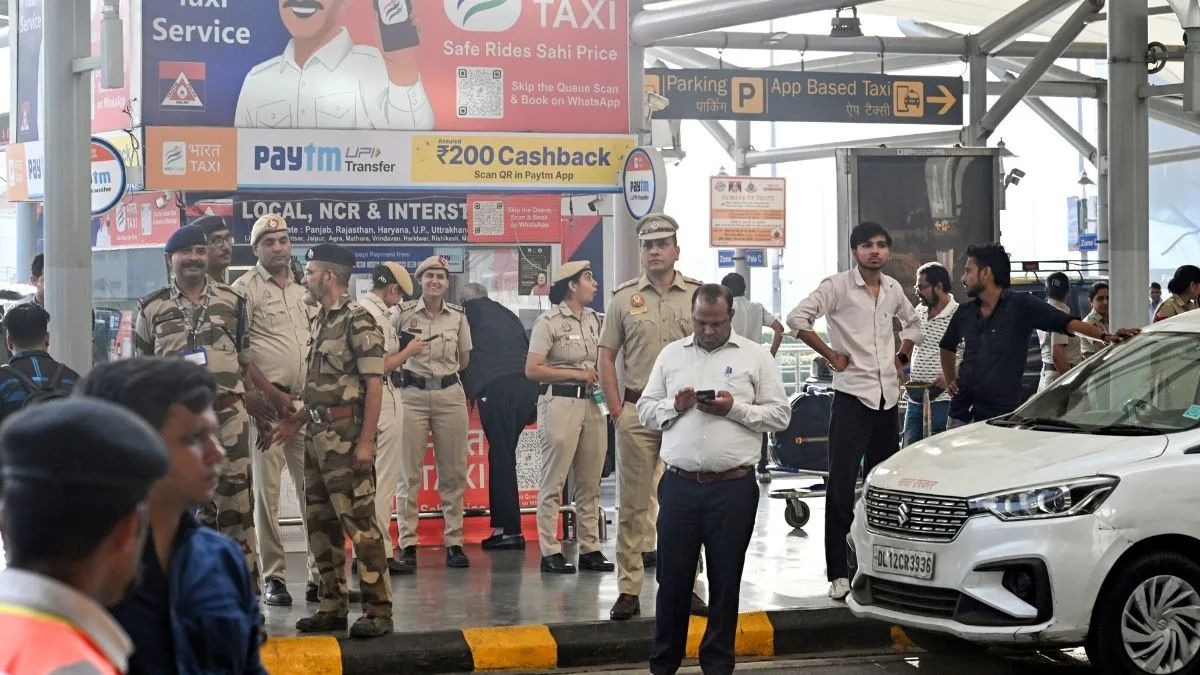
Malaysian law enforcement, working with India's central security agencies, has deported two individuals accused of operating on behalf of the banned Khalistan Zindabad Force, who were arrested immediately upon arrival at Delhi's Indira Gandhi International Airport. The deportation represents a notable instance of cross-border security cooperation in Southeast Asia, underlining growing efforts by regional governments to combat transnational terror financing networks that exploit porous financial channels and geographic distance to sustain militant operations thousands of kilometres from their operational base.
The two arrested men have been named as Gurvinder Singh from Ambala and Manjit Singh from Patiala, both in India's Punjab state. According to Punjab's Director General of Police Gaurav Yadav, the pair allegedly maintained a critical overseas infrastructure designed to funnel financial resources to operatives and modules aligned with the proscribed organisation. Their detention follows an intelligence-driven investigation that authorities say exposed how terror networks exploit international banking systems and informal money transfer mechanisms to circumvent official financial oversight.
The investigation that led to their identification originated from a series of security incidents that occurred across Punjab throughout the early months of this year. On January 23, authorities discovered an improvised explosive device that detonated near Sirhind in Fatehgarh Sahib district, prompting an intensive probe that would eventually expand into a much larger counter-terror operation. Subsequent investigations revealed an additional attempted bombing near Shambhu in Patiala district on April 27, suggesting a coordinated campaign targeting civilian and critical infrastructure targets.
Law enforcement agencies moving through these cases uncovered what officials describe as a terror module with connections to multiple attack attempts. The subsequent search operations yielded significant material, including an RPG launcher, explosives containing RDX, hand grenades, sophisticated firearms, and substantial ammunition caches. The discovery of such weaponry pointed to a sophisticated procurement operation with reliable access to military-grade materials, prompting investigators to trace funding sources beyond Punjab's borders.
Financial investigation proved pivotal in unravelling the international dimension of the conspiracy. Authorities conducting forensic analysis of money flows connected to the identified module discovered that funding was being channelled through foreign intermediaries rather than originating domestically. This pattern suggested an organised international support structure coordinating resources specifically to sustain terror activities within Punjab. Intelligence agencies subsequently determined that Malaysia served as a critical hub within this financing architecture.
The Malaysian connection revealed an elaborate network wherein the two deported operatives reportedly coordinated the transfer of funds to militant elements working within India. According to police statements, the accused utilised overseas bank accounts and informal financial channels to provide continuous financial support to Khalistan Zindabad Force-aligned operatives. The mechanism allowed foreign-based facilitators to maintain plausible deniability whilst simultaneously sustaining operations that would have been impossible to fund through domestic sources alone.
For Malaysia, the deportation signals heightened scrutiny of foreign nationals suspected of involvement in transnational terror financing, reflecting broader regional security concerns about how militant organisations exploit Southeast Asian financial infrastructure and geographic positioning. Malaysia has previously cooperated with Indian authorities on security matters and has maintained strict enforcement against individuals suspected of terror-related activities, though regional experts note that sophisticated financial laundering operations remain a persistent challenge across Southeast Asia's banking systems.
Following their arrival in India, both men were presented before a magistrate in Patiala, who authorised police custody for extended interrogation. Investigators are pursuing multiple investigative threads, including identifying additional network members, tracing the source of procured weapons, and mapping the complete operational structure. Police officials have emphasised that the investigation remains active, with ongoing efforts to identify other individuals implicated in the broader conspiracy and to dismantle remaining elements of the overseas support apparatus.
The case illuminates persistent vulnerabilities within international financial systems that militant organisations exploit to sustain operations across borders. For Malaysia and other Southeast Asian nations serving as transit or financing hubs, the incident underscores the imperative of strengthening financial intelligence mechanisms and deepening cooperation with neighbouring countries. The coordination between the Royal Malaysia Police, Punjab Police, and India's central security apparatus suggests movement towards more integrated regional responses to terror financing, though security analysts caution that truly effective disruption requires sustained multilateral effort targeting the institutional and technological infrastructure enabling such cross-border resource flows.

%22%2F%3E%3C%2Fpattern%3E%3C%2Fdefs%3E%3Crect%20width%3D%22100%25%22%20height%3D%22100%25%22%20fill%3D%22url(%23ph2hy9vg)%22%2F%3E%3Crect%20width%3D%22100%25%22%20height%3D%22100%25%22%20fill%3D%22url(%23ph2hy9vp)%22%2F%3E%3Ctext%20x%3D%2250%25%22%20y%3D%2250%25%22%20text-anchor%3D%22middle%22%20dominant-baseline%3D%22central%22%20fill%3D%22rgba(255%2C255%2C255%2C0.95)%22%20font-family%3D%22Georgia%2C%20'Times%20New%20Roman'%2C%20serif%22%20font-weight%3D%22700%22%20font-size%3D%22272%22%20letter-spacing%3D%22-0.02em%22%3EAnwar%3C%2Ftext%3E%3C%2Fsvg%3E)