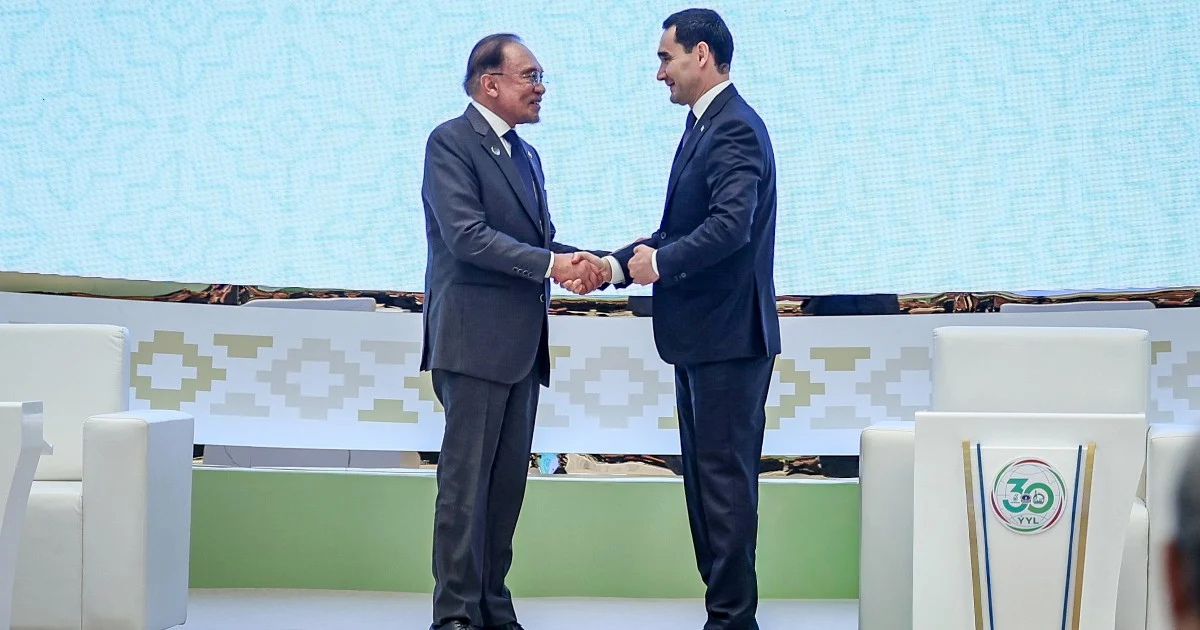
Malaysia and Turkmenistan have moved to broaden their strategic partnership across multiple sectors, signalling a significant expansion of bilateral engagement between the Southeast Asian nation and the Central Asian energy producer. The commitment was formalised following Prime Minister Datuk Seri Anwar Ibrahim's official visit to Turkmenistan, marking a pivotal moment in the two countries' evolving relationship and opening new pathways for cooperation that extend well beyond traditional energy partnerships.
The agreement to deepen energy sector cooperation represents the foundation of this expanded engagement, reflecting Turkmenistan's position as a major global energy exporter and Malaysia's strategic interests in securing diversified energy sources. For Malaysia, which faces evolving energy demands as the nation pursues its own development and sustainability goals, accessing partnerships with reliable energy suppliers in stable regions offers important strategic flexibility. Turkmenistan's vast natural gas reserves and historical role as a significant energy player in Central Asia make it a natural partner for Malaysian entities seeking to explore long-term energy arrangements and technological collaborations in resource exploration and extraction.
Beyond the energy dimension, both nations have recognised the substantial untapped potential in trade and investment flows. Current bilateral trade volumes remain relatively modest considering the size and economic capabilities of both countries, suggesting room for substantial growth. Malaysian businesses, particularly in manufacturing, technology services, and agro-industry, could find significant opportunities in the Turkmenistan market, while Turkmen enterprises might explore investment possibilities in Malaysia's financial services hub and manufacturing sector.
The transportation and logistics component of this expanded partnership carries particular significance for Malaysia's positioning as a regional trade and connectivity hub. Turkmenistan's geographic location along key transcontinental trade corridors creates opportunities for Malaysian firms to participate in broader Eurasian commerce networks. Enhanced transportation links and logistics frameworks could facilitate smoother movement of goods between Southeast Asia and Central Asia, benefiting businesses in both regions and potentially establishing Malaysia as a preferred gateway for Central Asian products entering Asian markets.
Educational cooperation featured prominently in the agreement, reflecting both nations' commitment to building human capital and fostering people-to-people connections. Malaysian universities and technical institutions stand to benefit from expanded student exchange programmes and collaborative research initiatives with Turkmen counterparts, particularly in fields aligned with both nations' development priorities. Conversely, Malaysian educational expertise in areas such as Islamic finance, digital transformation, and specialised technical fields could prove valuable for Turkmenistan's institutional development, creating mutually beneficial learning ecosystems.
Technology collaboration emerged as a key pillar of the new partnership framework, addressing a growing area of mutual interest. Malaysia's established position in digital innovation, semiconductor manufacturing, and fintech could complement Turkmenistan's efforts to modernise its technological infrastructure and diversify its economy beyond traditional energy sectors. Joint ventures in digital services, telecommunications, and smart city initiatives represent promising avenues for cooperation that could accelerate development trajectories in both nations while positioning Malaysian companies as partners in Central Asian modernisation.
Anwar Ibrahim's official visit itself carries diplomatic weight in the context of Malaysia's broader foreign policy positioning. By engaging directly with Central Asian leadership, Malaysia reinforces its vision of a nation operating on multiple international stages rather than confining itself to Southeast Asian concerns. This outreach demonstrates Malaysia's commitment to building relationships across diverse geographic regions and demonstrating the country's relevance as a partner for nations pursuing economic diversification and regional integration.
The timing of this expanded partnership aligns with broader shifts in global geopolitics and economic reconfiguration. Turkmenistan, like many Central Asian nations, seeks to reduce economic dependence on traditional regional powers while building diversified partnerships across Asia. Malaysia's positioning as a respected Southeast Asian economy with Islamic credentials and growing technological capabilities makes it an attractive partner for such diversification strategies. Similarly, Malaysian strategic interests benefit from stable relationships with energy-producing regions and alternative trade corridor development.
From a Malaysian economic perspective, the agreement opens doors for companies seeking to establish footholds in Central Asian markets before competitors recognise the potential. Early movers in trade, construction, technology services, and financial intermediation could gain lasting advantages in these nascent business relationships. Government-backed initiatives supporting such market entry could yield significant returns as bilateral economic engagement deepens over coming years.
The emphasis on multiple cooperation sectors rather than narrow energy focus suggests both nations recognise the value of comprehensive engagement. This diversified approach creates multiple touchpoints for relationship development and reduces vulnerability to sector-specific disruptions. Should energy markets fluctuate or face challenges, the strength of educational, technological, and trade relationships provides stable foundations for continued engagement.
Looking ahead, the success of this expanded partnership will depend on concrete follow-up actions from both governments and private sector stakeholders. Establishing clear mechanisms for business facilitation, addressing regulatory harmonisation, and building awareness among entrepreneurs and institutions about partnership opportunities will prove critical. Malaysian chambers of commerce and government trade agencies should prioritise supporting local companies exploring Turkmenistan opportunities, while reciprocal support from Turkmen institutions would accelerate practical implementation of the agreed frameworks.

%22%2F%3E%3C%2Fpattern%3E%3C%2Fdefs%3E%3Crect%20width%3D%22100%25%22%20height%3D%22100%25%22%20fill%3D%22url(%23ph2hy9vg)%22%2F%3E%3Crect%20width%3D%22100%25%22%20height%3D%22100%25%22%20fill%3D%22url(%23ph2hy9vp)%22%2F%3E%3Ctext%20x%3D%2250%25%22%20y%3D%2250%25%22%20text-anchor%3D%22middle%22%20dominant-baseline%3D%22central%22%20fill%3D%22rgba(255%2C255%2C255%2C0.95)%22%20font-family%3D%22Georgia%2C%20'Times%20New%20Roman'%2C%20serif%22%20font-weight%3D%22700%22%20font-size%3D%22272%22%20letter-spacing%3D%22-0.02em%22%3EAnwar%3C%2Ftext%3E%3C%2Fsvg%3E)