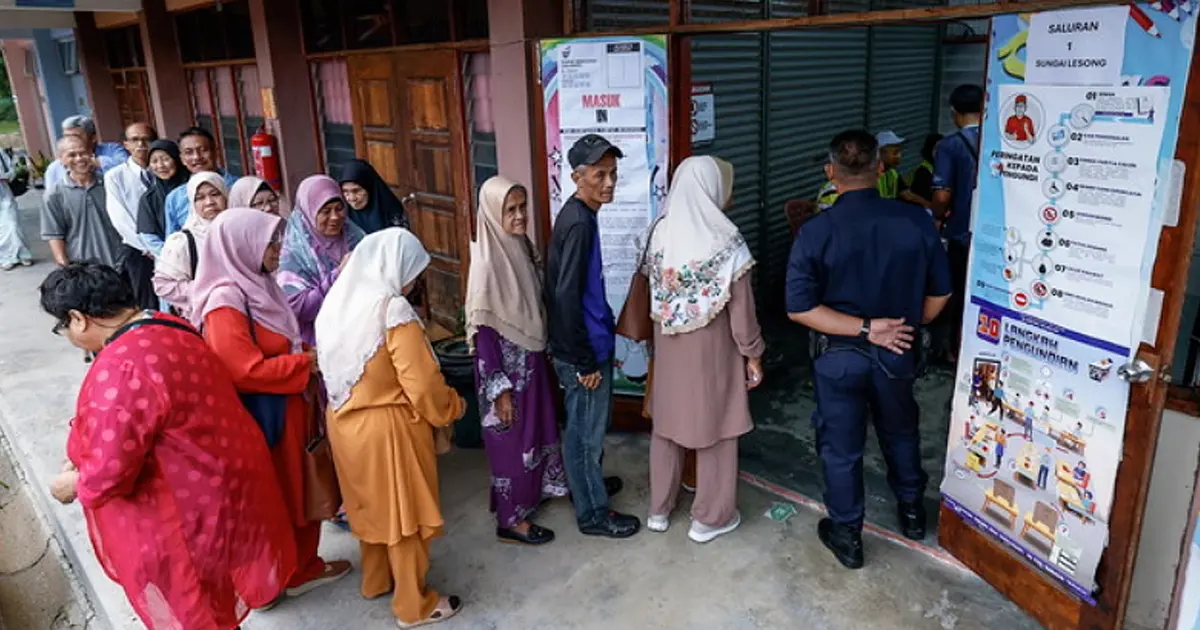
Political observers are sounding alarm over the potential consequences of prolonged debate surrounding the 3R issues on Malaysia's Malay electorate, with one academic suggesting that repeated engagement with these contentious topics could gradually erode voter enthusiasm and active participation in the political process. Awang Azman Pawi, a researcher at Universiti Malaya, has articulated concerns that the constant cycling of these narratives threatens to produce what he terms 'emotional fatigue' within this critical voting bloc, ultimately reshaping how communities assess their political leaders and the parties seeking their support.
The underlying mechanism behind this phenomenon reflects a fundamental shift in voter psychology. When constituencies encounter repetitive messaging around divisive cultural or identity-based topics, even those initially receptive to such framing gradually experience exhaustion from the emotional labour required to maintain engagement. This psychological dynamic becomes particularly consequential in Malaysia's electoral context, where Malay voters represent a substantial proportion of the electorate and their turnout and voting preferences substantially influence outcomes at both state and federal levels.
Academics and political strategists increasingly recognise that the sustained prominence of the 3R framework—however significant its proponents consider these matters—cannot indefinitely dominate the political conversation without generating counterproductive effects. The public sphere operates with finite capacity for attention and emotional investment, and when particular issues monopolise discourse space, voters often experience a saturation point beyond which further engagement becomes burdensome rather than mobilising.
Perhaps more significantly for ruling parties and opposition formations alike, Awang Azman's analysis suggests that electoral outcomes ultimately hinge not on the frequency with which particular themes resurface, but rather on demonstrable governmental achievement. Political parties will face reckoning based on their tangible record of administration and their effectiveness in resolving the material challenges affecting constituents' daily existence. This principle applies across all voter demographics but carries particular weight among economically vulnerable populations.
The cost of living crisis constitutes precisely such a material challenge. Malaysians across ethnic and religious backgrounds increasingly experience squeeze on household budgets, elevated expenditure on fundamental necessities such as food, fuel, and housing, and diminished purchasing power relative to wage stagnation. These economic pressures transcend the cultural and identity frameworks that often dominate political discourse, creating a parallel conversation about bread-and-butter governance that parties cannot indefinitely sideline without electoral consequence.
For Malay voters specifically, this tension between identity-based political messaging and economic anxiety creates a peculiar bind. While these communities may hold strong views on culturally significant matters, their families still require affordable schooling, medical care, and nutrition. When political campaigns fixate on one domain while the other deteriorates, voters experience cognitive dissonance that eventually manifests as alienation from the political process itself. This dynamic particularly disadvantages incumbent administrations, who cannot simply promise future remedies but must account for their stewardship of present conditions.
The warning embedded in Awang Azman's assessment carries implications extending beyond Malaysian domestic politics. Across Southeast Asia, numerous governments have attempted to mobilise constituencies through cultural nationalism or identity-based appeals whilst struggling to deliver equitable economic outcomes. The Malaysian experience suggests that this strategy carries temporal limits; electorates eventually demand alignment between the rhetoric governing political campaigns and the lived reality of household finances and public service delivery.
Moreover, the analyst's framing introduces nuance often absent from mainstream political reporting. Rather than presenting the 3R issues as inherently powerful or irrelevant, he locates them within a broader calculation about voter behaviour and political accountability. His argument acknowledges that these matters clearly resonate with segments of the population whilst simultaneously suggesting that their strategic utility diminishes if unaccompanied by strong governmental performance in domains affecting voter welfare.
Parties seeking to construct winning coalitions must therefore navigate sophisticated terrain. Dismissing the 3R issues entirely risks alienating core constituencies for whom these concerns carry genuine importance. Conversely, concentrating political resources almost exclusively on these frameworks whilst neglecting the economic foundations of voter security invites the very emotional fatigue that Awang Azman identifies. The political middle ground requires simultaneous attention to both cultural and economic voter concerns, a balance few administrations achieve with consistent success.
The implications for Malaysia's political trajectory depend substantially on whether major parties absorb this analytical insight. Parties demonstrating capacity to address both dimensions of voter concern—acknowledging the legitimacy of cultural anxieties whilst simultaneously delivering tangible improvements in living standards—position themselves more effectively for electoral success. Conversely, those locked into monolithic messaging risk presiding over electorates increasingly fatigued by familiar framings and increasingly sceptical of parties' capacity to ameliorate the economic challenges touching their households daily.