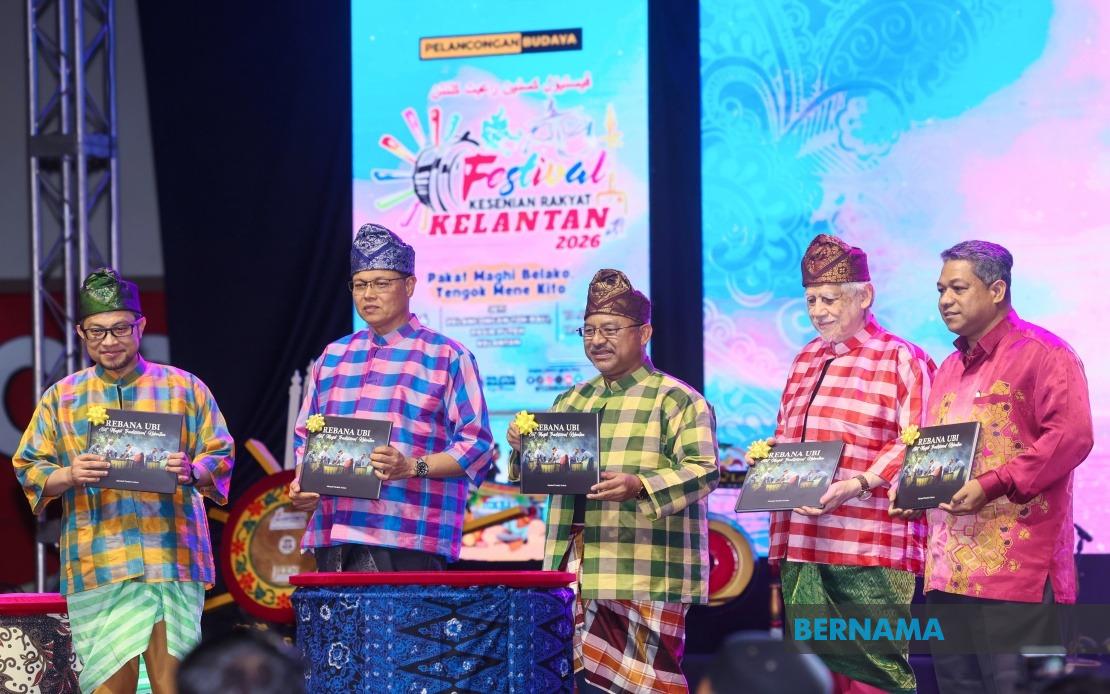
The Kelantan Arts Festival (FKRK) 2026 concluded this month after a four-day run at Tok Bali Tourism Jetty in Pasir Puteh, establishing itself as an important gathering point for preserving and celebrating the state's distinctive artistic traditions. The event, spanning from July 1 to 4, exemplified the government's commitment to strengthening community bonds through cultural expression while advancing the Malaysia MADANI framework at grassroots level.
According to the National Department for Culture and Arts (JKKN), the festival's programming strategy deliberately centred on programmes that encapsulated Kelantan's cultural identity and the authentic character of its heritage landscape. The festival's centrepiece was the special performance titled 'Titih Bonda Pusaka Ayahanda', which served a dual purpose by simultaneously celebrating traditional artistic forms while demonstrating the vibrancy of multicultural collaboration through its multiracial percussion component. This artistic approach reinforced the Malaysia MADANI message that national unity emerges most powerfully when communities maintain their distinct identities whilst embracing shared values.
The performance roster drew from Kelantan's most respected cultural ambassadors, bringing together figures including Roy Kapilla, Amy Search, Datuk Dr Lim Swee Tin, Paksu Agil, Megat Haikal, Zamry Gerak Khas, and Joe Rajuna. These performers were complemented by the Dikir Barat Kala Mahajara ensemble and the Mak Yong Kijang Mas troupe, organisations that function as custodians of Kelantan's most distinctive performance traditions. The breadth of this lineup reflected an intentional effort to span multiple generations and artistic disciplines, connecting younger audiences with established masters of traditional forms.
Beyond performances, the festival architecture prioritised interactive participation and community involvement. Organisers structured the programme around various competitions designed to engage different demographic groups. A traditional dance competition specifically targeted children, functioning as a cultural transmission mechanism that allows younger generations to develop proficiency in classical movement vocabularies. The Mek and Awe Comey competition served a similar function by celebrating traditional costume and fashion within a contemporary competitive framework, while the ADABI cooking competition highlighted Kelantan's culinary heritage as an equally legitimate expression of cultural identity alongside performing arts.
The festival programme expanded beyond formal competitive structures to encompass experiential learning opportunities. JKKN Kelantan coordinated demonstrations of folk sports, providing visitors with practical exposure to recreational traditions that might otherwise fade from community memory. These hands-on activities transformed the jetty into an educational environment where cultural knowledge transfer occurred through participation rather than passive observation, an approach that significantly increases retention and meaningful engagement, particularly among younger attendees.
Commercial and community dimensions interwove throughout the four-day schedule. Craft product sales provided local artisans with marketplace access whilst simultaneously enabling festival-goers to acquire authentic cultural artefacts. Exhibitions hosted by government agencies and non-governmental organisations broadened the festival's scope beyond performance and competition into policy awareness and social engagement, connecting cultural celebration with contemporary development initiatives. A community feast functioned as both gastronomic experience and social leveller, creating informal spaces where participants from different backgrounds could interact and share meals.
The Tourism, Arts and Culture Ministry (MOTAC) framed FKRK 2026 as advancing its portfolio mandate within Kelantan's development landscape. By positioning the festival as a vehicle for Malaysia MADANI values, MOTAC signalled the government's interpretation of cultural programming as integral to governance philosophy rather than peripheral to it. This positioning carries implications for how subsequent arts initiatives may be evaluated and funded, potentially elevating cultural events from discretionary community activities to strategic policy instruments.
Organisational coordination reflected multiple tiers of government involvement. MOTAC operated through JKKN as its implementing agency whilst establishing formal partnerships with Kelantan state government, demonstrating federal-state collaboration on cultural matters. Private sector participation through Nasrom Travel Sdn Bhd provided logistical expertise and resource mobilisation. Local administrative support from the Pasir Puteh Land and District Office and Pasir Puteh District Council ensured ground-level implementation and community liaison.
Kelantan Menteri Besar Datuk Mohd Nassuruddin Daud's participation in the opening ceremony underscored political commitment to the event, whilst the attendance of State Tourism, Culture, Arts and Heritage Committee chairman Datuk Kamarudin Md Nor reflected institutional acknowledgement of the festival's cultural significance. The presence of JKKN director-general Mohd Amran Mohd Haris completed a hierarchy of engagement spanning federal cultural administration through state political leadership.
For Malaysian observers tracking cultural policy implementation, FKRK 2026 demonstrates how Malaysia MADANI translates into programmatic action at regional level. The festival model—combining competitive structures, experiential learning, commercial opportunity, community feasting, and formal performances—offers a replicable template for other states seeking to balance cultural preservation with community engagement and economic activity. The event's emphasis on intergenerational knowledge transmission and multiethnic artistic collaboration addresses significant concerns about heritage erosion in rapidly urbanising societies, positioning cultural festivals as counterweights to cultural homogenisation pressures.
The Kelantan festival also reflects broader Southeast Asian conversations about the relationship between cultural identity and national integration. Unlike frameworks that position traditional culture as obstacle to modernity, the Malaysia MADANI approach instantiated through FKRK 2026 treats cultural continuity as compatible with contemporary governance priorities. This philosophical positioning may influence how other ASEAN nations approach their own heritage preservation and cultural policy agendas.

