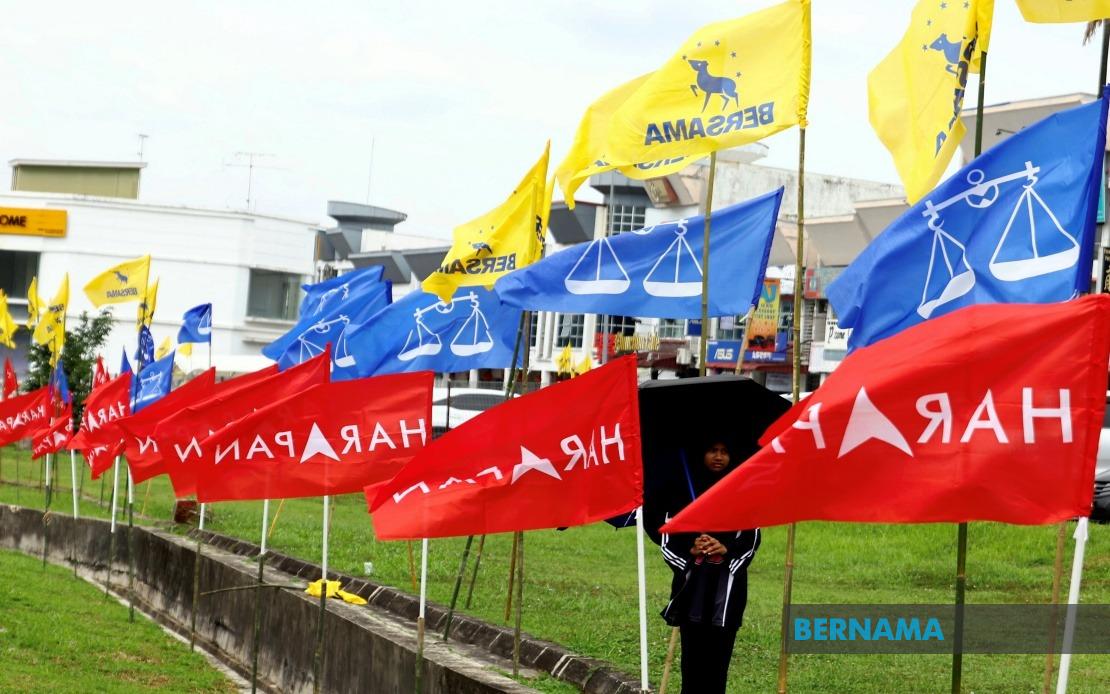
Johor's political battle reaches its climax tomorrow as 2.7 million registered voters across the state cast their ballots in the 16th state election, determining which coalition will govern the resource-rich state for the next five years. The intensive two-week campaign period officially ends at 11.59 pm tonight, silencing all ground and digital canvassing activities as parties await the electorate's verdict. With polling centres opening at 8 am across all 56 constituencies, the Election Commission anticipates that full tallies will be available by 10 pm, meaning Malaysians will know the outcome before midnight.
This election sees 172 candidates vying for representation—a significantly lower number than the 239 who stood in the previous state election, suggesting tighter party discipline and coordination among the competing coalitions. The Barisan Nasional and Pakatan Harapan each field 56 candidates, maintaining parity in the contest, while Perikatan Nasional puts forward 33 hopefuls. Parti Bersama Malaysia, a relative newcomer to Johor's electoral landscape, contests 15 seats, while MUDA fields four candidates, three smaller parties put up one candidate each, and six independent candidates complete the lineup. This configuration reflects the fragmented nature of Malaysia's political environment, where no single bloc enjoys overwhelming dominance.
The campaign itself concentrated on bread-and-butter issues that resonate deeply with ordinary Johoreans. Throughout the fortnight, all major coalitions emphasised their approaches to the cost of living crisis, economic revitalisation, employment opportunities, and enhanced social safety nets—themes that transcend traditional partisan divides. The presence of Prime Minister Anwar Ibrahim representing Pakatan Harapan and Deputy Prime Minister Ahmad Zahid Hamidi representing Barisan Nasional at final rallies underscored the stakes involved, with both federal-level figures staking their credibility on strong state-level performances.
Political analysts have identified voter turnout as a crucial determinant of which coalition will triumph, though the relationship between participation rates and electoral outcomes remains complex and territory-dependent. Dr Nazreena Mohammed Yasin from Universiti Tun Hussein Onn Malaysia explains that turnout variations across constituencies and demographic groups can advantage different parties in different areas, making blanket predictions unreliable. She notes that while the previous 2022 Johor election attracted 54.92 per cent voter participation, turnout dynamics in marginal constituencies—where victory margins remain razor-thin—could prove decisive in determining overall results.
The role of party machinery cannot be understated in tomorrow's contest. The effectiveness with which each coalition mobilises its supporters and manages logistical operations at polling centres will substantially influence outcomes, particularly in closely fought seats. Party workers' ability to identify sympathetic voters, ensure their attendance at polls, and provide transport where needed remains a fundamental factor in electoral competition, especially given Malaysia's dispersed settlement patterns and challenges in voter mobility.
Undecided voters and fence-sitters represent another wild card. These electors, who maintain flexibility about their choices until the final moment, could swing several constituencies either direction, potentially reshaping the overall balance between coalitions. In an electoral environment characterised by unprecedented competition and relatively stable support bases for major players, these swing voters assume outsized importance in determining the final seat count.
Assoc Prof Dr Mazlan Ali from Universiti Teknologi Malaysia observes that both Barisan Nasional and Pakatan Harapan have structured their campaign messaging around political stability, emphasising the importance of coherent, non-fragmented governance for the state's continued development. This narrative choice reflects broader federal-level dynamics, where the Unity Government arrangement between historically rival coalitions has become central to Malaysia's political story. Voters evaluating these stability claims will weigh them against demonstrated track records at both state and federal levels.
The analyst also suggests that voter calculations increasingly hinge on past performance and proven delivery capacity rather than mere rhetorical promises. Manifestos and electoral pledges certainly matter, but electorates today demand evidence that parties can translate commitments into tangible improvements in living standards, infrastructure development, and public service quality. This reality-focused approach to political evaluation represents a maturation of Malaysian democratic culture, where voters hold leaders accountable for concrete results rather than empty slogans.
Expectations of heightened public interest in tomorrow's election suggest turnout could exceed the 2022 figure, potentially making every single vote extraordinarily significant. Greater participation typically translates to larger swings and more volatile seat distributions, as less-engaged voters who mobilise only during high-interest elections often vote differently from habitual participants. This dynamic could favour whichever coalition succeeds in motivating previously dormant supporters.
Johor's electoral outcome carries ramifications extending well beyond the state boundary. As Malaysia's second-largest state by population and a crucial economic driver for the broader region, Johor's governance directly affects investor confidence, business sentiment, and economic momentum throughout Southeast Asia. A state election outcome reflecting strong public mandate for either coalition would strengthen federal stability, while a fragmented or unexpected result could trigger renewed jockeying for position at the national level.
The shift from 40 Barisan Nasional seats to a more fragmented assembly composition during the previous term demonstrates voter willingness to redistribute power when dissatisfied with incumbents. Whether tomorrow's voters reinforce, reverse, or further shuffle this balance will reveal the depth of public sentiment regarding government performance, economic management, and leadership quality. The composition of Johor's next state assembly will define the state's trajectory across critical areas including industrial policy, education, health services, and infrastructure investment.
As dawn breaks on July 11, the extensive campaign infrastructure—billboards, roadshows, social media blitzes, and personal canvassing—will fall silent. The decision-making authority passes entirely to voters at the ballot box. Whether they reward continuity or demand change, punish perceived failures or recognise genuine achievements, the electorate's collective choices will reshape Johor's political architecture for years ahead, with implications rippling across Malaysia's broader political economy.

