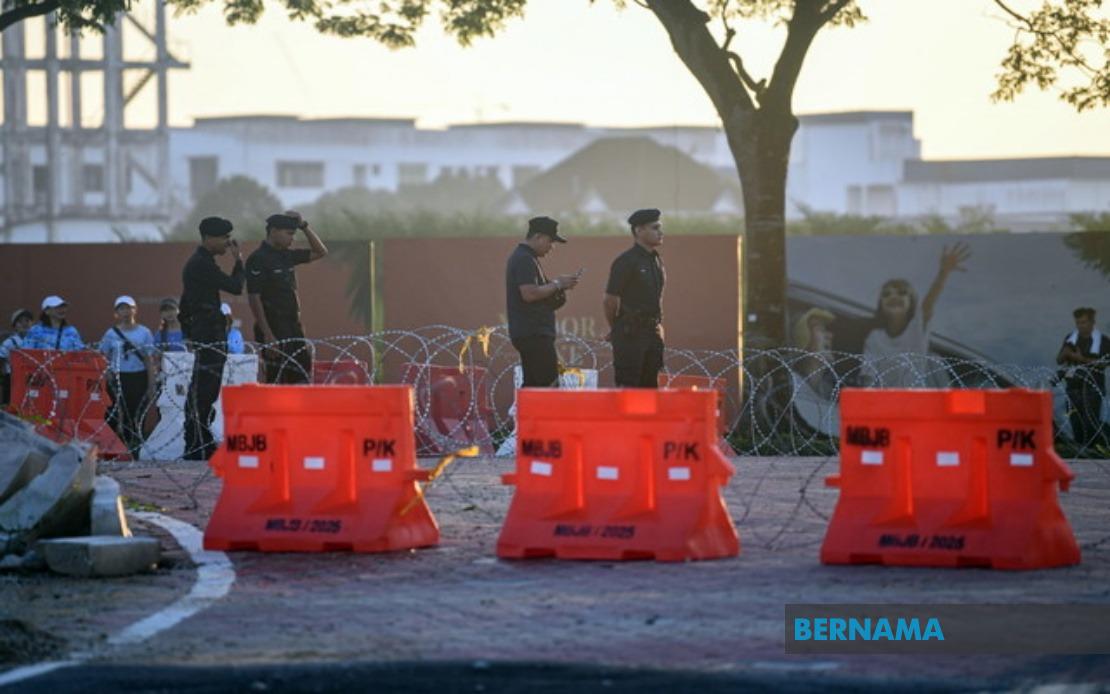
The nomination phase of Johor's 16th state election proceeded without disruption on June 27, as election officials and party representatives processed candidate paperwork across 56 designated nomination centres throughout the state. Clement weather in the morning hours provided an ideal backdrop for the administrative work, which commenced at 9am and concluded at 10am at each venue, allowing the Election Commission to receive and process nomination documents under optimal conditions.
Across the state capital and surrounding districts, the atmosphere at voting locations remained structured and controlled, with Election Commission personnel completing final setup procedures before the formal opening of nomination windows. The systematic approach adopted by electoral authorities ensured that the initial phase of what promises to be a closely watched political contest in Malaysia's southern corridor remained free of logistical complications or procedural delays.
Security arrangements proved visible at all 56 centres, with uniformed personnel deployed to maintain order and supervise the orderly flow of party representatives and candidate supporters. The presence of security forces reflected the commission's determination to safeguard the integrity of the electoral process and prevent any incidents that might undermine public confidence in the nomination proceedings.
Party faithful demonstrated notable enthusiasm for the electoral cycle, with supporters congregating at nomination venues as early as 7:30am to demonstrate backing for their respective candidates. The early morning gatherings indicated the significant stakes involved in this election, reflecting Johor's pivotal position within Malaysia's political landscape and the competitive nature anticipated in several contest-capable constituencies.
The Malaysian Meteorological Department provided weather forecasting indicating that morning conditions would remain dry across most Johor districts, though afternoon thunderstorms were predicted in select areas. This meteorological pattern meant that nomination activities benefited from clear conditions during the critical morning hours when most nomination document submissions occurred, minimising weather-related disruptions to the process.
The Johor State Legislative Assembly comprises 56 electoral districts, each returning one representative to the state parliament. The dissolution of the assembly occurred on June 1, triggering the nomination process and setting in motion the electoral calendar that would culminate in polling day on July 11. Early voting opportunities were scheduled for July 7, providing military personnel, police officers, and their families opportunities to cast ballots in advance of the main election date.
The electoral register for this election encompasses 2,727,926 eligible voters across the state, a substantial constituency reflecting Johor's significant population and demographic weight within the Malaysian federation. This voter population comprised 2,703,175 ordinary citizens registered to vote, supplemented by 12,041 military personnel and their spouses enrolled in dedicated military voting rolls, and 12,710 police personnel and their spouses similarly registered through law enforcement provisions.
Johor's electoral significance extends beyond mere numerical representation, as the state has long occupied a strategically important position in Malaysian electoral politics. The state's voting patterns frequently influence broader regional political dynamics, and outcomes in Johor have historically carried implications for federal politics, making the electoral conduct and voter participation in this cycle matters of national political attention.
The orderly progression of nomination activities suggested that electoral management would maintain professionalism throughout the campaign and voting phases ahead. The Election Commission's demonstrated capacity to coordinate activities across 56 separate venues while maintaining consistent procedural standards indicated preparedness for the more complex operational demands that would arise during the campaigning period and subsequent polling day itself.
With nomination formalities now concluded, the campaign period would commence in earnest, allowing parties and candidates to mobilise supporters and present their policy platforms to voters across the state. The compressed timeframe between nomination completion and polling day meant that the subsequent weeks would witness intensive electoral activity as competing parties sought to persuade voters in what appeared likely to be a contested election in numerous constituencies.

