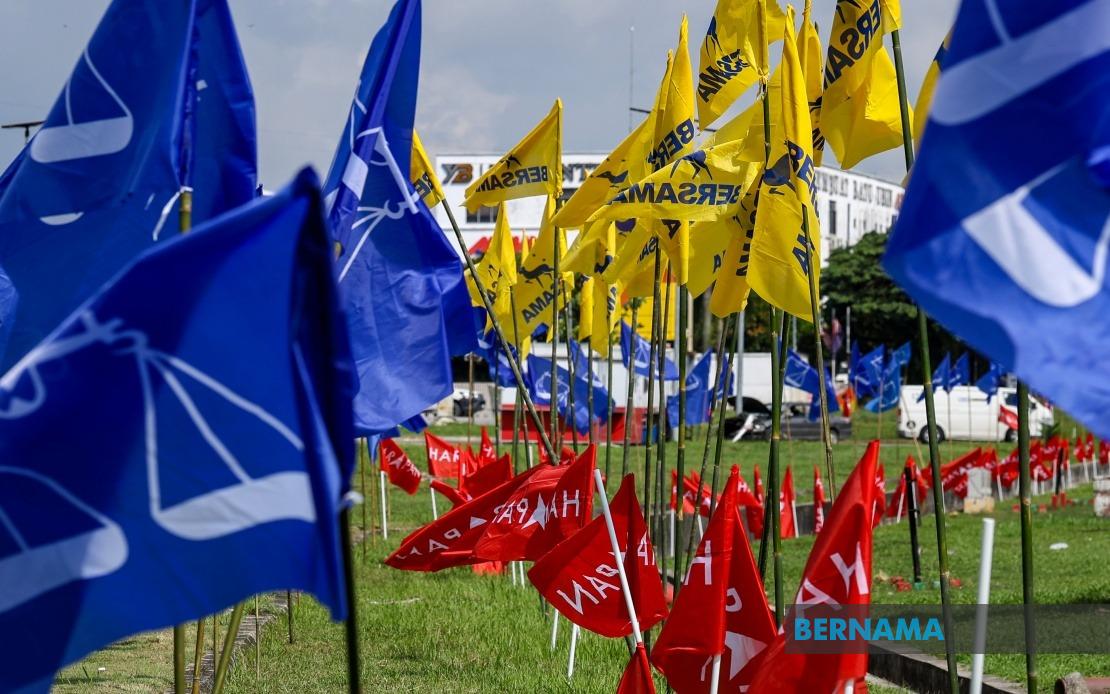
The opening phase of Johor's 16th state election reveals a marked departure from the traditional playbook of grand public rallies and mass gatherings. Instead, political organisations across the spectrum have adopted a more measured, localised approach to campaigning, focusing their energies on direct voter contact and community-level engagement. This strategic recalibration reflects broader shifts in how Malaysian political parties are responding to evolving voter expectations and the demands of modern electoral competition.
According to Universiti Sains Malaysia political sociologist Prof Datuk Dr Sivamurugan Pandian, the measured pace of the first campaign week represents a deliberate adaptation to current political realities. Parties are deploying house visits, small group meetings, and community-focused programmes as their primary tools for voter outreach. These methods serve multiple functions simultaneously—they allow candidates to interact directly with constituents, understand localised grievances, and simultaneously strengthen the organisational infrastructure that underpins electoral success. By front-loading these foundational activities, parties are building what Sivamurugan describes as the backbone upon which more intensive campaign efforts will rest in subsequent weeks.
The strategic logic underlying this approach extends beyond mere cost-effectiveness or logistical convenience. Sivamurugan emphasises that direct candidate-voter interaction creates competitive advantages in individual constituencies by allowing contenders to cement their positioning with local voters. The first week, in his assessment, functions as a preparatory phase where party machinery remains partially hidden, its true capacity and organisational strength yet unrevealed. Political analysts anticipate that as campaigns advance into their second phase, senior party figures will enter the fray, triggering an escalation in rallies, more aggressive messaging, and intensified digital campaigns aimed at persuading undecided voter segments.
The transformation of campaign methodology reflects a broader professionalisation of electoral strategy across Malaysian political organisations. Nusantara Academy for Strategic Research geostrategist Dr Azmi Hassan characterises contemporary campaigns as inherently data-driven enterprises where parties deploy hybrid strategies heavily reliant on social media leverage. The contrast with earlier campaign eras is striking—where previous decades witnessed large-scale public assemblies in open spaces serving as the primary voter engagement mechanism, today's campaigns employ dispersed teams conducting granular face-to-face persuasion efforts. Parties are systematically categorising voters into white (supporters), grey (persuadable), and black (opposition) categories, tailoring their messaging and resource allocation accordingly.
The thematic content of campaigns so far has crystallised around three primary narratives: party track records, future policy pledges, and assertions regarding each organisation's capacity to deliver political stability. According to Ilham Centre researcher Mujibu Abd Muis, a political science lecturer at Universiti Teknologi MARA, these narratives remain relatively generic at this stage, lacking the resonance required to fundamentally reshape the overall campaign landscape. The critical test arrives when such political narratives translate into concrete voter concerns—whether parties can demonstrate how their platforms address cost-of-living pressures, employment opportunities, local infrastructure development, and the quality of public services. Without this translation into everyday voter priorities, even well-crafted political messaging risks remaining abstracted from the concerns that actually motivate electoral behaviour.
The geographic distribution of early campaign activity offers revealing insights into party strategic calculations. Mujibu notes that most campaign machinery has concentrated efforts in northern Johor, encompassing districts such as Muar, Tangkak, and Segamat, alongside portions of Batu Pahat and Kluang. This concentration represents calculated resource optimisation rather than random effort allocation. Northern Johor contains multiple constituencies anticipated to experience closely competitive contests, making them potentially outcome-determinative in a state-level election. The deployment of senior national leaders to these areas serves a dual purpose—generating immediate attention whilst simultaneously signalling to internal party structures the strategic importance party leadership assigns to specific constituencies.
The two major political coalitions are pursuing distinctly differentiated geographic strategies reflecting their respective competitive strengths. Barisan Nasional and Pakatan Harapan are converging in what Universiti Teknologi Malaysia's Associate Professor Dr Mazlan Ali characterises as a coalition-level contest for state control. Pakatan Harapan maintains stronger organisational influence in southern and western Johor districts, whereas Barisan Nasional anticipates superior performance in eastern coastal constituencies, particularly Mersing and Kota Tinggi. The manner in which campaign machinery is mobilised across the state therefore correlates directly with each coalition's internal assessments regarding where electoral victory is achievable and where resources might be strategically deployed for maximum impact.
One element commanding near-universal emphasis among political analysts is the critical importance of voter turnout. All three academic observers independently highlighted that voting participation rates will significantly influence the election's final outcome, yet this remains an area where campaign impact remains notoriously difficult to predict or control. Parties must simultaneously persuade voters regarding candidate quality and policy platforms whilst also motivating electoral participation itself—a dual challenge that becomes particularly acute in state-level elections where voter engagement tends to lag behind federal contests.
The 16th Johor state election structures a competitive field across 56 assembly seats contested by 172 candidates total. Voting is scheduled for July 11, with early voting opportunities available on July 7. These logistical parameters establish temporal constraints on campaign intensity and progression. The compressed timeframe between campaign commencement and polling day means that any campaign momentum generated must escalate rapidly if parties are to maximise voter persuasion in the election's final days. The opening week's quiet intensity therefore represents merely the prelude to what analysts anticipate will become an increasingly heated competitive environment as coalitions deploy their full organisational capacity and prominent political figures directly engage in the electoral struggle.

