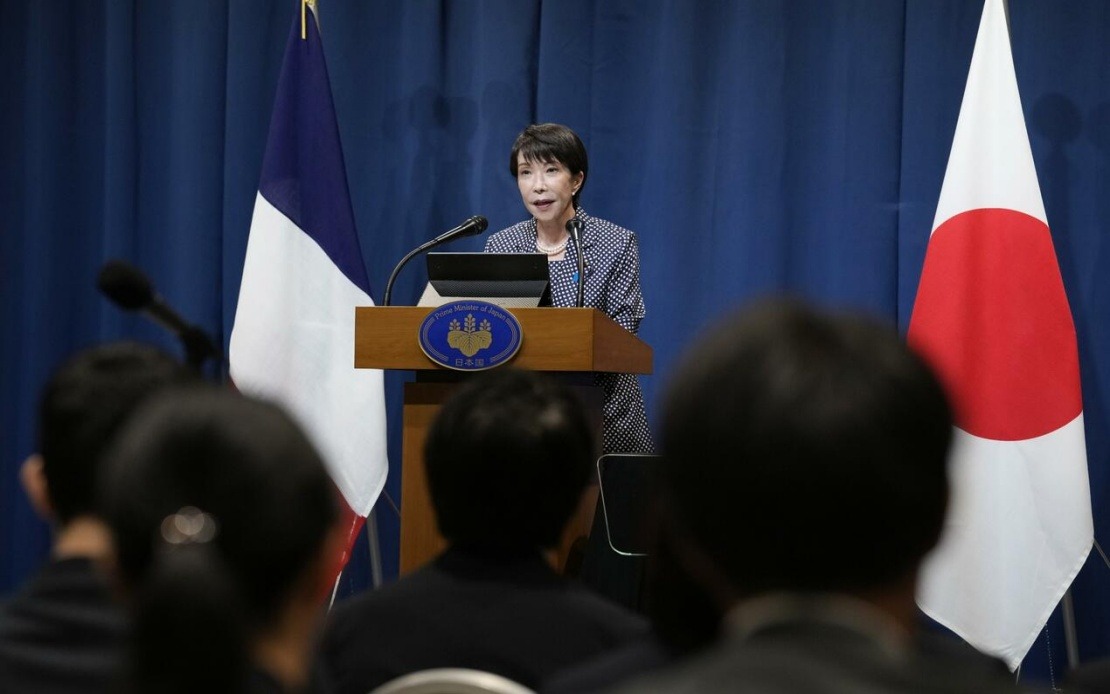
Prime Minister Sanae Takaichi's Cabinet approval rating has slipped to 55.8 per cent, marking a significant erosion of public confidence in the leadership since her inauguration in October last year. According to a Kyodo News poll conducted over the weekend, this represents the lowest level of support the Cabinet has recorded during its tenure, reflecting growing public anxiety over Japan's economic trajectory and its vulnerability to external shocks.
The timing of this decline reflects mounting domestic discontent centred on two interconnected concerns: persistent inflation affecting household finances, and Japan's strategic exposure to global instability in the Middle East. The resource-scarce nation, heavily dependent on imported energy and raw materials, remains acutely sensitive to any disruption in critical shipping lanes and geopolitical flashpoints in Western Asia. This structural vulnerability has become increasingly salient in public consciousness as prices for everyday goods, particularly food and fuel, remain elevated despite initial policy interventions.
On the specific question of military commitment, the poll revealed substantial public resistance to expanding Japan's defence footprint in the region. When asked whether Japanese Self-Defence Forces should be deployed to secure maritime passages in key waterways such as the Strait of Hormuz, 54.7 per cent of respondents rejected the notion, while 36.6 per cent favoured such involvement. This substantial margin suggests deep public unease with military adventurism, particularly when weighed against domestic economic priorities and the risks of entanglement in Middle Eastern conflicts.
The timing of the survey held particular significance, arriving in the aftermath of preliminary peace negotiations between the United States and Iran that produced a tentative agreement involving the reopening of the Strait of Hormuz. Had this diplomatic breakthrough occurred earlier, it might have provided political cover for the Takaichi administration; instead, the government finds itself defending positions on regional engagement that lack clear public endorsement, even as international pressure for Japanese participation in maintaining Middle Eastern stability persists.
Domestic economic grievances dominate public discourse and survey responses with striking clarity. The persistence of elevated prices across essential categories, particularly food and beverages, has eroded household purchasing power and triggered widespread frustration with government economic management. When surveyed on potential solutions, 43.9 per cent of respondents indicated support for reducing the consumption tax on food and drinks from the current 8.0 per cent to 1.0 per cent, viewing this targeted measure as acceptable provided implementation could proceed swiftly. This plurality indicates conditional support for tax relief—respondents are willing to endorse relief measures so long as they translate into immediate practical benefits.
Moreover, a substantial minority of 22.6 per cent of respondents advocated for complete elimination of consumption tax on food and beverages, aligning with commitments made by the ruling coalition parties during election cycles. The gap between these two positions—partial reduction versus full elimination—reveals internal disagreement within the electorate over the appropriate policy response, yet both camps agree that the status quo is unacceptable. This consensus on the necessity for change, even as the precise mechanism remains contested, presents both opportunity and political risk for the Takaichi administration.
For Malaysia and other Southeast Asian economies, Japan's predicament offers instructive parallels and cautionary lessons. Like Japan, Malaysia faces inflationary pressures that disproportionately affect lower and middle-income households, even as the government balances competing priorities in defence, social spending, and fiscal sustainability. The erosion of public support when economic hardship persists despite stated commitments reveals the political costs of perceived inaction or delayed results, a dynamic particularly acute in democratic systems where governments face periodic electoral reckoning.
Japan's vulnerability to Middle Eastern disruptions also resonates across the region, as Southeast Asian nations including Malaysia depend heavily on stable energy supplies and unimpeded maritime commerce. Any sustained geopolitical instability in the Strait of Hormuz or broader Western Asia directly affects energy costs, shipping insurance premiums, and supply chain reliability across Southeast Asia. Public discomfort with military deployments in response to such threats reflects not isolationist sentiment but rather pragmatic recognition that military solutions rarely address underlying resource dependency.
The Cabinet's declining support suggests that Japanese voters are increasingly attuned to the fundamental tradeoff between security commitments and domestic welfare spending. With household budgets stretched by inflation, public willingness to fund external security guarantees or military operations diminishes correspondingly. This phenomenon—the displacement of military spending concerns by bread-and-butter economic issues—reverberates politically across advanced democracies globally and carries implications for regional security architecture in Southeast Asia, where Japanese military presence and technological partnerships form significant components of balancing mechanisms.
The Takaichi administration faces mounting pressure to demonstrate tangible progress on inflation mitigation, particularly through tax relief measures that directly reduce consumer expenditures on essential goods. The convergence of evidence—multiple survey responses pointing toward consumption tax reduction as a priority—indicates that the government ignores this preference at considerable political peril. However, implementing such measures without compromising fiscal sustainability or funding for defence and social services requires deft policy sequencing and clear communication regarding the trade-offs involved.
Looking ahead, the trajectory of this Cabinet's support will likely track closely with inflation data and the pace at which price pressures ease for ordinary households. Regional developments, particularly in the Middle East, may exercise secondary influence on public sentiment, but Japanese voters appear to be prioritising domestic economic relief over geopolitical positioning. For Malaysia and the region, this Japanese experience underscores the primacy of domestic economic management in sustaining political support and the limits of relying on security arguments to justify spending priorities when household welfare remains under pressure.