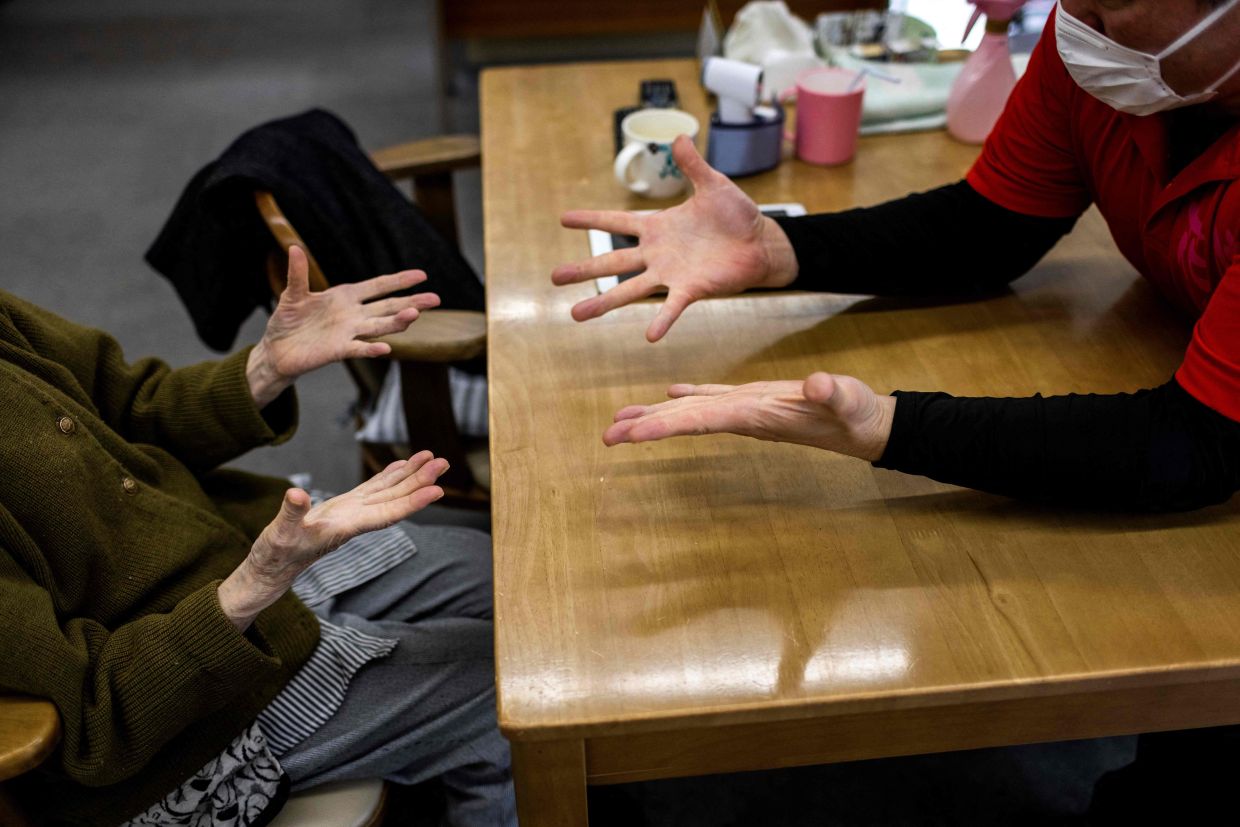
Japan's demographic crisis has become the subject of increasingly provocative discussion in recent months, with a former physician-turned-novelist suggesting that the nation's stretched caregiving system might benefit from an extreme measure: amputating non-functional limbs in elderly patients. Yo Kusakabe, a seventy-year-old retired geriatric specialist from Osaka, has long argued that such a procedure—described in his work as "A-care" or Amputation Care—could substantially reduce physical strain on overwhelmed caregivers, and his 2003 novel exploring this premise has now been adapted into a feature film that has generated significant controversy since its theatrical release in Japan last month.
Kusakabe's willingness to articulate such an unconventional proposal reflects the severity of Japan's long-term care predicament. The nation faces a projected shortage of approximately 570,000 caregivers by 2040, a shortfall that threatens to destabilise an industry already struggling under the weight of an elderly population that represents nearly one-third of the country's total. This demographic reality sits uncomfortably alongside a healthcare system that often prioritises keeping patients alive through aggressive intervention—feeding tubes and intravenous nutrition for those aged 75 and above are heavily subsidised—rather than prioritising comfort or dignity in final years. For healthcare professionals like Kusakabe, this approach appears not merely ineffective but potentially counterproductive, creating impossible burdens for family members and paid carers alike.
The novelist frames his controversial proposition in practical rather than philosophical terms. Immobilised arms and legs, he contends, serve no function for paralysed patients while creating tangible obstacles for those responsible for their care. Such limbs become entangled in clothing during dressing, complicate bathing routines, and significantly increase the physical burden of lifting and transferring patients. For female caregivers assisting heavier male patients, the removal of such appendages would reduce the risk of debilitating back injuries. Kusakabe presents amputation not as cruelty but as rational harm reduction—a logical step to prevent system collapse and the human tragedies that accompany it.
His timing, though dark, proves pertinent. Japan has developed an ugly statistical reality around caregiver breakdown: the term "kaigo satsujin," or caregiving murder, has become established enough in public discourse to warrant regular news coverage. An investigation by public broadcaster NHK in 2016 revealed that such homicides—cases where overwhelmed, exhausted caregivers kill their charges—occur approximately once every two weeks across the country. For Kusakabe, this represents an early warning sign. Should abuse and fatal incidents accelerate further, he argues, his novel's radical solution might transition from speculative fiction to genuine policy consideration, particularly if framed around patient consent and family agreement.
Kusakabe's novel originally seemed unmarketable when completed more than two decades ago, dismissed as too transgressive for film adaptation. Yet the recent cinema release has pierced the cultural barrier that once shielded such provocative ideas from mainstream debate. Online reviewers have described the resulting film variously as shocking, the year's most controversial offering, and an exploration of "terrifying madness." However, critical responses reveal more nuance than simple rejection. Some commentators acknowledge that despite the amputation concept's initial revulsion, it contains internal logic worthy of serious consideration—a recognition that the film succeeds in complicating rather than resolving the underlying ethical question.
The screenplay also explores how amputation might benefit patients themselves, drawing on Kusakabe's clinical experience. He recalls elderly patients with severely damaged limbs expressing genuine desire for removal, finding their paralysed or malfunctioning appendages sources of constant pain rather than resources. In the film's portrayal, amputees subsequently experience improved agility within their reduced physical capacity, manipulating wheelchairs with greater efficiency and engaging in activities like tossing balloons—small pleasures rendered impossible by the burden of non-functional limbs. This reframing positions amputation not as loss but as liberation, transforming the question of end-of-life dignity into something more complex than a simple preservation of bodily integrity.
Kusakabe's central philosophical challenge addresses the definition of dignity itself. He asks whether true dignity lies in painfully attempting to feed non-functional arms through sleeves or whether it resides in freedom from suffering. If a patient consents to amputation, if the procedure facilitates family caregiving, and if all parties accept the decision, he questions society's right to intervene. This framing reveals a doctor's perspective shaped by witnessing pain and exhaustion that abstract ethical principles cannot adequately address. Yet Kusakabe himself recognises that Japan's culture tends toward positions incompatible with such rational decision-making.
The contrast between Japan and Scandinavian practice illuminates the gap between Kusakabe's proposal and contemporary clinical reality. In countries like Sweden and Denmark, palliative care standards typically permit natural death through withholding nutrition when patients cease eating. Such an approach reflects a cultural acceptance that some deaths represent merciful conclusions rather than medical failures. Japan, conversely, maintains what Kusakabe describes as a blanket commitment to maintaining life through technological intervention, regardless of suffering or prognosis. Insurance systems heavily subsidise life-prolonging procedures, while family members often feel psychologically compelled to pursue every available option, oblivious to the suffering such treatments inflict.
This cultural divergence suggests that Kusakabe's radical solution may prove unsustainable in the Japanese context precisely because it requires the rational decision-making framework that Japanese caregiving culture lacks. The author himself acknowledges that his bold approach probably cannot take root in a society committed to aggressive life-preservation at all costs. Moreover, his novel ultimately undermines its own thesis: the fictional narrative traces how amputation's initial promise collapses through tragedy, destroying the protagonist's confidence in the procedure's effectiveness. This narrative arc suggests that even the author views A-care not as a viable solution but as a logical reductio ad absurdum—an exploration of where caregiving system neglect logically leads.
For Malaysian and Southeast Asian observers, Kusakabe's provocation offers cautionary perspective on demographic ageing. While Malaysia's elderly population remains proportionally smaller than Japan's, the nation faces its own acceleration toward an older society. The caregiving workforce challenges that Japan confronts today will likely emerge across the region within two decades, requiring policy responses that balance quality of life, caregiver welfare, and resource constraints. Kusakabe's fictional exploration, however troubling, highlights the dangers of allowing elderly care systems to deteriorate until unthinkable options begin appearing rational. The film and novel serve less as endorsements of amputation than as urgent warnings about what societies risk if they fail to invest adequately in dignified, humane long-term care infrastructure before demographic pressures make such investments impossible.
Ultimately, Kusakabe's intervention in Japanese public discourse reveals the crisis character of contemporary elderly care rather than proposing any realistic solution. His shocking proposal functions as cultural critique, dramatising the catastrophic failure of systems that reduce care to a burden-reduction exercise rather than a human endeavour. The controversy surrounding the film adaptation suggests that Japanese society recognises both the urgency of the care crisis and the inadequacy of current approaches—even if audiences remain unwilling to entertain such radical remedies. The question Kusakabe poses is not whether amputation represents good policy but whether societies can address elderly care humanely once they have allowed systems to deteriorate so severely that such extreme measures begin to acquire logical appeal.