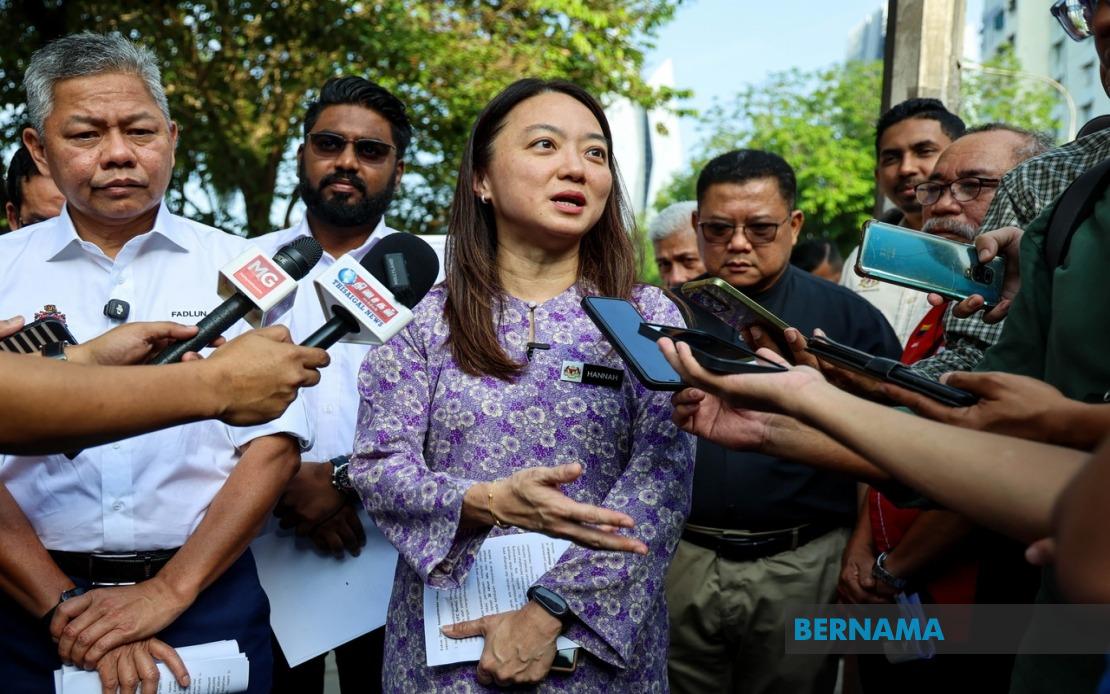
Minister in the Prime Minister's Department (Federal Territories) Hannah Yeoh has called on all local authorities to demonstrate greater initiative in maintaining the cleanliness and operational safety of public facilities, asserting that tourism hubs such as Putrajaya should not require social media campaigns to spur action. Speaking after a site inspection of a hawker facilities upgrading initiative under the Sustainable Business Programme near the Urban Transformation Centre (UTC) Sentul, Hannah emphasised that basic maintenance routines must become an embedded responsibility rather than a reactive measure triggered by public outcry online.
The minister's remarks came in response to recent complaints by social media users regarding malfunctioning public infrastructure in Putrajaya, including damaged lifts and escalators that had drawn considerable online attention. Hannah acknowledged that while some comprehensive infrastructure projects may demand additional budgetary allocations, the foundational work of ensuring cleanliness and operational safety should never be compromised or deferred. She stressed that there exists no justifiable reason for any local authority to neglect these essential functions, which form the backbone of public confidence in municipal management.
Hannah outlined a forward-looking approach to facility oversight, urging all parties involved in local administration to conduct more frequent on-site inspections and monitoring activities. This preventive strategy would identify maintenance issues before they accumulate into serious problems that subsequently capture negative attention online. The emphasis on ground-level visibility reflects a broader shift in how municipal leaders can demonstrate accountability and responsiveness to their constituents through consistent presence and observable action, rather than reactive damage control.
Regarding the specific Putrajaya situation, Hannah disclosed that her ministry had already engaged with the management of Putrajaya Corporation to initiate necessary repair works. This intervention illustrates how ministerial oversight can accelerate response times, yet it also underscores the underlying challenge that such high-level involvement often becomes necessary only when issues achieve viral prominence. The swift action demonstrates capacity within the system, raising questions about why comparable urgency should not apply to routine maintenance across all local authorities from the outset.
Beyond the immediate infrastructure concerns, Hannah addressed the broader phenomenon of social media-driven accountability, offering a nuanced perspective on digital communication and information dissemination. She cautioned content creators and social media users to exercise greater discernment when sharing videos and complaints online, noting that footage circulating through digital platforms frequently presents incomplete narratives that capture only a fraction of actual circumstances. This observation points to a genuine tension between the democratising potential of social platforms and the risks of incomplete or misleading information reaching mass audiences.
The minister articulated a sophisticated argument about the nature of public discourse in the digital age, suggesting that every issue encompasses multiple perspectives and contextual factors that single videos or posts cannot adequately convey. She argued that social media users bear responsibility for assessing information critically before amplifying content, particularly when such amplification can shape public perception and policy response. This framing reflects growing concern among policymakers about how viral moments, while sometimes spurring necessary action, can also distort priority-setting and resource allocation across public administration.
Hannah's call for wisdom and discernment among digital audiences does not negate the legitimate role of social media in highlighting genuine infrastructure failures and demanding accountability. Rather, it suggests a tension between two important principles: the public's right to expose governmental failures and the government's need to maintain operational effectiveness without constant crisis management. Striking this balance requires both better preventive maintenance from local authorities and more thoughtful information-sharing practices from citizens and media users.
For Malaysia's local authorities, the message carries particular weight given the country's reliance on tourism revenue and the substantial role of cities like Putrajaya in projecting national competence and professionalism. Public facilities that malfunction or appear neglected create lasting impressions on both domestic and international visitors, directly impacting perceptions of municipal administration and national development. The reputation costs of degraded infrastructure extend far beyond the immediate inconvenience to users, affecting tourism appeal and investor confidence in affected regions.
The broader context of Hannah's intervention reflects wider governance challenges across Southeast Asia, where rapid urbanisation and tourism expansion have sometimes outpaced the capacity of local authorities to maintain expanding infrastructure networks. Many cities in the region face similar pressures: growing tourist expectations, ageing facilities requiring replacement rather than simple repair, and limited budgets relative to maintenance demands. Malaysia's experience in this area offers lessons for neighbouring countries grappling with comparable municipal management issues.
Implementing Hannah's recommendations would require local authorities to invest in structured maintenance schedules, staff training, and regular inspection protocols that operate independently of public complaints. Such systematic approaches reduce the likelihood of infrastructure failures and eliminate the perception of governmental responsiveness that responds only after public pressure. Building this institutional capacity demands commitment to operational discipline and consistent resource allocation, treating maintenance as a permanent strategic priority rather than an optional add-on when funding permits.
The call for proactive facility maintenance also intersects with broader service delivery expectations in Malaysia, where citizens increasingly demand professional standards comparable to those in developed nations. Public facilities represent tangible expressions of government commitment to citizen welfare; their condition directly reflects institutional priorities and administrative competence. When lifts malfunction or escalators fail, the message conveyed extends beyond the immediate inconvenience, suggesting broader governance deficiencies that undermine public confidence in municipal institutions.
Moving forward, Hannah's intervention signals that Federal Territories oversight will increasingly focus on preventive maintenance standards and consistent facility upkeep. This approach could establish benchmarks for other local authorities nationwide, creating competitive pressure toward higher standards. Success will ultimately depend on whether local authorities respond with genuine structural changes to maintenance protocols or whether they treat the statement as temporary rhetorical pressure that dissipates once social media attention moves elsewhere. The effectiveness of Hannah's call will be measured not in reactive repairs following viral complaints, but in sustained operational excellence that renders such complaints unnecessary.