Malaysia's Perikatan Nasional coalition has pencilled in June 22 for a critical Supreme Council gathering that will address fundamental governance questions threatening to fracture the opposition alliance. The session, to be held in Kota Baru, represents an opportunity for the bloc's senior leadership to resolve accumulated tensions that have strained relations among its constituent parties and undermined their capacity to present a unified front ahead of anticipated electoral contests.
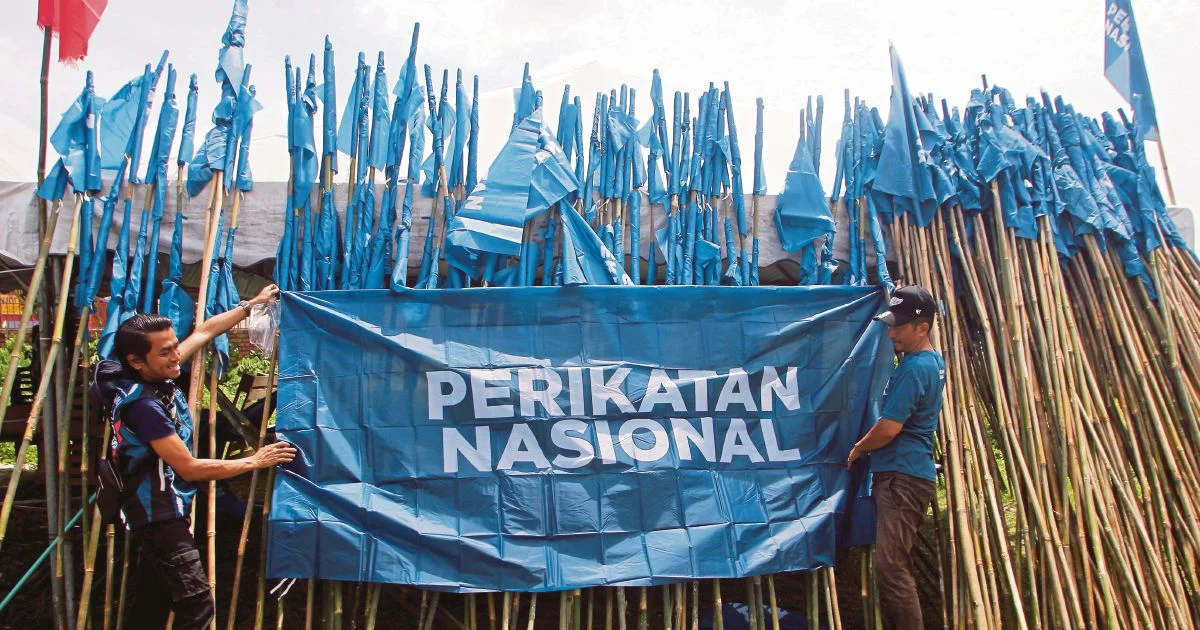
The coalition's logo represents more than mere branding—it constitutes a critical asset that signals legitimacy and organisational cohesion to voters. Disputes over its usage reflect deeper anxieties within the partnership about individual parties' visibility and influence within the broader alliance structure. Different member parties have long harboured competing visions about how prominently their own symbols should feature alongside the Perikatan Nasional logo in campaign materials and official communications, a friction point that has periodically erupted into public disagreement and undermined the group's credibility.
The question of candidate endorsements carries even greater strategic weight, as it directly determines which contenders will benefit from coalition machinery and resources during electoral campaigns. In Malaysian politics, a coalition's backing can substantially enhance a candidate's prospects by mobilising organised party networks, securing cross-party voter transfers, and gaining access to pooled campaign resources. Without clear protocols governing these decisions, smaller parties risk marginalisation while larger ones may attempt to consolidate disproportionate advantage, breeding resentment that corrodes internal solidarity.
For Malaysian voters and observers of opposition politics, the June 22 meeting signals whether Perikatan Nasional possesses the institutional maturity to govern itself effectively. The coalition's capacity to resolve these internal disputes through structured dialogue rather than public acrimony will substantially influence its credibility as an alternative government-in-waiting. Southeast Asian democracies routinely struggle with coalition management, and Malaysia's opposition movements have historically fragmented when internal governance mechanisms proved inadequate to mediate competing interests.
The timing of this convocation reflects growing urgency within the alliance's hierarchy. Postponed resolutions on these matters create decision vacuums that individual parties attempt to fill unilaterally, generating contradictory signals that confuse both internal constituencies and external observers. By establishing a formal date and venue, the Supreme Council leadership is signalling determination to impose order and establish binding frameworks that will govern coalition behaviour in the coming electoral cycle.
History demonstrates that successful political coalitions in Southeast Asia require clear constitutional arrangements governing resource allocation, candidate selection, and public representation. When such frameworks remain ambiguous or contentious, they become instruments through which stronger partners dominate weaker ones, ultimately triggering the defections and splits that have periodically decimated Malaysian opposition movements. The Perikatan Nasional leadership appears mindful of these historical pitfalls and is moving to preempt them through proactive institutional design.
The Supreme Council gathering will likely examine whether existing coalition agreements require amendment or clarification to address disputed questions about logo usage. Such discussions typically involve arcane technical matters—proportion, prominence, juxtaposition of symbols—but they carry profound implications about each party's identity and standing within the broader structure. Resolving these matters satisfactorily requires acknowledging the legitimate interests of all parties rather than imposing hierarchical solutions that privilege particular members.
Regarding candidate endorsements, the Supreme Council must establish transparent criteria and procedures that party leaders view as impartial and defensible to their respective grassroots constituencies. Malaysian political parties maintain complex internal approval processes, and candidates who contest without coalition backing face substantially reduced electoral prospects. The Supreme Council therefore bears responsibility for ensuring that endorsement decisions receive legitimacy through procedurally fair processes rather than appearing to reflect backdoor machinations or factional preferences.
For regional observers, the Perikatan Nasional Supreme Council meeting assumes importance beyond Malaysia's borders. Coalition management challenges comparable to those facing the opposition alliance exist throughout Southeast Asia, and successful institutional innovations in Malaysian politics frequently influence neighbouring democracies. How Perikatan Nasional addresses these governance questions may provide instructive lessons for other regional opposition movements attempting to maintain coherence while respecting the distinct interests of constituent parties.
The June 22 session will ultimately determine whether Perikatan Nasional can establish itself as a serious contender capable of managing the complex coordination problems inherent in multi-party politics. Success requires demonstrating that the alliance functions as a genuine partnership where decisions reflect negotiated consensus rather than domination by stronger members. Failure would reinforce sceptical voters' perception that Malaysian opposition politics remains plagued by the factional divisions and institutional weaknesses that have long undermined its electoral competitiveness.