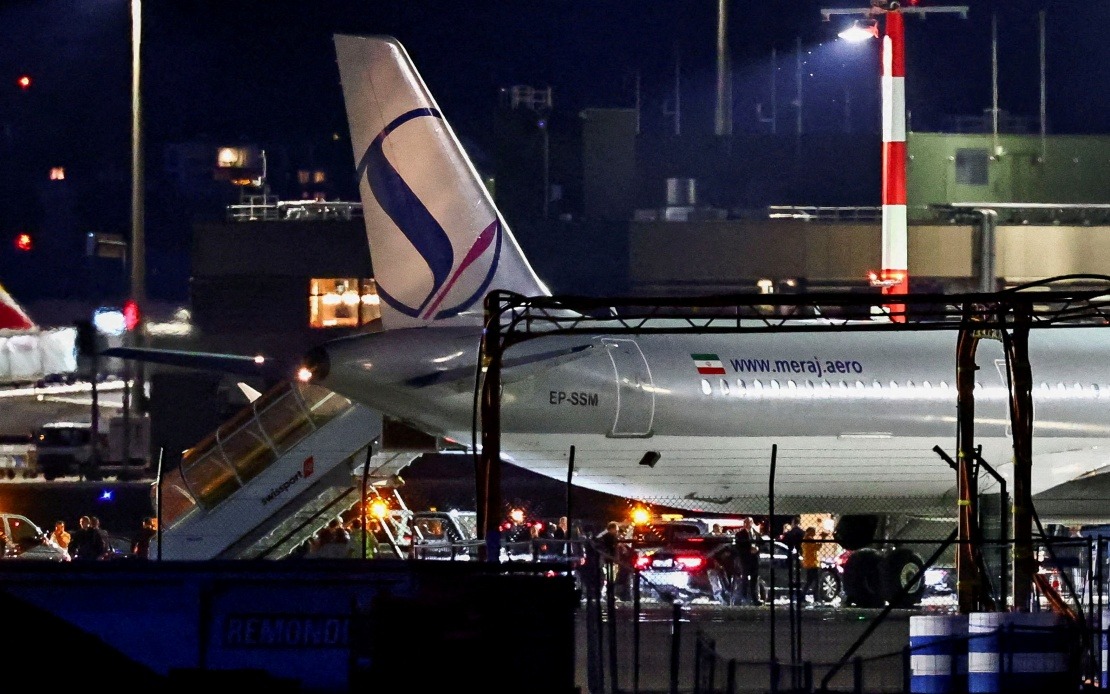
Negotiations between Iran and the United States scheduled for Switzerland will hinge on Tehran's insistence that Washington first honour specific provisions of an existing memorandum of understanding, according to Iranian Foreign Ministry spokesman Ismail Baghaei. The Iranian government has made clear that without concrete progress on several foundational articles—particularly those addressing regional military conflicts and economic sanctions—the talks cannot advance toward a comprehensive final agreement.
The memorandum framework that underpins these negotiations contains a sequence of implementation requirements that must be satisfied before further discussions can proceed. According to Baghaei's statement released through his official social media channel, Iran views Article 13 of the memorandum as the critical gating mechanism. This provision stipulates that negotiations on a definitive accord cannot commence unless Iran and the United States have already implemented the obligations outlined in Articles 1, 4, 5, 10, and 11. This structural approach gives Tehran significant leverage, as it conditions progress on compliance with earlier commitments rather than proceeding with discussions on faith.
At the heart of Iran's negotiating position is Article 1, which addresses the cessation of hostilities across multiple regional theatres. For Tehran, ending what it characterizes as a broader regional conflict cannot be compartmentalized. The Iranian government specifically references the necessity of halting fighting in Lebanon alongside other frontiers, suggesting that regional stability across the Middle East is intertwined with any bilateral settlement between Tehran and Washington. This reflects Iran's view that its security concerns extend beyond direct US-Iranian relations and encompass its broader sphere of influence in the Middle East, particularly in areas where Iranian-backed groups maintain significant presence.
Beyond the military dimension, Iran has prioritized the financial and commercial relief clauses within the memorandum. Article 10 addresses the restoration of Iran's capacity to export crude oil to international markets, a matter of existential importance to Iran's economy given the centrality of petroleum revenues to the state budget. Similarly, Article 11 concerns the unfreezing and return of Iranian assets that have been locked away through international sanctions regimes, likely referring to substantial sums held in foreign banks and frozen through coordinated Western financial restrictions.
Articles 4 and 5 complement these provisions by addressing the broader security architecture that would govern future Iranian-American relations. These articles envision a permanent cessation of hostilities coupled with mutual non-aggression commitments, together with the withdrawal of United States naval forces from the immediate vicinity of Iranian territory. The restoration of safe commercial passage through the strategically vital Strait of Hormuz—through which roughly one-third of the world's seaborne oil trades—represents another crucial component. The memorandum also contemplates regional discussions on the future governance and administration of this waterway, suggesting that Iran seeks a voice in maritime governance and security arrangements that currently remain dominated by American naval presence.
For Malaysian readers and broader Southeast Asian observers, these negotiations carry significant implications. The Strait of Hormuz remains critical to energy security across the region, with multiple Southeast Asian nations dependent on Gulf oil and gas imports. Any escalation of Iranian-American tensions could disrupt shipping lanes and elevate energy costs across the region. Additionally, any resolution of Iranian-American hostilities could reshape regional geopolitical alignments, potentially affecting China's Belt and Road Initiative projects and broader Southeast Asian trading relationships with both Iran and the United States.
The sequencing that Iran has insisted upon reflects lessons Tehran learned from previous international agreements. By conditioning final negotiations on implementation of earlier commitments, Iran attempts to prevent the scenario where it makes concessions in pursuit of a comprehensive accord only to find its negotiating partner reluctant to honour preliminary undertakings. This negotiating structure also allows Tehran to claim progress on incremental matters—ceasefire agreements, sanctions relief—that will generate domestic political support even if comprehensive negotiations ultimately stall.
The lifting of sanctions on Iranian oil exports would have cascade effects across global energy markets. Iran possesses the world's second-largest proven natural gas reserves and substantial crude reserves. If Iranian crude returns to international markets in significant volumes, it could exert downward pressure on oil prices, potentially benefiting energy-importing nations across Southeast Asia and beyond. However, such relief remains contingent on Washington's willingness to grant waivers permitting Iranian oil sales and associated financial transactions—a politically sensitive matter within the United States given ongoing debates about Iran's regional activities and human rights record.
The Financial and commercial provisions related to unfreezing Iranian assets extend beyond mere asset return. They encompass the restoration of Iran's access to the international financial system, including correspondent banking relationships that enable currency conversion and international transfers. This dimension carries implications for Iran's capacity to engage in legitimate international trade and investment, potentially opening opportunities for Iranian business engagement with Southeast Asian trading partners currently constrained by secondary sanctions risks.
Iran's emphasis on regional ceasefire provisions, particularly involving Lebanon, underscores that Tehran views the memorandum as addressing a broader conflict ecosystem rather than simply regulating direct US-Iranian relations. The Lebanese dimension is particularly significant given Hezbollah's central role in that nation's political and military landscape and the organization's Iranian connections. For the United States, agreeing to Article 1 provisions that encompass Lebanon raises questions about enforcement mechanisms and verification, since Lebanon's internal dynamics involve multiple armed groups with varying degrees of Iranian affiliation.
From a Malaysian diplomatic perspective, these negotiations merit close observation. Malaysia maintains commercial relationships with both Iran and the United States and has historically attempted to maintain balanced regional engagement. The outcome of these Switzerland talks could influence Malaysia's own strategic positioning within broader great power competition dynamics and its engagement with Middle Eastern actors ranging from Saudi Arabia to Iran. Additionally, any normalization of Iran-US relations might create new commercial opportunities for Malaysian traders while potentially complicating Malaysia's security relationships with American partners.

%22%2F%3E%3C%2Fpattern%3E%3C%2Fdefs%3E%3Crect%20width%3D%22100%25%22%20height%3D%22100%25%22%20fill%3D%22url(%23phhvu2g)%22%2F%3E%3Crect%20width%3D%22100%25%22%20height%3D%22100%25%22%20fill%3D%22url(%23phhvu2p)%22%2F%3E%3Ctext%20x%3D%2250%25%22%20y%3D%2250%25%22%20text-anchor%3D%22middle%22%20dominant-baseline%3D%22central%22%20fill%3D%22rgba(255%2C255%2C255%2C0.95)%22%20font-family%3D%22Georgia%2C%20'Times%20New%20Roman'%2C%20serif%22%20font-weight%3D%22700%22%20font-size%3D%22151%22%20letter-spacing%3D%22-0.02em%22%3EMalaysian%3C%2Ftext%3E%3C%2Fsvg%3E)