India's National Eligibility cum Entrance Test, commonly known as NEET, proceeded on Sunday with extraordinary security precautions after the previous iteration was invalidated due to a widespread paper leak scandal. The re-examination affects 2.2 million aspiring medical students competing for approximately 100,000 undergraduate places at Indian medical colleges. The original test in May was scrapped following revelations that examination papers had been compromised, an incident that exposed serious vulnerabilities in India's examination infrastructure and prompted intense public backlash.
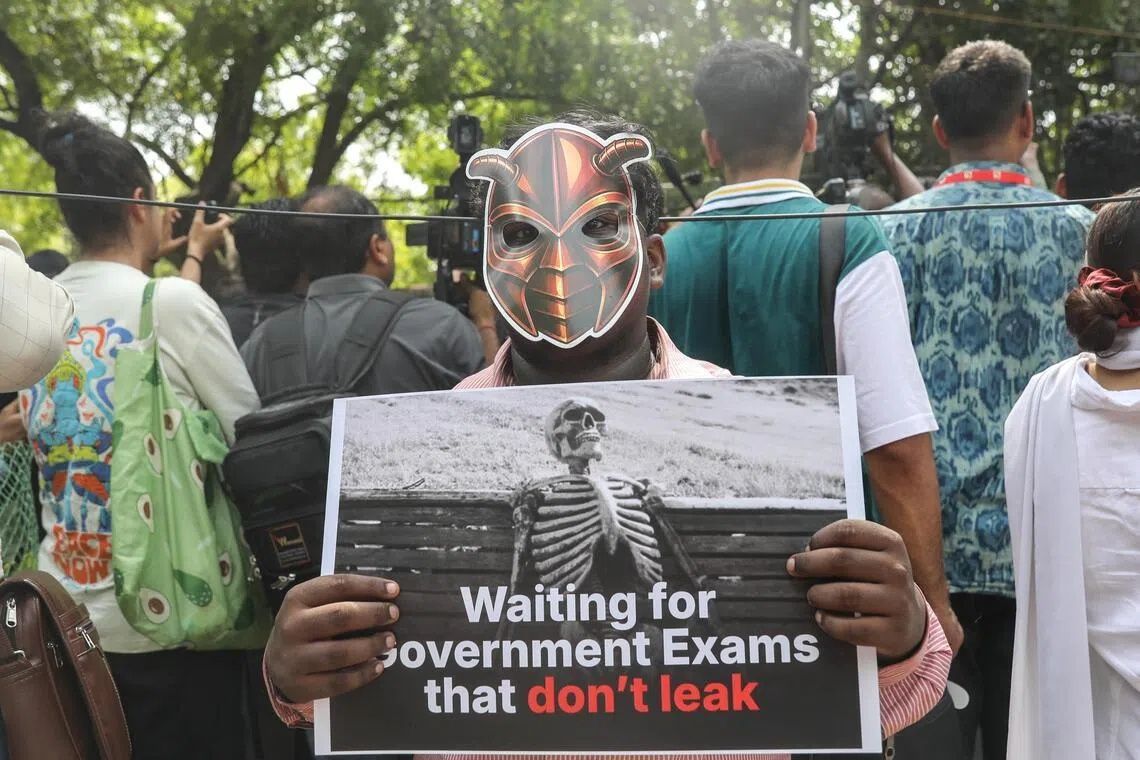
The fallout from the compromised examination extended beyond the immediate crisis facing medical aspirants. A parallel marking scandal affecting nearly two million high school students compounded the credibility crisis for India's testing systems. Reports emerged of grade miscalculations and answers attributed to wrong candidates, amplifying public frustration with the education administration. This dual crisis triggered a wave of youth-led activism, with students and parents vocally demanding accountability from Education Minister Dharmendra Pradhan. The combination of these failures created a broader narrative about institutional dysfunction in India's examination ecosystem.
Indian authorities responded by mobilising an exceptionally large security apparatus for Sunday's retest. The National Testing Agency deployed more than 200,000 officials, including police personnel, across examination centres nationwide. The government also took the controversial step of temporarily restricting access to Telegram, the encrypted messaging platform that investigation agencies identified as a key tool used by organised cheating networks to distribute leaked papers and coordinate fraud operations. This technological restriction proved contentious, with privacy advocates questioning the proportionality of the measure.
The National Testing Agency announced a comprehensive multi-layered security framework designed to prevent a recurrence of the fraud. The system incorporates biometric authentication requirements for all test-takers, artificial intelligence-powered camera surveillance monitoring examination halls in real time, and GPS tracking of all question paper materials to ensure their physical security throughout the examination period. These measures represent a significant escalation in technological monitoring and represent one of the most technologically intensive examination security protocols deployed in India to date.
The intensity of competition surrounding NEET reflects the enormous stakes involved for Indian youth. The test remains the sole gateway to undergraduate medical education in India, creating extreme competition where millions compete for a limited number of seats. This scarcity has spawned a massive coaching industry, with private tutoring centres charging substantial fees to help students prepare. The high financial stakes and fierce competition have simultaneously created lucrative opportunities for criminal networks willing to exploit the examination system through paper leaks and coordinated fraud schemes.
Investigations into the original leak identified a chemistry lecturer as an alleged key orchestrator of the paper distribution scheme. The Central Bureau of Investigation arrested the individual, signalling that authorities had traced the compromise to insider involvement within the examination administration itself. This revelation was particularly damaging to public confidence, demonstrating that threats to examination integrity were not external but embedded within the institutional structures responsible for conducting the tests.
Telegram's role in facilitating the fraud underscored how digital communication platforms have become integral to organised cheating networks. The messaging app's encryption features and channel structure made it an ideal conduit for rapidly sharing compromised examination materials across large networks of coordinated cheaters. Pavel Durov, Telegram's founder, challenged the effectiveness of the app ban, suggesting that cheating networks would simply migrate to alternative platforms. He argued that the fundamental problem lay not with any particular communication technology but with insiders willing to leak examination materials for profit.
The examination scandal has sparked unusual forms of political protest and commentary. A satirical movement calling itself the "Cockroach People's Party" emerged on social media in May and rapidly accumulated millions of followers. The movement used humour and irreverent social commentary to channel public frustration with educational governance failures. The movement's central demand—the resignation of Education Minister Dharmendra Pradhan—reflected broader disillusionment with institutional accountability and systemic reform efforts.
For Southeast Asian observers, India's examination crisis carries significant implications beyond its borders. The region contains numerous countries with similarly competitive entrance examination systems and comparable challenges managing paper leaks and organised fraud. Malaysia's own university entrance system, while distinct from India's structure, faces recurring concerns about examination integrity and security. The technical solutions deployed by India's National Testing Agency, including biometric verification and AI surveillance, represent approaches that regional examination boards may consider adopting to strengthen their own systems.
The broader lesson from India's crisis extends to the structural vulnerabilities created by extreme competition for scarce educational opportunities. When millions of aspiring students compete for limited places, the financial incentives for examination fraud escalate correspondingly. Educational administrators across the region might consider whether the fundamental scarcity driving such intense competition warrants policy-level responses, such as expanding higher education capacity, alongside the technological security measures being implemented.
The human cost of the original examination failure deserves particular attention. Media reports indicated that some teenagers took their own lives following the paper leak and subsequent examination cancellation, highlighting the psychological toll of systemic failures on vulnerable students. This tragic dimension adds weight to demands for comprehensive institutional reform and stronger mechanisms to prevent future crises.