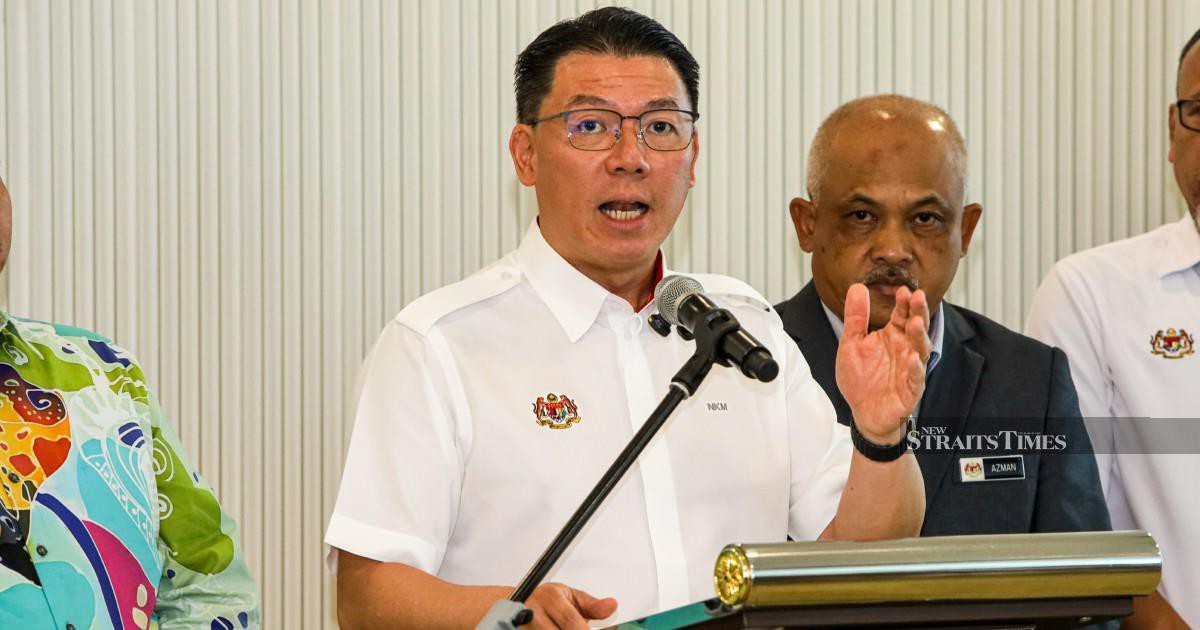
Housing and Local Government Minister Nga Kor Ming has pledged to conduct a rigorous and comprehensive inquiry into the circumstances surrounding the death of Rocky, a pet dog whose case has stirred significant public concern in Port Klang. His commitment reflects growing pressure from animal welfare advocates and the general public, who have been closely monitoring how authorities handle allegations of potential cruelty or negligence in the incident.
The minister's statement underscores the seriousness with which the government intends to treat the matter, positioning animal protection as a priority within his ministry's purview. By personally guaranteeing a thorough investigation, Nga Kor Ming has elevated the case from a local incident to one with ministerial oversight, signalling that no matter how modest the victim—a domestic pet rather than a person—the probe will receive adequate resources and attention.
The death of Rocky has become emblematic of broader concerns about animal welfare standards in Malaysia. Pet ownership has surged in recent years, particularly among urban millennials and young families, yet legal frameworks protecting animals from cruelty remain fragmented and inconsistently enforced across states. The Port Klang incident has prompted renewed calls for stronger legislation and better coordination between local authorities, animal welfare organisations, and law enforcement agencies.
Nga's explicit assertion that there is no tolerance for cruelty or abuse against animals reflects a statement of principle that carries implications beyond this single case. It sets a tone for how future complaints of animal mistreatment will be handled and provides assurance to a public that has increasingly mobilised around such issues through social media and online petitions. For a region where pet culture has become mainstream, such ministerial pronouncements carry weight in shaping public expectations of accountability.
The Housing and Local Government Ministry's involvement in the investigation is noteworthy, as animal welfare typically spans multiple government departments including veterinary services, local councils, and the Royal Malaysian Police. The minister's engagement suggests the need for inter-agency coordination to establish what happened to Rocky and whether proper procedures were followed by relevant authorities. Port Klang, as a major port city in Selangor, falls under local government structures that ultimately answer to the ministry, making this a legitimate area of ministerial concern.
Public discourse surrounding Rocky's death has highlighted gaps in how Malaysia documents and investigates animal-related incidents. Unlike some neighbouring countries, Malaysia lacks a centralised, transparent database of animal cruelty cases, making it difficult for advocates to identify trends or hold institutions accountable. A thorough investigation into Rocky's death could establish precedent for how such cases are handled going forward, potentially influencing policy development.
The commitment to investigate also addresses concerns that without clear accountability mechanisms, pet owners and members of the public may lose faith in authorities' ability to protect animals under their care. This is particularly relevant in urban areas like Port Klang, where animal-related disputes—whether involving neighbours, service providers, or public facilities—frequently arise but struggle for resolution through existing complaint channels.
For animal welfare organisations operating in Malaysia, the minister's pledge represents an opportunity to engage with government on broader reform. Groups such as the Malaysian Animal-Associated Trauma Society and others have long advocated for statutory recognition of animal rights, mandatory cruelty reporting mechanisms, and standardised investigative protocols. Rocky's case may catalyse conversations about embedding animal protection more firmly within local government operations.
The investigation's scope will likely determine whether systemic failures in oversight or individual acts of negligence led to Rocky's death. Port Klang's local authorities will be expected to cooperate fully, potentially opening their handling of animal-related complaints to scrutiny. This transparency, if achieved, could strengthen public confidence in institutions that are often perceived as distant or inaccessible.
For Malaysian pet owners, Nga's statement provides some reassurance that political leadership recognises animal welfare as a governance issue deserving investigation and action. However, meaningful change will require sustained effort beyond rhetoric—including budget allocation for enforcement, training of personnel, and statutory amendments to animal protection laws that currently differ across states.
The case also reflects Malaysia's transition towards more developed-country concerns and values, where animal rights feature prominently in public consciousness. This shift has been particularly pronounced among younger, urban populations who view pets as family members deserving legal protections comparable to those in Western nations. How the government responds to Rocky's death will signal whether such expectations are merely aspirational or genuinely embedded in policy.
Looking ahead, the thoroughness of this investigation will establish benchmarks for future cases. If conducted transparently with findings publicly released, it could strengthen institutional credibility and encourage more people to report suspected animal cruelty, knowing that complaints will be taken seriously at the highest levels of government. Conversely, if the inquiry remains opaque or inconclusive, public trust may erode further, leaving many to question whether official commitments to animal welfare protection can be relied upon.

