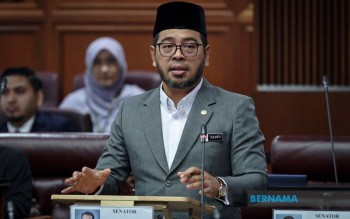
Malaysia's government has committed over RM10 billion to rescue Tabung Haji, the national Islamic pilgrimage savings institution, in what constitutes a major intervention to address a deepening financial crisis caused by years of mismanagement and embezzlement. Minister in the Prime Minister's Department (Religious Affairs) Dr Zulkifli Hasan disclosed the scale and rationale for the bailout during a special sitting of the Dewan Rakyat, where lawmakers were briefed on the findings of a Royal Commission of Inquiry into the institution's collapse and the government's remedial strategy moving forward.
The financial deterioration of Tabung Haji had become dire by late 2018, when the deficit between the institution's liabilities and assets had widened to exceed RM10 billion within just three months of that quarter. This precipitous decline left the institution technically insolvent, unable to meet its obligations to the millions of Malaysian Muslims who had placed savings with Tabung Haji in preparation for their hajj pilgrimage to Mecca. The speed of this collapse underscored how severe the underlying problems had become, forcing policymakers to act decisively to prevent further deterioration that could have devastated the savings of ordinary Malaysians.
Dr Zulkifli emphasised that the government's decision to inject capital was driven purely by the necessity to restore Tabung Haji's viability as a going concern, not to acquire or control the institution's assets for the state. The bailout was structured as part of a broader restructuring initiative designed to nurse the institution back to financial health and establish conditions for long-term sustainability. This distinction matters considerably, as it clarifies that the government viewed the rescue as a stabilisation measure rather than a nationalisation or asset grab, though it inevitably increased public sector exposure to what had become a problematic financial entity.
The minister also moved swiftly to counter misinformation that had begun circulating in certain quarters, dismissing claims that assets had been sold to non-Muslim or Chinese buyers as deliberate falsehoods aimed at stoking communal tensions and public anger. These kinds of accusations, he suggested, were being weaponised by irresponsible actors seeking to exploit the Tabung Haji crisis for political or social division. By publicly rebutting these narratives in parliament, the government sought to prevent the crisis from metastasising into a broader controversy tinged with religious or racial undertones that could inflame public sentiment.
The structural arrangement of the troubled assets proved central to the government's approach. Assets held by Tabung Haji were transferred to Urusharta Jamaah, a wholly-owned subsidiary of the Minister of Finance Incorporated, a statutory entity that functions as an investment arm of the federal government. This move allowed for separation of the problem assets from Tabung Haji's core operations while maintaining public ownership and ensuring that any eventual recovery or restructuring of these holdings would flow back to the public purse rather than enriching private interests. The arrangement essentially ringfenced the financial difficulties while protecting the integrity of the main institution.
The Royal Commission of Inquiry report that prompted the government's intervention had presumably documented the extent of mismanagement and embezzlement that had depleted Tabung Haji's reserves over an extended period. Such findings carry significant implications for governance and accountability across Malaysia's religious institutions and government-linked entities. The fact that such large-scale financial deterioration had gone unaddressed until the institution faced imminent collapse raises questions about the adequacy of existing oversight mechanisms, audit procedures, and internal controls that should have flagged problems well before they reached crisis proportions.
The Pakatan Harapan Government's decision to conduct and release findings from the Royal Commission represented a commitment to transparency regarding what had transpired, in contrast to earlier periods when such failures might have been obscured or downplayed. The decision to brief parliament in a special sitting underscored the gravity with which the administration treated the matter and its determination to place the facts before elected representatives and, by extension, the Malaysian public. This approach stood in contrast to the historical tendency to contain embarrassing disclosures within government circles.
For millions of Malaysians who had entrusted savings to Tabung Haji, the government's intervention provided reassurance that their deposits would be preserved rather than lost entirely. However, the episode also demonstrated the risks inherent in concentrating such large amounts of public savings within a single institution, particularly where governance standards and management competence proved inadequate to the task. The bailout cost represents a substantial burden on the public finances and taxpayers, making it one of the more expensive institutional rescues in recent Malaysian history.
Looking forward, the injection of capital and restructuring process will need to be accompanied by robust reforms to prevent recurrence of the mismanagement that precipitated the crisis. These might include strengthened governance frameworks, enhanced audit and compliance mechanisms, improved transparency in asset management, and more rigorous oversight of senior management. The government's willingness to allocate such significant resources to restoration suggests that policymakers view Tabung Haji as sufficiently important to the social and religious fabric of the nation to justify the investment, despite the costs involved.
For the broader Southeast Asian context, Malaysia's experience with Tabung Haji offers cautionary lessons about the vulnerabilities of large faith-based savings institutions. Other countries in the region with similar mechanisms for facilitating religious obligations face comparable governance challenges, and Malaysia's handling of the crisis—both in terms of the intervention itself and the transparency surrounding it—may serve as either a cautionary tale or a model depending on how effectively the restructuring ultimately restores institutional health and prevents future deterioration.

