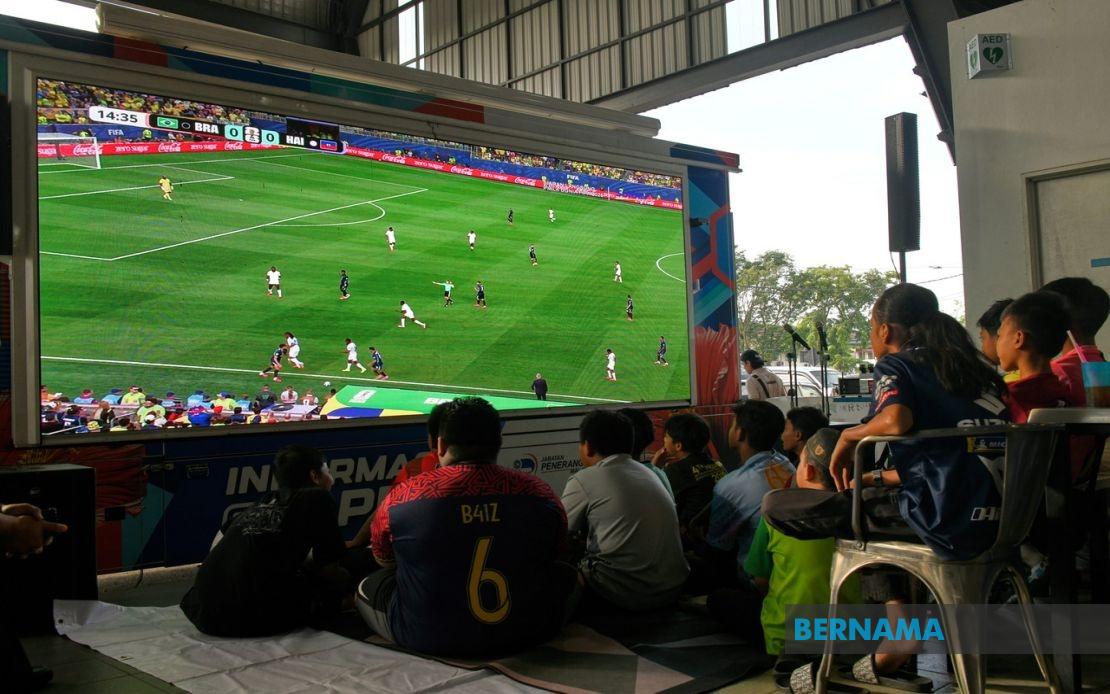
Communications Minister Datuk Fahmi Fadzil has emphasised how the government's decision to transmit 2026 FIFA World Cup matches through state broadcaster RTM and Unifi TV is delivering tangible financial relief to Malaysia's food and beverage sector and ordinary households. Speaking in Butterworth after observing the Brazil versus Haiti fixture at a public market food court, Fahmi underscored the initiative's growing acceptance among traders and the wider community, who have seized the opportunity to enjoy world-class sporting entertainment without the substantial licensing fees that typically accompany such premium content.
The Malaysian Muslim Restaurant Owners Association has conveyed enthusiastic endorsement of the free transmission arrangement, with members reporting considerable operational savings in an economic climate marked by persistent cost pressures. One businessman highlighted to the minister that this represents an unprecedented opportunity—the first occasion in over twenty years that he has accessed World Cup coverage without incurring broadcast fees. Such testimony reflects the substantial financial burden that premium sports rights can impose on small and medium enterprises, particularly in the hospitality sector where margins remain tight and customer retention increasingly depends on offering competitive experiences.
The availability of matches across multiple platforms—RTM's traditional television service, the RTMKlik digital portal, and Unifi TV—ensures accessibility across diverse demographic segments and technological capabilities. This multi-channel approach acknowledges Malaysia's varied digital infrastructure and consumption patterns, allowing residents in both urban centers and rural areas to participate in the global football spectacle. Fahmi positioned this initiative as a strategic intervention that addresses public affordability concerns whilst simultaneously supporting business viability within the food service industry, where providing World Cup viewing has become a standard customer attraction.
Beyond the immediate economic calculations, the broadcast arrangement carries broader implications for sectoral recovery and consumer behaviour. By removing financial barriers to access, the government has essentially removed a constraint on how restaurants and food courts utilise major sporting events as customer magnets. In a market where discretionary spending remains cautious, bundling free entertainment with affordable meals encourages foot traffic and extends average customer dwell time, generating secondary revenue through additional food and beverage consumption.
Fahmi's ground-level engagement at Seberang Jaya market reflected a deliberate effort to gather unfiltered intelligence on trader concerns and operational realities. Beyond celebrating the broadcast initiative, he prioritised direct conversation with business proprietors regarding their broader challenges and policy expectations from both state and federal administrations. This on-the-ground methodology enabled the minister to capture nuanced feedback that might not surface through formal consultation channels, yielding insights into how external shocks—particularly regional instability—transmit through supply chains and cost structures affecting everyday business operations.
The minister flagged the ongoing ripple effects of Middle Eastern conflict on commodity prices and supply chain costs throughout Malaysia, observing that while diplomatic efforts pursue peace, economic consequences persist domestically. Rising expenses for imported goods and materials create cumulative pressure on traders operating with fixed or slow-adjusting margins. Fahmi advocated for ministers, parliamentarians and state assembly members to systematically visit affected communities and commercial zones, arguing that direct exposure to trader hardships and household budget constraints should inform policy-making at all governance levels.
This advocacy for ministerial field engagement reflects recognition that policy efficacy often hinges on accurate understanding of ground-level realities. Politicians and administrators risk designing interventions based on incomplete or secondhand information, potentially missing critical implementation challenges or unintended consequences. By encouraging cabinet colleagues and elected representatives to conduct regular market visits and engage traders conversationally, Fahmi implicitly endorsed a governance model where empirical observation complements data analysis and stakeholder consultations.
The World Cup broadcast initiative also demonstrates how strategic use of state infrastructure—in this case the capabilities of national broadcasters and incumbent internet service providers—can deliver public benefit aligned with commercial interests. The arrangement neither requires substantial government expenditure nor imposes onerous burdens on RTM or Unifi TV, yet generates demonstrable value for both businesses and consumers. This represents efficient policy design that leverages existing assets to address market failures or equity concerns without creating new fiscal obligations.
For Malaysian football enthusiasts and casual viewers, the arrangement democratises access to elite sporting competition traditionally concentrated among cable television subscribers or premium digital platform members. The World Cup functions as a genuinely mass cultural event when broadcast barriers dissolve, fostering communal viewing experiences in public spaces and commercial venues that strengthen social cohesion around shared sporting passion. This cultural dividend extends beyond economic metrics, contributing to national pride and community engagement during the tournament.
The minister committed to conveying trader feedback and policy recommendations to Prime Minister Datuk Seri Anwar Ibrahim and Penang Chief Minister Chow Kon Yeow, establishing an escalation pathway for locally identified concerns to reach senior decision-making forums. Such commitment signals that ground-level observations translate into substantive consideration rather than remaining performative gestures. The effectiveness of this feedback loop will ultimately determine whether subsequent policy adjustments address genuine trader challenges or ignore them despite ministerial acknowledgment.
Moving forward, the success of the World Cup broadcast initiative may establish a template for future sporting events and entertainment content, potentially prompting broader reconsideration of how major global broadcasts serve simultaneous cultural and economic functions. If the arrangement demonstrably supports business resilience whilst enhancing public entertainment access, stakeholders may argue for extending similar frameworks to other premium sporting fixtures or entertainment properties, gradually shifting Malaysia's content accessibility model toward greater universality.

%22%2F%3E%3C%2Fpattern%3E%3C%2Fdefs%3E%3Crect%20width%3D%22100%25%22%20height%3D%22100%25%22%20fill%3D%22url(%23ph2hy9vg)%22%2F%3E%3Crect%20width%3D%22100%25%22%20height%3D%22100%25%22%20fill%3D%22url(%23ph2hy9vp)%22%2F%3E%3Ctext%20x%3D%2250%25%22%20y%3D%2250%25%22%20text-anchor%3D%22middle%22%20dominant-baseline%3D%22central%22%20fill%3D%22rgba(255%2C255%2C255%2C0.95)%22%20font-family%3D%22Georgia%2C%20'Times%20New%20Roman'%2C%20serif%22%20font-weight%3D%22700%22%20font-size%3D%22272%22%20letter-spacing%3D%22-0.02em%22%3EAnwar%3C%2Ftext%3E%3C%2Fsvg%3E)