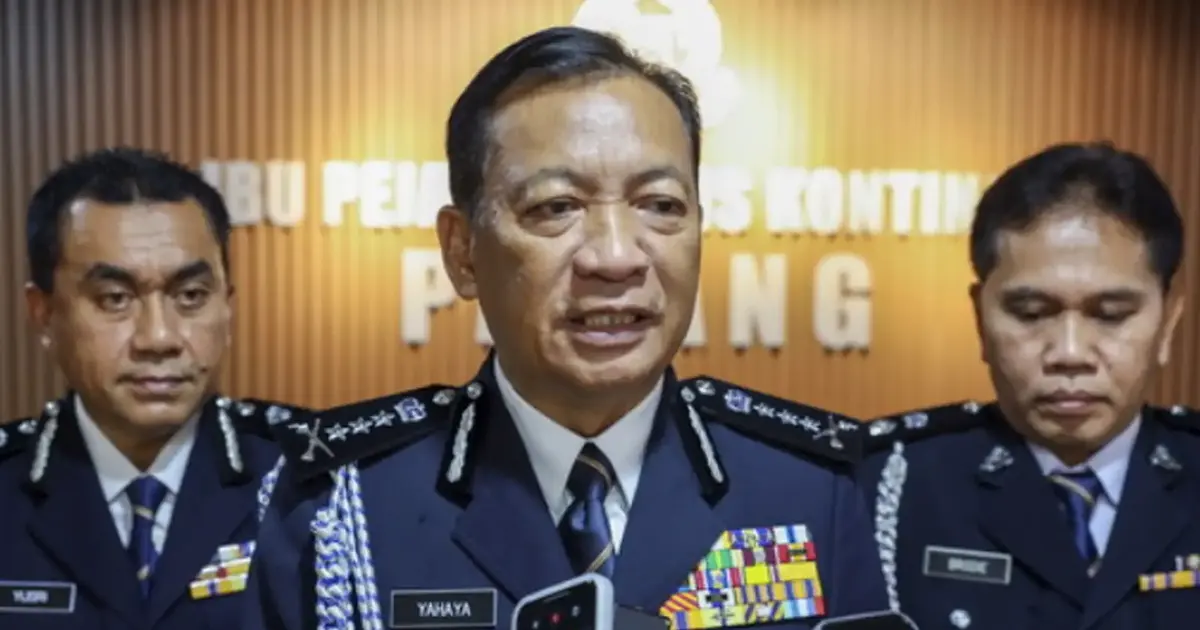
The investigation into a widespread forged medical certificates operation has expanded with police apprehending four more individuals, signalling the growing scope of an elaborate fraud network that has attracted law enforcement attention across Pahang. According to Yahaya Othman, the state police chief, five individuals who had been held in remand since their arrest on Monday were released today, as officers continue their systematic review of the evidence against each suspect.
The cascading nature of these arrests and releases reflects the complexity involved in unravelling what appears to be a coordinated scheme to produce fraudulent medical documentation. Police sources indicate that the investigation requires meticulous examination of financial records, communications between parties, and the authentication procedures involved in generating false medical certificates. The staggered approach to detentions allows investigators time to verify claims and establish clear links between suspects before pursuing formal charges.
Medical certificate fraud represents a significant public health and administrative concern across Malaysia, as false documentation undermines workplace safety protocols, employment verification systems, and medical records integrity. When individuals obtain unauthorised sick leave through forged certificates, it creates cascading problems for employers attempting to manage workforce stability and for healthcare systems struggling to maintain accurate patient records. The practice also creates potential liability issues for legitimate medical practitioners whose credentials may be exploited in the fraud.
The involvement of Pahang authorities in this investigation underscores how such operations are not confined to major urban centres but have proliferated across multiple Malaysian states. The coordination required to produce convincing medical documents, distribute them through networks, and maintain customer anonymity often involves multiple participants across different locations. Pahang police's actions suggest they have identified key coordination points and are methodically working through the supply chain of this illicit operation.
Investigators typically focus on identifying the source of the forged documents, the distribution network, and the end-users who purchased the certificates. Each layer of the operation serves a distinct function: some individuals may handle production, others manage marketing and sales, while accomplices ensure payment collection and logistics. The differential treatment of the five released suspects versus those retained indicates that police have established varying degrees of involvement and culpability among the detained individuals.
The decision to release five suspects suggests either that prosecutors determined insufficient evidence existed to justify extended remand, or that these individuals were classified as peripheral to the operation's core activities. Malaysian law permits police to hold suspects in remand for investigation purposes, but courts must be satisfied that continued detention serves the investigation. The judicial review process ensures that detentions do not become indefinite and that police maintain appropriate evidentiary standards.
Such rackets often emerge from a combination of demand-side factors—individuals seeking to avoid work or obtain undeserved benefits—and supply-side vulnerabilities in healthcare systems. The ease with which medical certificates can be forged, coupled with the minimal consequences some individuals perceived before authorities intensified efforts, created conditions for these networks to flourish. Enhanced scrutiny from both police and hospital authorities has gradually dismantled some operations, though new variants continue emerging.
For Malaysian employers, the implications are significant. Companies relying on medical certificates for attendance verification face mounting risks of being defrauded through counterfeit documentation. While legitimate medical facilities have implemented security features to reduce forgery, determined fraudsters continuously adapt their techniques. This arms race between authentication systems and forgery methods places additional burden on human resources departments to implement verification protocols.
The Pahang investigation illustrates how law enforcement agencies have shifted toward treating certificate fraud as an organised concern rather than isolated incidents. The multi-person arrests across separate operations suggest police have identified systematic patterns and supply relationships. Cooperation between different police jurisdictions and coordination with healthcare regulators has amplified enforcement capacity, enabling authorities to pursue not just individual users but the infrastructure enabling the fraud.
As police continue processing evidence from the four newly arrested individuals, the coming weeks will reveal whether they have identified additional members of the network or uncovered alternate distribution channels. The investigative momentum demonstrated through these successive arrests signals that authorities view this operation as sufficiently serious to warrant sustained resource commitment. For medical practitioners and healthcare institutions, this enforcement action reinforces the importance of implementing rigorous document verification and reporting suspicious requests to law enforcement.
The outcome of this investigation will likely influence how other Malaysian states approach similar cases. If prosecutors successfully establish convictions and secure meaningful penalties, it may serve as a deterrent to others considering involvement in such schemes. Conversely, sentencing outcomes that individuals perceive as lenient may perpetuate the perception that certificate fraud carries manageable risks relative to rewards.

%22%2F%3E%3C%2Fpattern%3E%3C%2Fdefs%3E%3Crect%20width%3D%22100%25%22%20height%3D%22100%25%22%20fill%3D%22url(%23ph2hy9vg)%22%2F%3E%3Crect%20width%3D%22100%25%22%20height%3D%22100%25%22%20fill%3D%22url(%23ph2hy9vp)%22%2F%3E%3Ctext%20x%3D%2250%25%22%20y%3D%2250%25%22%20text-anchor%3D%22middle%22%20dominant-baseline%3D%22central%22%20fill%3D%22rgba(255%2C255%2C255%2C0.95)%22%20font-family%3D%22Georgia%2C%20'Times%20New%20Roman'%2C%20serif%22%20font-weight%3D%22700%22%20font-size%3D%22272%22%20letter-spacing%3D%22-0.02em%22%3EAnwar%3C%2Ftext%3E%3C%2Fsvg%3E)