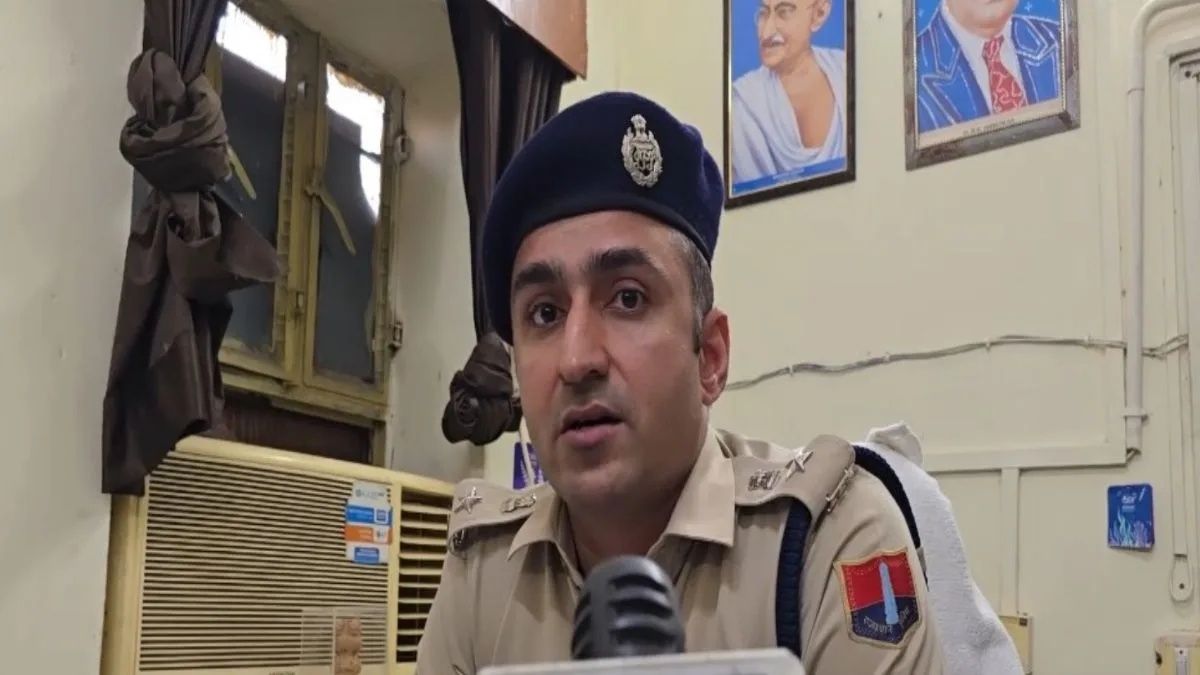
A suspected honour killing has shocked Rajasthan's Dholpur district, with police investigating the deaths of two sisters who authorities believe were deliberately thrown into a river by members of their immediate family. The alleged crime, which occurred near Sagarpada Bridge on the night of June 11, has prompted investigators to examine what appears to be a tragic consequence of familial opposition to the young women's romantic choices. Superintendent of Police Vikas Sangwan confirmed that Bharat Lodha, a resident of Pharakpur village and father of four, has been named as the primary suspect alongside several other family members in connection with the incident.
The initial discovery of information about the alleged crime prompted police teams to mobilize to the Sagarpada Bridge location for detailed examination and evidence collection. What investigators uncovered during their preliminary inquiries painted a disturbing picture of a family conflict that may have culminated in violence. Preliminary police findings suggest that the two victims were targeted because they were engaged in romantic relationships that their family members actively opposed, creating a situation where family honour—or the family's perception of it—may have driven the alleged perpetrators to take irreversible action. This angle of the investigation has led authorities to explore the possibility that this incident constitutes an honour killing, a form of murder that has plagued certain communities across South Asia despite legal prohibitions.
According to Sangwan, police received credible information alleging that Bharat Lodha had murdered two of his daughters, prompting immediate investigative action. The timing of the alleged incident, which occurred between 9 and 10 in the evening on June 11, appears to have been deliberately chosen to minimize the likelihood of witnesses. Police teams responded swiftly to establish a perimeter around the Sagarpada Bridge area and began the meticulous process of gathering physical evidence and reconstructing the sequence of events that led to the tragedy.
The investigative process has proven complex, with authorities still working to verify multiple aspects of the case. Detectives are currently focused on reconstructing the movements of the victims in the hours leading up to the alleged crime. Questions remain about how the young women were transported to the bridge, who accompanied them, what vehicle was used, and whether additional family members played roles in the alleged incident. Each of these details carries significant weight in establishing the full chain of culpability and determining what charges will ultimately be filed against suspects.
Police have indicated that the modus operandi itself remains under active investigation, with officers attempting to understand the precise circumstances under which the victims were positioned near or pushed from the bridge. The physical geography of Sagarpada Bridge and the nearby river, combined with forensic evidence potentially recovered from the scene, will play crucial roles in corroborating witness accounts and establishing the factual basis for prosecution. Investigators are also questioning individuals with connections to the case, building a comprehensive picture of family dynamics, tensions, and potential motivations.
The case underscores a persistent challenge in Indian law enforcement: addressing honour killings that occur within family structures where traditional concepts of family reputation continue to clash with modern legal frameworks protecting individual autonomy and the right to choose one's romantic partner. Rajasthan, like several other Indian states, has witnessed numerous similar cases where family members have taken violent action against relatives—particularly daughters and sisters—perceived to have brought dishonour through romantic or marital choices deemed inappropriate by elders. These incidents highlight the intersection of patriarchal family structures, caste considerations, and notions of family honour that continue to motivate violence despite criminal laws explicitly prohibiting honour killings.
For Malaysian readers and those across Southeast Asia, this case provides sobering evidence of how traditional family power structures can intersect with violence in ways that transcend national boundaries. While Malaysia has not witnessed honour killings at the scale reported in parts of South Asia, the underlying tensions between individual autonomy and family authority reflect dynamics that resonate in various communities. The case demonstrates why legal frameworks protecting individual choice in matters of marriage and relationships remain essential across the region, and why enforcement of such protections requires sustained attention from law enforcement and judicial systems.
The Rajasthan police department has committed to continuing comprehensive investigation into all dimensions of the alleged crime. Sangwan emphasized that while preliminary details have emerged, the full facts of the case will only be revealed as investigation progresses. This stance reflects recognition that honour-killing cases often involve complex family involvement that requires careful evidentiary work to establish individual culpability and motive. The investigation may well uncover evidence of premeditation, planning, or broader family consensus regarding the alleged crime, factors that could influence both the charges filed and eventual sentencing.
Authorities have indicated that legal action will proceed based on findings of the ongoing investigation, suggesting that formal charges may be imminent once investigators have gathered sufficient corroborating evidence. The case will likely draw significant media attention and may influence public discourse around family autonomy, women's rights, and the state's obligation to protect citizens from violence perpetrated by their own relatives. As the investigation unfolds, it will contribute to the growing body of documented honour killings in India, a category of crime that law enforcement agencies and civil rights organizations have increasingly prioritized in recent years as understanding of its prevalence has grown.
%22%2F%3E%3C%2Fpattern%3E%3C%2Fdefs%3E%3Crect%20width%3D%22100%25%22%20height%3D%22100%25%22%20fill%3D%22url(%23ph25143g)%22%2F%3E%3Crect%20width%3D%22100%25%22%20height%3D%22100%25%22%20fill%3D%22url(%23ph25143p)%22%2F%3E%3Ctext%20x%3D%2250%25%22%20y%3D%2250%25%22%20text-anchor%3D%22middle%22%20dominant-baseline%3D%22central%22%20fill%3D%22rgba(255%2C255%2C255%2C0.95)%22%20font-family%3D%22Georgia%2C%20'Times%20New%20Roman'%2C%20serif%22%20font-weight%3D%22700%22%20font-size%3D%22320%22%20letter-spacing%3D%22-0.02em%22%3ETV3%3C%2Ftext%3E%3C%2Fsvg%3E)