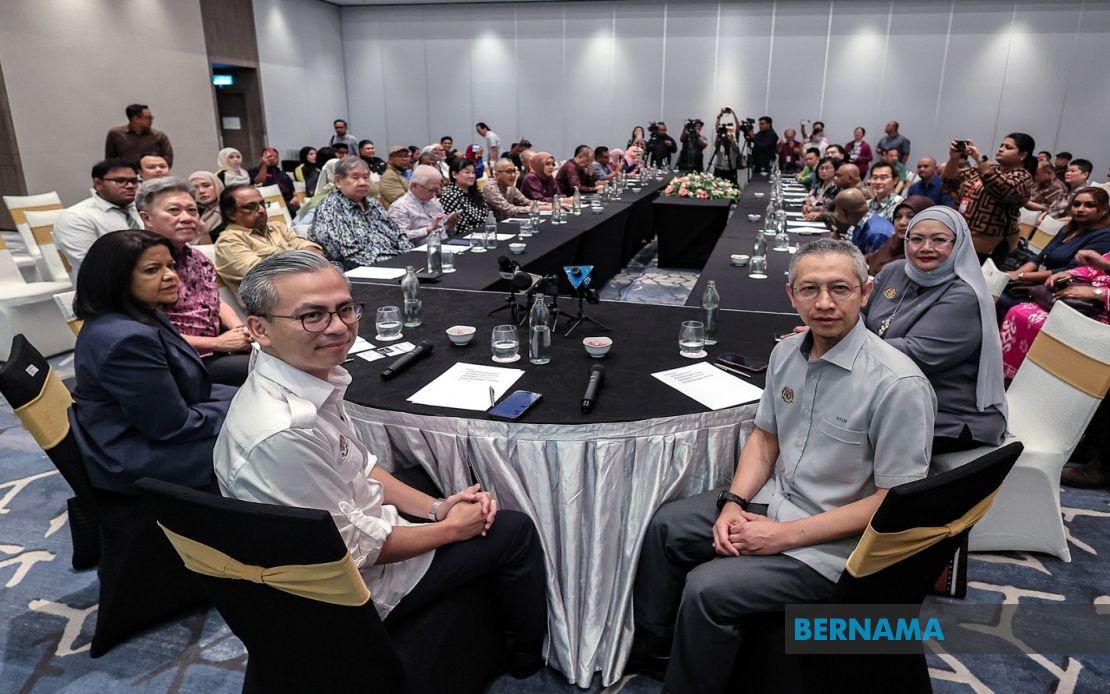
Communications Minister Datuk Fahmi Fadzil has suggested embedding structured retreat sessions with media professionals into the annual National Journalists' Day (HAWANA) celebrations, positioning them as a formal mechanism for dialogue between the government and the press. Speaking in Butterworth following a two-hour engagement session at HAWANA 2026, Fahmi outlined plans to work with the Malaysian Media Council to coordinate and supervise these retreats, transforming what has traditionally been a commemoration event into a recurring consultative forum where industry voices can be systematically captured and channeled to policymakers.
The proposal reflects a deliberate shift toward institutionalizing communication channels between Putrajaya and Malaysia's media landscape. Rather than treating press engagement as episodic, the minister envisions these annual retreats as standing opportunities for journalists and media executives to articulate grievances, share strategic insights, and propose concrete solutions to structural challenges facing their sector. By anchoring this dialogue to an established national event, the Communications Ministry appears intent on creating predictability and regularity in how government responds to media industry concerns.
These retreats would function as comprehensive feedback mechanisms, Fahmi explained, extending beyond routine complaints to encompass substantive policy discussions. Media practitioners would have formal space to propose legislative amendments, advocate for regulatory changes, or highlight emerging issues that require governmental attention. The scope deliberately encompasses both immediate operational problems and longer-term questions about industry sustainability and competitive positioning, indicating the government recognizes that media viability involves complexities that cannot be addressed through short-term interventions alone.
The timing of this proposal is strategically significant given the acute economic pressures confronting Malaysia's mainstream media sector. Fahmi directly identified the financial hemorrhaging caused by social media platforms as a primary challenge demanding urgent collaborative attention. Traditional news organizations invest substantially in journalism, editorial infrastructure, and content production, yet find their work replicated and distributed on Facebook, TikTok, and Instagram without generating corresponding revenue streams. This structural asymmetry has devastated newsroom budgets and forced painful consolidations across the industry.
The minister's acknowledgment that social media platforms extract value from professional journalism without providing financial compensation represents a significant articulation of a problem that media executives have repeatedly raised in private conversations. By publicly centering this issue and pledging governmental assistance in engaging social media companies, Fahmi signals that Putrajaya recognizes mainstream media's financial crisis as a matter of national interest rather than a purely commercial issue. This positioning could prove important when advocating for regulatory discussions with global technology companies that have historically resisted regional government intervention.
The role designated for the Malaysian Media Council as coordinator of these annual retreats underscores the government's preference for working through established industry bodies rather than imposing solutions unilaterally. The council functions as an intermediary representing media organizations' collective interests, and enlisting it as the organizational custodian of these retreat sessions lends legitimacy to the process. By delegating logistics to an industry body, the Communications Ministry also signals respect for the media sector's autonomy and creates structural distance between governmental pressure and editorial independence, even as the substantive dialogue remains firmly anchored in government-media relations.
The attendance at HAWANA 2026's dialogue session reflected high-level governmental commitment to this engagement framework. Communications Ministry secretary-general Datuk Abdul Halim Hamzah and deputy secretary-general Datuk Bahria Mohd Tamil joined Fahmi, while Malaysian National News Agency Bernama's leadership—including chairman Datuk Seri Wong Chun Wai and CEO Datin Paduka Nur-ul Afida Kamaludin—participated alongside representatives from private media organizations and the Malaysian Media Council's chairman Tan Sri Nallini Pathmanathan. This cross-sector presence underscored that the government approaches media sector challenges not as Bernama's specific problems but as industry-wide concerns requiring coordinated responses.
For Malaysian media organizations already grappling with declining classified advertising, shrinking print circulation, and fierce competition from digital-native news platforms, the proposal offers potential pathways to policy intervention. Whether these retreats translate into concrete measures—such as advertising tax incentives for media outlets, regulatory requirements for social media platforms to negotiate licensing arrangements with news publishers, or subsidies for public-interest journalism—remains undetermined. However, establishing a formal annual consultation mechanism creates structural opportunity for media advocates to make cases directly to senior decision-makers rather than relying on ad hoc meetings or indirect lobbying.
The regional dimension merits consideration as well. Southeast Asian governments across Thailand, Indonesia, and the Philippines face similar tensions between protecting press freedom and supporting struggling traditional media industries. Malaysia's formalization of annual media retreats could establish a governance model that other regional governments observe and potentially emulate, particularly as digital disruption accelerates across the region. Conversely, if these retreats become vehicles for subtle governmental pressure on editorial content or become forums where press freedom concerns are subordinated to commercial considerations, they could signal a cautionary precedent for peers.
Fahmi's framing of media sustainability as a governmental priority rather than an exclusive industry problem represents meaningful rhetorical shift that could carry tangible consequences. By positioning the government as a potential partner in solving media economics rather than as a regulator or adversary, he creates diplomatic space for more candid conversation about underlying structural problems. However, the success of this approach depends entirely on whether retreat sessions produce actionable outcomes and whether governmental commitments to support media industry interests materialize in legislative or regulatory action.
The proposal ultimately reflects recognition that Malaysia's media ecosystem faces an existential challenge that market forces alone cannot resolve. As digital platforms continue capturing advertising revenue that historically sustained journalism, governments increasingly recognize that press freedom and social cohesion depend on journalists having economic viability to practice their profession. By proposing regular structured dialogue focused explicitly on media sustainability alongside coverage policy matters, Fahmi positions the Communications Ministry as responsive to industry concerns while maintaining governmental authority over ultimate policy decisions. Whether these retreats become substantive instruments of industry reform or ceremonial exercises in consultation remains a question that will become clear only through implementation and observable governmental follow-through on media sector proposals.

%22%2F%3E%3C%2Fpattern%3E%3C%2Fdefs%3E%3Crect%20width%3D%22100%25%22%20height%3D%22100%25%22%20fill%3D%22url(%23ph2hy9vg)%22%2F%3E%3Crect%20width%3D%22100%25%22%20height%3D%22100%25%22%20fill%3D%22url(%23ph2hy9vp)%22%2F%3E%3Ctext%20x%3D%2250%25%22%20y%3D%2250%25%22%20text-anchor%3D%22middle%22%20dominant-baseline%3D%22central%22%20fill%3D%22rgba(255%2C255%2C255%2C0.95)%22%20font-family%3D%22Georgia%2C%20'Times%20New%20Roman'%2C%20serif%22%20font-weight%3D%22700%22%20font-size%3D%22272%22%20letter-spacing%3D%22-0.02em%22%3EAnwar%3C%2Ftext%3E%3C%2Fsvg%3E)