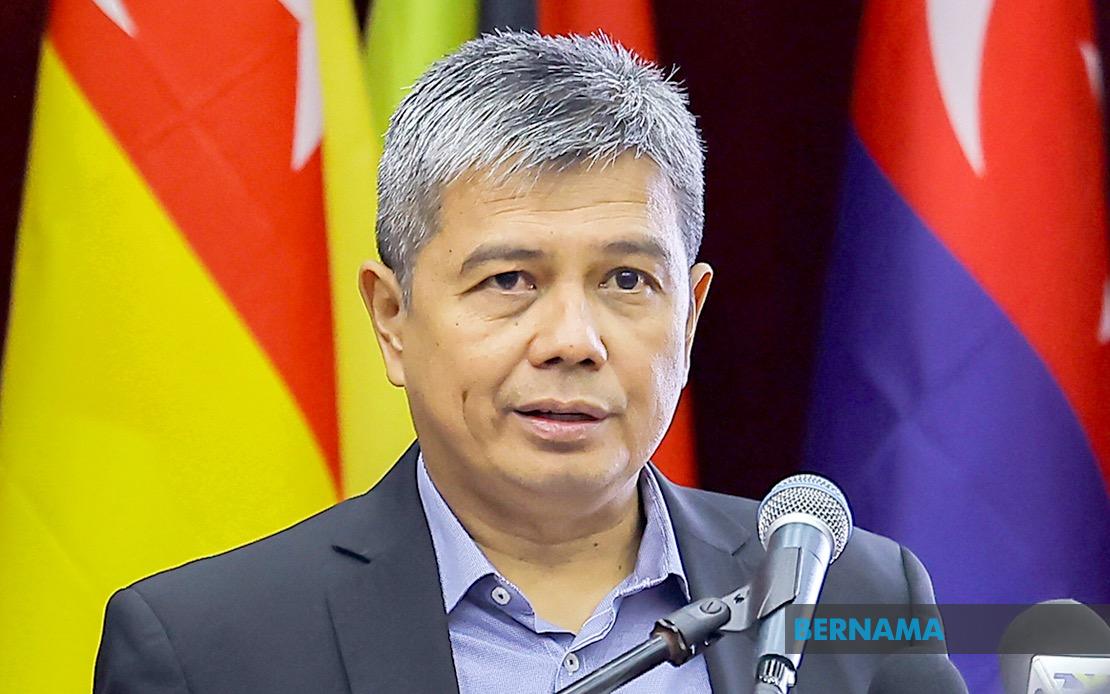
All political parties and candidates competing in tomorrow's 16th Johor State Election must bring their campaign operations to a complete halt when the official campaign period concludes at 11.59 pm tonight, the Election Commission announced in Johor Bahru on Wednesday. The directive covers every conceivable form of electioneering, from traditional street-level canvassing activities near polling stations to the increasingly significant digital sphere where parties have leveraged social media platforms to reach voters. Datuk Khairul Shahril Idrus, the EC secretary, delivered the reminder in a statement emphasising the regulatory boundary that separates the heated campaign phase from the neutral period preceding voting.
The commission's notice extends beyond simply shutting down visible campaign machinery. Political parties and their candidates face legal prohibitions against establishing, operating, or maintaining campaign booths—known locally as barung—on the actual polling day itself. Violations constitute a criminal offence under the Election Offences Act 1954, underscoring the seriousness with which Malaysian electoral authorities treat breaches during the sensitive voting period. This restriction reflects the longstanding principle that polling day must remain a space where voters exercise free choice without the presence of partisan infrastructure or messaging that might influence last-minute decisions.
The digital realm receives particular attention in the EC's statement, with explicit mention that campaigning through social media must cease entirely once the midnight deadline passes. Platforms including Facebook, X, Instagram, TikTok, and Threads have become central to modern election campaigns, and the blanket prohibition signals the commission's determination to prevent parties from exploiting the always-on nature of digital communication. For Malaysian voters accustomed to the omnipresent political content that characterises contemporary elections, this hard cutoff represents a rare moment of enforced silence from contesting parties, though the EC's capacity to monitor compliance across these platforms remains an ongoing challenge.
Voters themselves face their own set of procedural requirements and restrictions designed to ensure the integrity and orderliness of tomorrow's poll. The commission has explicitly prohibited the use of mobile phones within polling streams, with notices to be posted in and around voting facilities to reinforce this rule. Those who bring phones must surrender them to designated collection areas immediately after receiving their ballot papers, retrieving them only after completing their votes. This measure addresses growing concerns about the ease with which voting choices can be documented or shared in real time through smartphone photography, potentially compromising ballot secrecy and the principle that voting decisions remain genuinely personal.
The EC has encouraged voters to spread out their voting across the full operating window rather than concentrating at particular times, recommending that citizens check the MySPR Semak application for individualised suggested voting slots. While the commission acknowledges that voters retain absolute discretion to cast ballots anytime between 8 am and 6 pm, or during whatever extended hours their particular polling centre may observe, the gentle nudge toward distributed participation aims to prevent the congestion, extended queues, and inevitable frustration that can emerge from compressed voting periods. The staggered approach also eases pressure on poll workers and election officials charged with managing the voting machinery and verifying voter eligibility.
Authentication mechanisms remain central to the EC's voting framework, with voters required to bring valid identity cards for verification against the electoral roll. The commission's specific reminder that voters should not surrender their identity documents to anyone except duly authorised election officials reflects historical concerns about potential fraud or intimidation. Voters are also advised to confirm their registration status and polling location details in advance through available online platforms, a preventive step that transforms what might otherwise become frustrating on-the-day surprises into manageable administrative matters addressed before voters arrive at polling stations.
Employers across Johor have received their own directive to accommodate employees who wish to vote, with the EC emphasising that the Election Offences Act 1954 mandates reasonable time allowances for registered voters to participate. This provision represents recognition that voting access depends partly on workplace cooperation, and the reminder signals that the EC will take seriously any employer interference with workers' voting rights. For many Malaysians, the permission to absent themselves from work for voting purposes remains a meaningful civic opportunity, particularly in sectors where strict attendance policies might otherwise discourage participation.
Behind the scenes, the commission has completed comprehensive verification of all polling infrastructure scheduled for deployment tomorrow. Equipment inspections conducted on Thursday and Friday encompassed ballot boxes, indelible ink supplies, ballot papers, and voting booths—the physical apparatus upon which the entire election depends. Presiding Officers at each polling stream have now received their equipment allocations, with the EC confirming that all supplies are complete and in serviceable condition. This methodical preparation phase, rarely visible to the public, represents the institutional competence necessary to conduct elections that voters can trust, even amid political contests marked by intense partisanship.
The Johor State Election arrives at a moment when Malaysian electoral politics continue evolving in complex directions. State-level contests like this provide laboratories where voters test new political combinations and where parties refine their strategies ahead of federal contests. The 16th Johor election therefore carries significance beyond the state itself, offering indicators of shifting voter sentiment across the peninsula's second-largest state by population. Tomorrow's voting patterns may signal deeper movements in Malaysian politics that reach well beyond Johor's borders, making the integrity and credibility of the electoral process itself a matter of broader national concern.

