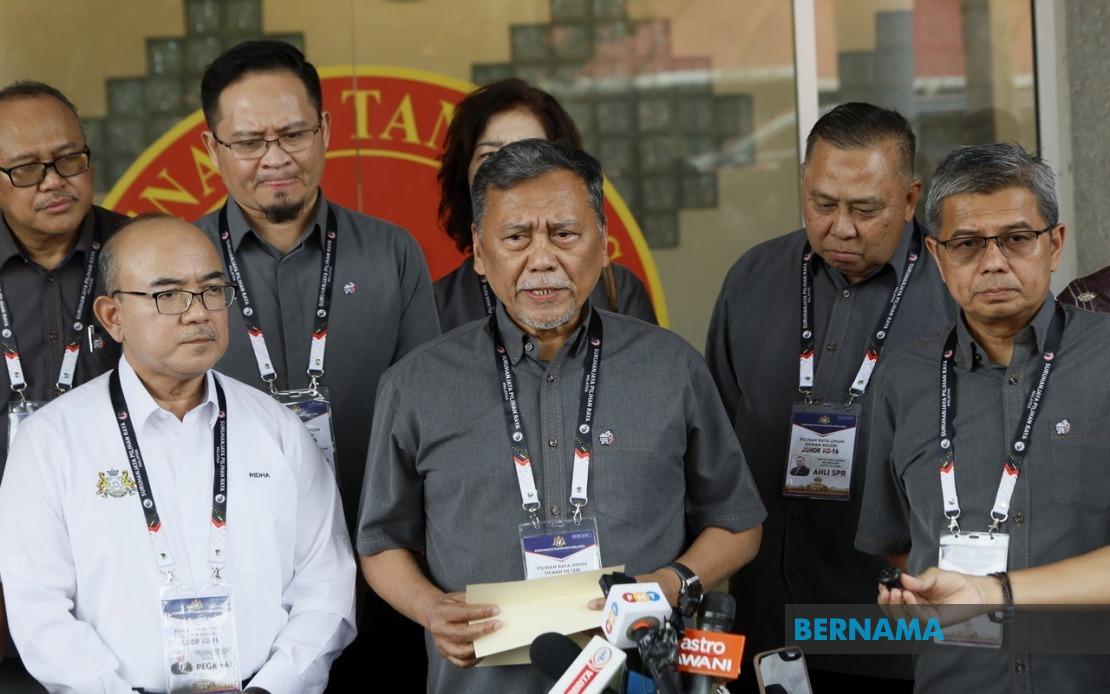
The Election Commission is banking on strong participation for early voting in the Johor state election, with officials projecting a 96 per cent turnout based on patterns observed in previous electoral cycles. EC chairman Datuk Seri Ramlan Harun outlined the ambitious target after observing voting procedures at Kem Mahkota in Kluang on July 7, expressing confidence that institutional voters would demonstrate their civic commitment through high numbers at the polls.
Early voting arrangements across Johor reflect meticulous planning by electoral authorities to accommodate personnel who are unable to participate in the main polling day. The commission opened 62 dedicated voting centres statewide, with staggered closing times designed to manage operational flow efficiently. Twenty-nine centres concluded voting at noon, five closed at 2 pm, whilst the remaining 28 facilities remained open until 5 pm, allowing flexibility for military and police personnel with varying shift schedules.
The early voting process encompassed 20,607 eligible voters drawn from two principal institutional cohorts. The Malaysian Armed Forces contingent, including their spouses, totalled 8,544 individuals, whilst 12,063 police personnel and their dependants made up the remainder. This significant bloc of institutional voters—representing roughly 0.75 per cent of the total electorate—plays a meaningful role in establishing election momentum and demonstrating broad participation across societal sectors.
Ramlan's projection of 96 per cent turnout among early voters stands markedly higher than typical participation rates among the general electorate, reflecting the structured nature of military and police voting. Unlike ordinary citizens who must navigate personal schedules and competing priorities, institutional voters operate within frameworks that facilitate participation. This disparity between institutional and general turnout has long been a feature of Malaysian electoral administration and speaks to the unique circumstances of security sector voting.
The logistics of vote management underscores the commission's meticulous approach to election integrity. Completed ballot boxes will be transported to police stations for secure storage, remaining sealed until counting commences on polling day Saturday. This custodial arrangement prevents premature tabulation whilst maintaining the sanctity of the democratic process through established safeguards and oversight mechanisms.
Vote counting will commence at 5 pm on Saturday, with commission officials expressing optimism about delivering timely results to the public. Ramlan anticipated that comprehensive outcome announcements could be available by 10 pm, though midnight was identified as a realistic outer boundary for full result publication. This timeline balances the legitimate public appetite for swift electoral outcomes against the meticulous verification procedures necessary for credible, contestable results that command public confidence.
The Johor state election will ultimately hinge on the 2.7 million ordinary voters scheduled to cast ballots on Saturday. Ramlan leveraged the early voting milestone to urge broad participation among the wider electorate, framing voting as both a civic responsibility and a meaningful contribution to Malaysia's democratic system. His appeals reflected institutional messaging designed to boost turnout and reinforce public understanding of electoral participation as a foundational democratic act.
The 16th Johor State Election represents a significant test of voter engagement in one of Malaysia's most consequential states. Johor's economic weight, its substantial population, and its political influence within the federation ensure that electoral outcomes carry implications extending well beyond state boundaries. Early voting patterns can signal broader enthusiasm or apathy that may correlate with final election-day results, making the 96 per cent institutional turnout a potential bellwether for general voter sentiment.
Election commissions across democracies worldwide view early and advance voting as mechanisms to amplify participation and accommodate voters with logistical constraints. Malaysia's dual-track system—separating institutional early voting from general polling—reflects pragmatic recognition that security personnel require dedicated processes to fulfil their civic obligations. The commission's confidence in achieving 96 per cent turnout among these voters suggests institutional discipline and high civic awareness within military and police ranks.
As Malaysia navigates ongoing democratic renewal and electoral reform discussions, the performance of the Johor election will inform assessments of commission competence and public engagement with the democratic process. Strong turnout across both institutional and general voting cohorts would reinforce narratives of healthy democratic vitality, whilst participation shortfalls might trigger scrutiny of commission practices or electoral architecture. The coming week will clarify whether projections materialise and whether the Johor election reinforces or challenges existing assumptions about Malaysian voter behaviour.

