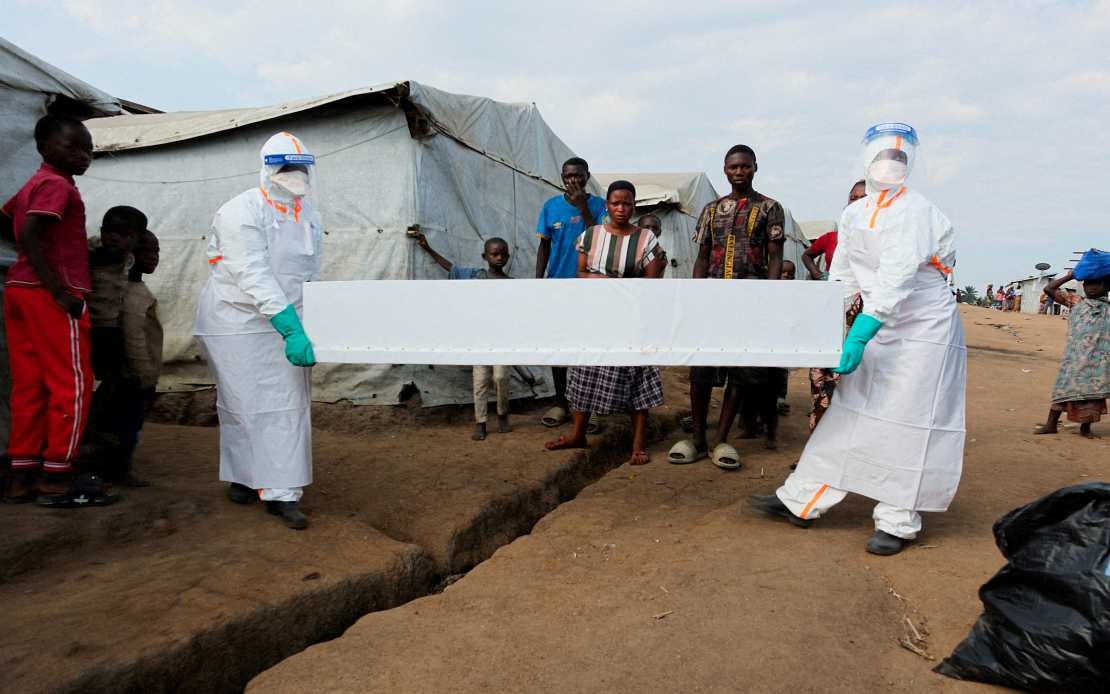
The Democratic Republic of Congo is grappling with a significant health emergency as confirmed Ebola virus cases have climbed past the 1,000 threshold, representing a critical juncture in the country's battle against the highly infectious disease. As of Sunday, the Health Ministry reported 1,003 confirmed cases with 254 fatalities, translating to a mortality rate of 25.3 per cent since the outbreak was officially declared on May 15. The trajectory of infections underscores the growing difficulty authorities face in containing the virus across multiple provinces simultaneously.
The geographic distribution of cases presents particular challenges for response teams, with ongoing transmission documented in Ituri, North Kivu, and South Kivu provinces. Health Minister Roger Kamba indicated that while some positive developments have emerged—including at least 100 recorded recoveries—the situation remains precarious. The ministry acknowledged a troubling decline in the rate at which authorities can follow up with contacts of confirmed cases, a critical component of any Ebola containment strategy. Currently, 365 patients are isolated or hospitalised, representing both the immediate caseload requiring medical intervention and the strain on healthcare infrastructure in a region already challenged by limited resources.
What makes this outbreak particularly concerning for regional observers is the stark warning issued by the Africa Centres for Disease Control and Prevention, which cautioned that the current epidemic could surpass the devastation witnessed during the 2014-2016 West African crisis. That earlier outbreak claimed over 11,000 lives across Guinea, Liberia, and Sierra Leone, fundamentally altering global perceptions of Ebola's pandemic potential. The Africa CDC's assessment reflects genuine anxiety within the public health community that without rapid, sustained suppression of transmission, the Democratic Republic of Congo faces the prospect of an even more catastrophic scenario.
Despite the grim trajectory, health authorities have not abandoned their mitigation efforts. The Health Ministry emphasised that response teams continue active field investigations, epidemiological surveillance, and prevention activities in affected communities. Minister Kamba stressed that intensified community communication campaigns remain central to the response strategy, acknowledging that public understanding and cooperation directly influence outbreak containment. These efforts are complemented by accelerated diagnostic testing and improved case management protocols, though the declining contact follow-up rate suggests that operational capacity is straining under the caseload.
A significant scientific development emerged when researchers from Uganda's Department of National Health Laboratory and Diagnostic Services and the Democratic Republic of Congo's Institute of National Biomedical Research identified the circulating strain as Ebola Bundibugyo. The determination that this variant originated from a fresh wildlife spillover event rather than from dormant transmission chains or historical cases has implications for containment strategy and outbreak trajectory modelling. Unlike scenarios where cryptic transmission might eventually burn out naturally, a new spillover event raises the possibility of ongoing animal-to-human transmission if wildlife reservoirs and human populations remain in contact.
For Southeast Asian nations and Malaysia specifically, this outbreak carries both direct and indirect significance. While Ebola remains geographically distant, the Democratic Republic of Congo's limited healthcare infrastructure, combined with regional factors such as porous borders and substantial population movement, means that any deterioration in containment could theoretically pose transnational risks. More immediately, Malaysian health authorities and infectious disease specialists are likely monitoring the outbreak closely to evaluate containment strategies and treatment efficacy, potentially informing regional pandemic preparedness planning.
The recovery rate, though modest at present, offers some encouragement for public health officials. One hundred patients have successfully cleared the infection and returned to their communities, a figure that exceeds many earlier projections for a rapidly spreading outbreak. However, this positive indicator must be contextualised against the accelerating case trajectory and the worrying decline in contact tracing effectiveness. The ability to identify, isolate, and monitor individuals who have had contact with confirmed cases remains foundational to Ebola control, and any deterioration in this capacity signals that response efforts may be falling behind viral transmission dynamics.
The Democratic Republic of Congo's healthcare system faces extraordinary pressure in managing this crisis. With 365 patients requiring isolation or hospitalisation simultaneously, and given the nation's fragile medical infrastructure in affected regions, the risk of healthcare facility overwhelm looms large. Such overwhelm could trigger secondary transmission within hospitals, further accelerating case numbers and complicating mortality calculations. The health system's resilience will likely prove determinative in whether containment succeeds or whether the outbreak achieves the catastrophic scale the Africa CDC cautioned against.
Looking forward, the coming weeks will be pivotal. Should case numbers continue their current trajectory, or should the contact follow-up rate deteriorate further, the Democratic Republic of Congo may face difficult resource allocation decisions. International assistance, though critical, often arrives with delays and bureaucratic complications. The fundamental challenge remains biological: Ebola's high transmissibility combined with inadequate epidemiological control mechanisms creates conditions for exponential spread. Whether intensified communication campaigns and improved case management can generate the inflection point necessary to reverse transmission trends remains an open and urgent question for Congolese authorities and the global health community alike.

%22%2F%3E%3C%2Fpattern%3E%3C%2Fdefs%3E%3Crect%20width%3D%22100%25%22%20height%3D%22100%25%22%20fill%3D%22url(%23pha5qfg)%22%2F%3E%3Crect%20width%3D%22100%25%22%20height%3D%22100%25%22%20fill%3D%22url(%23pha5qfp)%22%2F%3E%3Ctext%20x%3D%2250%25%22%20y%3D%2250%25%22%20text-anchor%3D%22middle%22%20dominant-baseline%3D%22central%22%20fill%3D%22rgba(255%2C255%2C255%2C0.95)%22%20font-family%3D%22Georgia%2C%20'Times%20New%20Roman'%2C%20serif%22%20font-weight%3D%22700%22%20font-size%3D%22272%22%20letter-spacing%3D%22-0.02em%22%3EAnwar%3C%2Ftext%3E%3C%2Fsvg%3E)