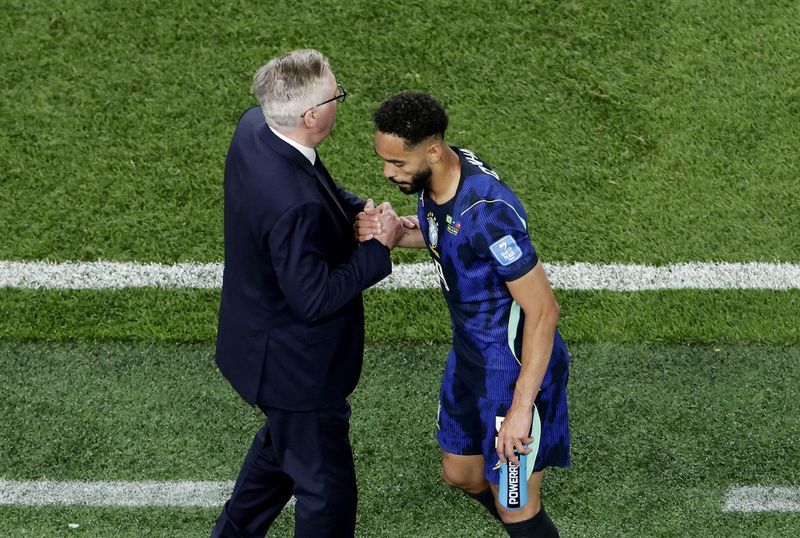
Carlo Ancelotti's redesigned Brazil midfield began to reveal its potential during a commanding 3-0 victory over Haiti in Philadelphia, offering supporters renewed optimism following the team's opening-match frustration against Morocco. Though the Seleção's problems extend beyond what one dominant performance can resolve, the shift in tactical approach provided clearer signposts regarding the direction this squad might travel under the Italian coach's stewardship.
The substitution of Matheus Cunha for Igor Thiago proved transformative in how Brazil structured its attacking play. Cunha's introduction brought an entirely different dimension to the team's movement and positioning, creating a more organic flow between midfield and forward areas that had been conspicuously absent during the 1-1 Group C opener. The twenty-five-year-old's tireless running and intelligent positioning essentially unlocked spaces that had previously gone underutilised, allowing Brazil to construct clearer passing triangles and maintain possession through more intricate combinations.
Paqueta's performance shift illustrated how personnel alterations can rehabilitate struggling players within a fresh tactical framework. The midfielder, who endured a difficult first half against Morocco and drew significant criticism from observers, found considerably more comfort operating as the left-sided midfielder in Ancelotti's diamond configuration. Positioned to support both Vinicius Junior and Cunha simultaneously, Paqueta appeared engaged and purposeful, constructing the play rather than merely responding to it. This positioning transformed him from a peripheral figure into a genuine architect of Brazil's attacking sequences.
The synergy that developed along Brazil's left flank represented perhaps the most encouraging development of the evening. Cunha's natural inclination to drift infield from his position created consistent opportunities for overlapping runs and short, incisive passes, while Vinicius found himself surrounded by considerably more attacking support than has been available during recent international appearances. Both Brazilian goals originated from this area of the pitch, underlining how thoroughly the tactical adjustments had restructured the team's attacking approach.
Cunha's movement patterns specifically recalled the playing style that made Neymar integral to Brazil's system before serious injury sidelined him. By operating as a flexible attacking midfielder rather than a conventional winger, Cunha provided the connective tissue that links midfield deployments to forward runs, creating the kind of fluidity that modern Brazilian football demands. This positioning appears more aligned with how attacking players function within contemporary elite football, where the distinction between midfield and forward roles has become increasingly blurred.
Yet significant vulnerabilities persist on the opposite flank, where Raphinha has consecutively disappointed. The Barcelona winger missed a training session earlier in the week due to blistering issues and carried visible signs of physical discomfort throughout the Haiti match. Beyond the injury considerations, Raphinha appeared misaligned with the tactical requirements Ancelotti's system demands; pinned to the right touchline, he mislaid elementary passes and struggled with basic ball control. His club role as a more fluid attacking midfielder sits uncomfortably with the wider positioning Brazil assigned him.
The divergence between Raphinha's domestic football demands and international tactical requirements presents a pressing concern. At Barcelona, he operates with considerably more positional freedom, drifting centrally to contribute to build-up play rather than remaining anchored to the wing. This stylistic incompatibility suggests that either Ancelotti's system requires adjustment, or Brazil needs alternative personnel better suited to operating as traditional right-sided contributors.
Following Raphinha's substitution, both Rayan and Luiz Henrique failed to establish meaningful presence on the right side. Rayan, in particular, looked unsettled following his introduction, suggesting that Luiz Henrique represents the likelier option should Raphinha's physical condition prevent participation against Scotland. Beyond personnel considerations, questions persist regarding whether the right flank can develop the attacking chemistry that Cunha and Paqueta generated on the left.
Concerns regarding Casemiro's continued suitability at international level also merit serious consideration. The 34-year-old midfielder, whilst remaining a vitally important presence, faces genuine questions about his capacity to manage the physical demands of confronting genuinely elite midfield units. Bruno Guimaraes, who operated effectively as the right-sided midfielder against Haiti, may require repositioning deeper to reinforce defensive solidity and facilitate more composed ball circulation from defensive areas.
Ancelotti's diamond midfield structure represents a genuine departure from previous configurations, fundamentally altering how Brazil constructs attacks and maintains possession. Successfully implementing this system across the tournament depends substantially on solving the right-flank deficiencies whilst sustaining the left-sided fluency that emerged against Haiti. The tactical flexibility demonstrated through personnel adjustments suggests the coach possesses both the conceptual understanding and practical willingness to make alterations as circumstances demand.
Brazil's performance contained nothing approaching the sweeping dominance supporters might anticipate from one of world football's traditional superpowers. Haiti's defensive vulnerabilities—particularly their willingness to advance aggressively whilst leaving vast spaces to exploit—significantly eased the Seleção's task. Against more accomplished opposition, the team's shortcomings will become considerably more pronounced. Nevertheless, the performance demonstrated tangible progression rather than stagnation, offering reasonable justification for believing that Ancelotti's emerging tactical framework might eventually produce the consistency and controlled dominance that successful tournament campaigns require.
%22%2F%3E%3C%2Fpattern%3E%3C%2Fdefs%3E%3Crect%20width%3D%22100%25%22%20height%3D%22100%25%22%20fill%3D%22url(%23ph2hy9vg)%22%2F%3E%3Crect%20width%3D%22100%25%22%20height%3D%22100%25%22%20fill%3D%22url(%23ph2hy9vp)%22%2F%3E%3Ctext%20x%3D%2250%25%22%20y%3D%2250%25%22%20text-anchor%3D%22middle%22%20dominant-baseline%3D%22central%22%20fill%3D%22rgba(255%2C255%2C255%2C0.95)%22%20font-family%3D%22Georgia%2C%20'Times%20New%20Roman'%2C%20serif%22%20font-weight%3D%22700%22%20font-size%3D%22272%22%20letter-spacing%3D%22-0.02em%22%3EAnwar%3C%2Ftext%3E%3C%2Fsvg%3E)