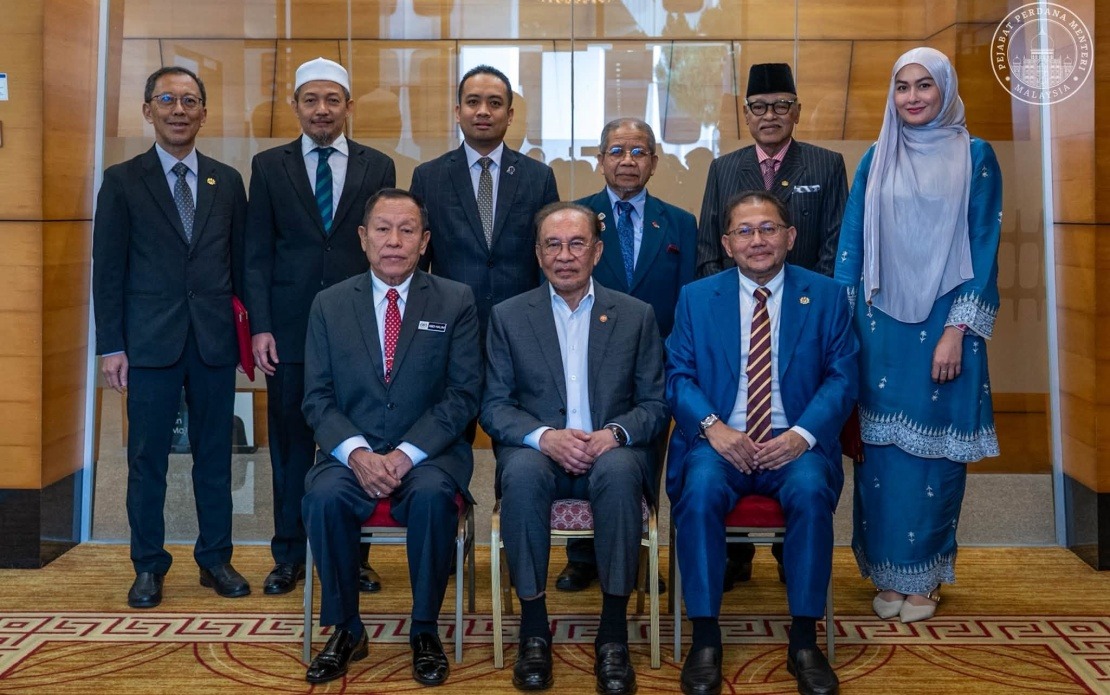
Prime Minister Datuk Seri Anwar Ibrahim has underscored that Malaysia's struggle against corruption cannot rest with individual agencies, calling instead for a comprehensive approach that harnesses the combined strength of law enforcement bodies, independent advisory committees, parliamentarians, government officials, business leaders, and ordinary citizens. Speaking in Parliament, Anwar outlined a vision of institutional synergy where multiple stakeholders work in concert to deter and detect wrongdoing throughout the nation's systems.
The Premier highlighted the pivotal role played by two specialised bodies established under the Malaysian Anti-Corruption Commission Act 2009: the Special Committee on Corruption (JKMR) and the Anti-Corruption Advisory Board (LPPR). These entities function as crucial internal checks on power, bringing independent scrutiny and critical analysis to strengthen the overall effectiveness of anti-corruption campaigns. Rather than operating in isolation, they complement the work of frontline enforcement agencies by providing objective oversight and institutional accountability.
Anwar presented letters of appointment to newly appointed members of both committees following approval from the Yang di-Pertuan Agong. The fresh cohort brings diverse professional backgrounds and sectoral expertise, yet they converge around a shared mission to elevate Malaysia's anti-corruption agenda. The Prime Minister's gesture of formally appointing these representatives in Parliament sent a symbolic message about the government's seriousness in tackling graft and the legitimacy of these oversight bodies in national governance.
The JKMR, established under Section 14 of Act 694, is composed of senators and members of the Dewan Rakyat selected by the monarch from both government and opposition benches. This bicameral composition ensures that anti-corruption efforts transcend partisan politics and enjoy cross-party legitimacy. By including opposition voices, Malaysia's framework acknowledges that fighting corruption serves broader national interests that supersede electoral competition, creating space for principled debate and genuine accountability measures.
The LPPR operates under different criteria, drawing its membership from Section 13 of the same legislation. Its members are chosen from individuals whose personal integrity and professional achievements have earned them distinction—either through exemplary public service or recognised excellence in their fields. This approach prioritises character and competence over political affiliation, bringing respected figures from academia, business, civil society, and other sectors into the anti-corruption apparatus.
For Malaysian readers, this structural emphasis reflects an important principle: that institutional strength against corruption emerges not from centralised power but from distributed accountability. When oversight committees include opposition politicians, private sector representatives, and respected independents, the system becomes harder to weaponise for partisan advantage while remaining genuinely responsive to public interest concerns. This mirrors international best practices where anti-corruption bodies maintain arm's-length distances from day-to-day political control.
The appointment of new committee members arrives at a moment when Malaysia's anti-corruption credibility faces scrutiny both domestically and internationally. Previous administrations faced criticism for politicising institutions meant to serve impartial justice. By deliberately broadening the representational base and emphasising the importance of these committees, Anwar signals an intention to rebuild public trust through inclusive governance architecture. The presence of seasoned professionals from multiple sectors within these bodies can enhance technical capacity while bolstering perceived legitimacy.
Anwar's emphasis on collective responsibility extends beyond formal institutions to encompass the private sector and civil society. Corporations, non-governmental organisations, and individual citizens play essential roles in reporting misconduct, maintaining ethical standards, and creating a cultural environment hostile to graft. When businesses embed integrity into their operations and citizens view corruption as beneath societal norms, enforcement efforts become more effective and less resource-intensive.
The Southeast Asian context amplifies the significance of Malaysia's multi-institutional approach. Across the region, countries struggle with varying degrees of corruption that hamper development, distort markets, and undermine public confidence. Malaysia's investment in sophisticated oversight mechanisms—combining enforcement rigour with advisory wisdom and parliamentary scrutiny—demonstrates a commitment to institutional maturity that differentiates it within ASEAN. Regional observers watching Malaysia's reforms may draw lessons applicable to their own governance challenges.
Implementation challenges remain substantial. Ensuring genuine independence of advisory bodies while maintaining operational coordination with enforcement agencies requires careful balance. Committee members must resist pressure from any quarter while avoiding the pitfall of becoming ceremonial fixtures. Parliament must allocate adequate resources and attention to these oversight roles rather than treating them as peripheral responsibilities. The private sector must embrace integrity standards even when they complicate business practices or reduce short-term profits.
For multinational corporations operating in Malaysia, this institutional framework offers clearer parameters for compliance and suggests that the government is serious about rules-based governance. For Malaysian investors navigating Southeast Asia, it provides assurance that home-country institutions are progressively strengthening, potentially reducing competitive disadvantages faced by companies adhering to higher ethical standards than some regional competitors.
Anwar's invocation of collective responsibility also carries implicit messaging about accountability. If corruption persists despite these structural investments, responsibility cannot be attributed solely to enforcement agencies. Politicians, business leaders, professionals, and citizens would bear shared liability for insufficient commitment. This framing potentially mobilises broader society behind anti-corruption norms rather than treating it as purely a law enforcement matter.
Moving forward, the success of Malaysia's anti-corruption fight will depend heavily on whether these committees can operate with genuine autonomy and whether their recommendations receive serious implementation. Equally important is whether the cultural message—that fighting graft is everyone's responsibility—takes root across institutions and communities. The appointment of new committee members represents an institutional moment, but the crucial test will come through sustained action and demonstrated results that validate the government's commitment to this collective, multi-sectoral approach.

