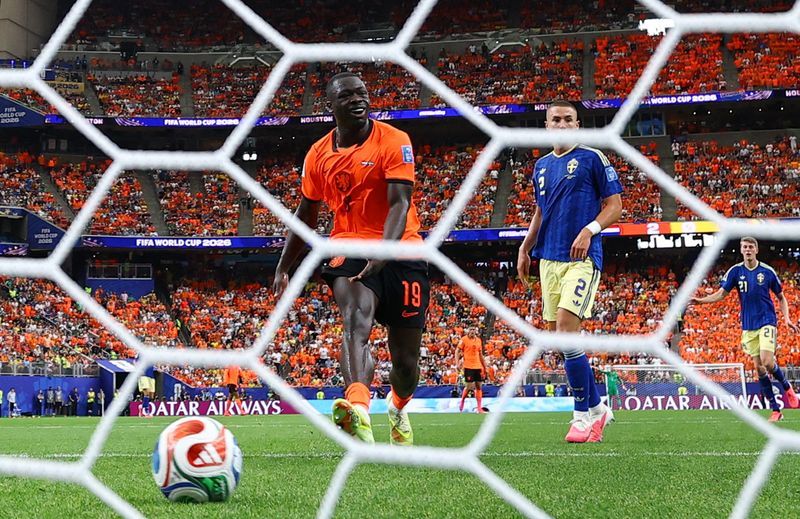
Ronald Koeman's tactical decisions drew sharp criticism following the Netherlands' uninspiring 2-2 draw with Japan in Dallas at the start of their World Cup Group F campaign, with observers questioning the effectiveness of his substitutions. Yet the Dutch coach demonstrated his tactical acumen just days later by orchestrating a dominant 5-1 victory over Sweden, a display that showcased not only a dramatically improved team performance but also vindicated his bold choice to deploy 24-year-old Brian Brobbey as the focal point of the attack. In the unpredictable world of professional football, a manager's reputation can shift dramatically in 90 minutes, and Koeman found himself restored to favour after making the inspired selection that would define the Netherlands' second tournament fixture.
Brobbey's impact was immediate and decisive. The Ajax striker netted twice within the opening 17 minutes against the Swedes, effectively determining the outcome of the match and establishing the platform for the Dutch to assert their dominance throughout. This brace represented far more than individual goal-scoring; it signalled that the player has evolved into a complete attacking threat capable of delivering at the highest level. For a squad searching for answers following the laboured opening performance, Brobbey's clinical finishing provided a much-needed injection of confidence and tactical clarity.
The 24-year-old's journey to this pivotal moment has been far from straightforward. He occupied a peripheral role within the national setup, notably overlooked during the qualifiers for the 2026 World Cup and effectively exiled from the squad for an entire year. His recall to the national team came as recently as March, suggesting that Koeman was not entirely convinced of his credentials until compelling evidence emerged. Yet circumstances and performances have conspired to thrust Brobbey into the spotlight at a crucial moment in the tournament.
Brobbey's recent spell in English football has been instrumental in his development. A season at Sunderland in the Premier League elevated his overall game significantly, moving him beyond the archetypal target man who relies primarily on physical attributes to trouble defenders. Speaking to journalists at the Dutch training facility earlier this month, Brobbey articulated how his time in England has broadened his tactical repertoire. He emphasised becoming a more complete forward, one capable not merely of engaging in physical battles but of reading defensive shapes, timing runs from deeper positions, and exploiting space with intelligent movement. These refinements are precisely what a modern centre-forward requires to thrive at elite level.
Memphis Depay has been the standard-bearer of Dutch attacking football for many years, holding the record for international goals. However, his recent injury layoff has diminished his sharpness, presenting both a challenge and an opportunity for potential successors. The Netherlands have recognised that finding an heir apparent to Depay is increasingly urgent, yet identifying the right candidate has proved difficult. Brobbey's performance on Saturday suggests he possesses the technical foundation and instinctive finishing ability that Depay brought to the position during his prime years.
The supporting cast surrounding the Dutch attacking line provides additional grounds for optimism about the team's offensive potential. Cody Gakpo operates with threatening intensity on the left flank, constantly creating overloads and crossing opportunities. Denzel Dumfries, operating as the right-back, overlaps aggressively to provide width and further multiplication of attacking threats. Beyond these established figures, the emergence of newcomer Crysencio Summerville as a viable creative option suggests that the Dutch possess sufficient personnel to support whichever striker leads the line. This depth of attacking resources means Brobbey would inherit a supporting cast equipped to deliver regular scoring opportunities.
Brobbey's clinical finishing on the weekend proved he can convert the chances that such a talented group creates. Unlike some forwards who may struggle with the mentality of performing on the world stage, Brobbey demonstrated composure in both striking moments, suggesting psychological resilience alongside technical proficiency. The combination of recent English football experience, tactical adaptability, physical maturity at age 24, and demonstrated finishing ability in high-pressure circumstances creates a compelling narrative for his continued selection.
For Malaysian and Southeast Asian observers, Brobbey's emergence holds broader significance. The development of young strikers across major football nations continues to shape the competitive landscape that determines which countries contend for international honours. The Netherlands' investment in identifying and developing new talent, particularly in central attacking positions, reflects the meritocratic approach that has historically underpinned Dutch football philosophy. Brobbey's selection and performance rewards form and current ability over seniority, a principle that keeps national teams competitive and young players motivated.
The narrative surrounding Brobbey also illustrates how players can resurrect their international careers through consistent club performance. His year in the wilderness following exclusion from the qualifiers demonstrates that national team exile is not necessarily permanent. Players who maintain their professionalism and continue to develop at club level have pathways back to national consideration, particularly when injuries to key players or tactical needs create openings. This has relevance for aspiring players throughout Asia contemplating their own international futures.
Moving forward, Brobbey faces the challenge of sustaining this level of performance and demonstrating consistency rather than isolated brilliant displays. One exceptional match, however impressive, does not guarantee long-term selection, particularly in a position historically dominated by experienced operators. Yet the foundation he has laid with his brace against Sweden and his clearly visible technical improvements positions him to genuinely compete for the role of leading the Dutch attack. Whether he can maintain this trajectory through the remainder of the tournament will determine whether this moment represents a breakthrough or merely a bright interlude.

%22%2F%3E%3C%2Fpattern%3E%3C%2Fdefs%3E%3Crect%20width%3D%22100%25%22%20height%3D%22100%25%22%20fill%3D%22url(%23ph2a6vmg)%22%2F%3E%3Crect%20width%3D%22100%25%22%20height%3D%22100%25%22%20fill%3D%22url(%23ph2a6vmp)%22%2F%3E%3Ctext%20x%3D%2250%25%22%20y%3D%2250%25%22%20text-anchor%3D%22middle%22%20dominant-baseline%3D%22central%22%20fill%3D%22rgba(255%2C255%2C255%2C0.95)%22%20font-family%3D%22Georgia%2C%20'Times%20New%20Roman'%2C%20serif%22%20font-weight%3D%22700%22%20font-size%3D%22136%22%20letter-spacing%3D%22-0.02em%22%3EPAS-Bersa%E2%80%A6%3C%2Ftext%3E%3C%2Fsvg%3E)