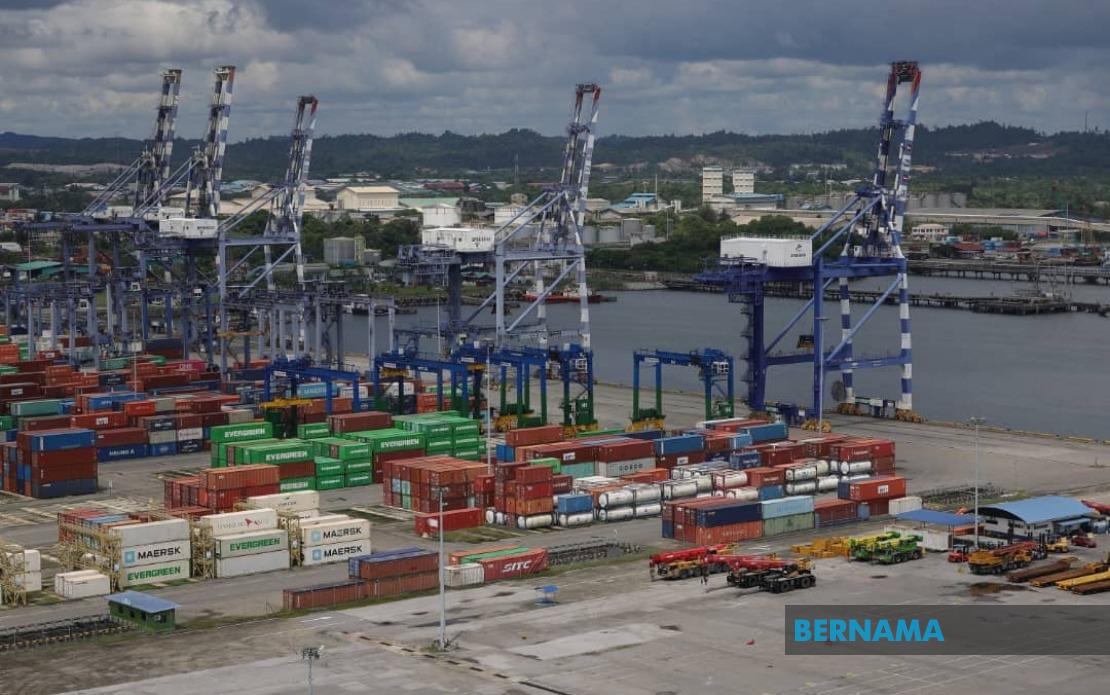
Sarawak has achieved a significant constitutional milestone with the formal handover of Bintulu Port's regulatory authority from federal to state control, a development that Minister in the Prime Minister's Department (Sabah and Sarawak) Datuk Mustapha Sakmud characterises as vindication of decades-long efforts to implement the Malaysia Agreement 1963 (MA63). The transfer, formalised at a ceremony in Bintulu today attended by Prime Minister Datuk Seri Anwar Ibrahim and Sarawak Premier Tan Sri Abang Johari Tun Openg, represents concrete progress in rebalancing the relationship between Malaysia's founding territories and the federal centre.
Mustapha's framing of the port handover as part of broader MA63 implementation carries particular weight given ongoing constitutional tensions between Kuala Lumpur and Sabah and Sarawak over resource management and autonomy rights. By positioning the transfer not as a loss of federal authority but as a strategic recognition of state capabilities, the minister attempts to reshape how such devolutions are perceived at the national level. This rhetorical approach may prove influential as further disputes arise over implementation of other MA63 provisions, particularly those concerning oil and gas revenues, immigration control, and religious affairs—areas where Sarawak has long contended that the 1963 agreement grants it greater autonomy than the federal government acknowledges.
The strategic importance of Bintulu Port extends well beyond port operations. As the nation's primary liquefied natural gas export facility, the port generates billions in annual revenue and serves as a critical economic artery not only for Sarawak but for Malaysia's standing in global energy markets. Sarawak's assumption of regulatory control means the state can now directly shape port development policies, determine tariff structures, and influence investment decisions regarding port expansion and modernisation—powers that carry substantial financial and geopolitical implications.
Mustapha's comments about the port's transformation into a broader industrial and logistics hub point to an ambitious vision that extends beyond LNG exports. The minister explicitly references Sarawak's competitive advantages in renewable energy, particularly hydroelectric capacity, and suggests that positioning Bintulu as a centre for low-carbon manufacturing and green industries could attract international investors increasingly concerned about carbon footprints and supply chain sustainability. This development model aligns with global trends toward decarbonisation and represents a potential economic diversification pathway for Sarawak beyond traditional energy exports.
For Malaysian readers, the handover carries implications for how federal-state relations evolve in the coming years. The apparent consensus between Anwar Ibrahim's administration and the Sarawak state government—despite their different political affiliations—suggests that MA63 implementation may be depoliticised to some degree. This could create momentum for resolving other outstanding constitutional grievances, though it may also embolden other state governments to demand similar devolutions of authority in their respective domains. The precedent established by Bintulu Port could reshape expectations across Malaysia's federal structure.
Regionally, the port's repositioning as a green energy and manufacturing hub positions Sarawak to compete more directly with Southeast Asian rivals such as Singapore, Vietnam, and Thailand for investment in sustainable industries. As supply chains increasingly fragment and companies seek manufacturing alternatives to China, Sarawak's combination of hydroelectric power availability, port infrastructure, and lower labour costs could prove attractive. The timing of this emphasis on green capabilities also reflects international pressure on ASEAN nations to demonstrate climate commitment, particularly as the region becomes a focal point for discussions on clean energy transition.
Mustapha's insistence that MA63 implementation strengthens rather than weakens the Malaysian federation reflects a broader debate about constitutional arrangements in multinational states. The argument that recognising autonomy rights of founding partners enhances rather than undermines national cohesion suggests an evolution in how federal structures are conceptualised—moving away from zero-sum interpretations of power distribution toward models emphasising subsidiarity and mutual benefit. This philosophical shift could have lasting consequences for how disputes over constitutional interpretation are resolved.
The port handover also carries practical significance for business and investment communities. Investors in port-dependent industries now face a single state-level regulatory authority rather than navigating federal-state coordination arrangements. This simplification could reduce bureaucratic friction and accelerate decision-making on port-related investment, though it may also create new uncertainties during the transition period as Sarawak establishes its own regulatory frameworks and operational standards.
Mustapha's characterisation of the event as demonstrating MA63 implementation through "cooperation" merits scrutiny. Behind this measured language lies the reality that Sarawak negotiated extensively for this transfer and had to overcome federal reluctance. The framing as mutual cooperation obscures the power struggle that preceded the handover but serves a diplomatic purpose by allowing both sides to declare victory. For Malaysian federalism, such face-saving language may prove necessary if further devolutions are to occur without creating the appearance of federal weakness or provoking resistance from other quarters.
Looking forward, this precedent may influence discussions over other port authorities in Sabah and Sarawak, as well as broader questions about natural resource management and revenue sharing. The Bintulu Port handover suggests that the Anwar Ibrahim administration is willing to implement MA63 provisions more substantially than predecessors, though the degree to which this willingness extends to revenue-sharing arrangements—historically the most contentious issue—remains uncertain. How Sarawak manages its new regulatory responsibilities at Bintulu will likely shape expectations and negotiations around further constitutional adjustments.