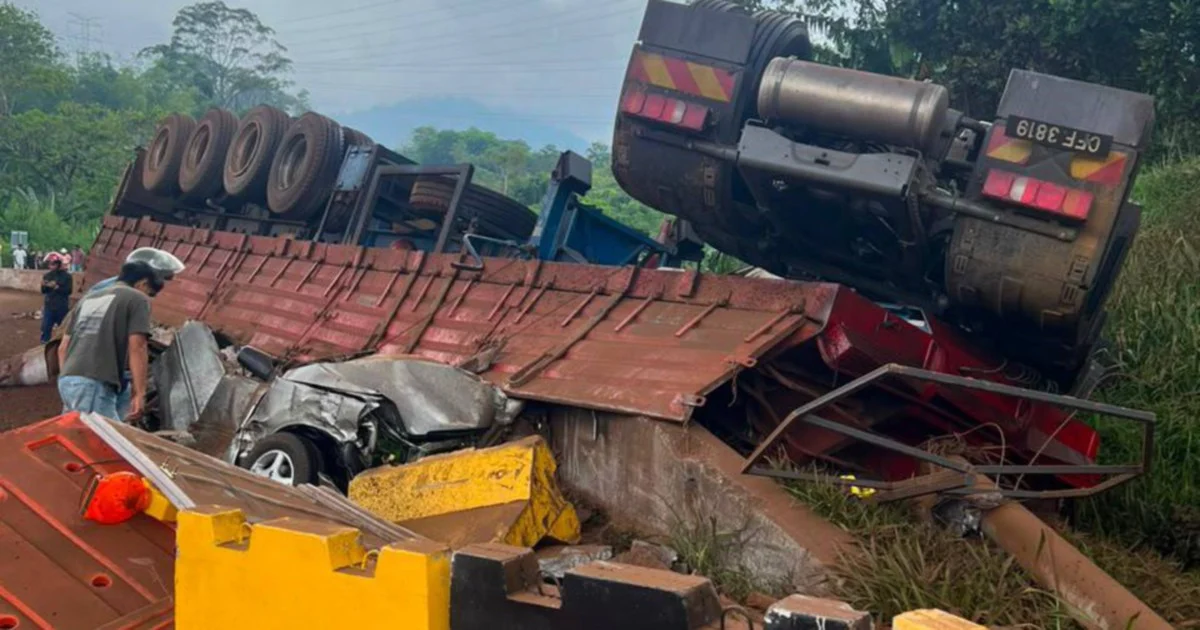
A trailer driver implicated in a deadly collision that claimed the lives of four people near Bentong on June 14 has been released on police bail, marking a significant development in the ongoing investigation into the incident. The driver, whose identity and other specific details remain under wraps as the case progresses through preliminary investigative stages, was held in custody following the fatal crash on the Karak Expressway before authorities decided to grant him conditional release. This bail arrangement permits the accused to remain free while police continue their forensic analysis and witness interviews related to the multi-vehicle collision.
The June 14 tragedy on the Karak Expressway represents one of the more serious traffic accidents recorded in recent months along the major arterial route connecting Kuala Lumpur to the east coast. The expressway, which stretches over 250 kilometres and serves as a critical economic corridor facilitating the movement of goods and passengers between the Klang Valley and Pahang, has witnessed numerous incidents over the years. The involvement of a heavy commercial vehicle in this particular accident underscores ongoing concerns about the management of large trucks and trailers on Malaysia's highway network, where weight regulations, maintenance standards, and driver fatigue continue to be pertinent safety considerations.
Police investigations into the crash have likely focused on multiple contributing factors that commonly emerge in large-scale road incidents. These typically include examination of the trailer's mechanical condition, review of maintenance records, assessment of weather and road conditions at the time of the collision, analysis of vehicle positioning data from dashcam footage if available, and detailed interviews with surviving witnesses who were present at the scene. The forensic reconstruction of such incidents involves specialists examining tyre marks, debris scatter patterns, and impact damage to determine sequence of events and apportion responsibility accordingly. The involvement of fatalities escalates the investigative complexity, requiring coordination between traffic police specialists and the public prosecutor's office.
The decision to release the driver on police bail represents a procedural step that does not constitute exoneration or determination of guilt. Instead, it reflects the investigating officer's assessment that continuing detention is no longer necessary to preserve evidence or maintain investigation integrity, coupled with confidence that the accused will cooperate with ongoing police enquiries and appear for further questioning as required. Malaysian traffic law permits such bail arrangements during the investigation phase, balancing the accused's right to liberty against public interest in ensuring the case proceeds comprehensively. The prosecutor's office will eventually determine what charges, if any, should be filed based on investigation findings.
For families of the four deceased victims, the progression to bail status potentially represents a difficult emotional moment, particularly if expectations existed for more extended detention pending formal charges. Malaysian courts have historically grappled with calibrating appropriate consequences for fatal traffic incidents, with outcomes ranging from vehicular negligence charges to more serious culpable homicide charges depending on established culpability. The severity of charges will ultimately hinge upon investigators' conclusions regarding the driver's conduct immediately preceding the collision, including questions of excessive speed, distraction, mechanical failure, or driver incapacity.
The Karak Expressway corridor has experienced significant traffic growth over the past decade, reflecting economic expansion in east coast states and increased container traffic from Port Klang destined for Kuantan port and inland distribution centres. This intensified usage, combined with the expressway's sometimes-challenging topography featuring several gradient sections, creates an environment where heavy vehicle management becomes increasingly critical. Transport operators and regulatory bodies face mounting pressure to implement technological solutions such as collision avoidance systems, speed governors, and driver behaviour monitoring to mitigate incident risk on this vital corridor.
The broader implications of this incident extend beyond the immediate investigation to encompass wider road safety discourse across Malaysia. Commercial vehicle accidents frequently catalyse policy discussions regarding hours-of-service regulations, mandatory rest break enforcement, and the adequacy of driver training standards for heavy goods vehicle operations. Industry observers note that significant proportions of fatal expressway incidents involve commercial vehicles, suggesting systematic gaps in either regulatory implementation or industry compliance with existing safety protocols. The Malaysian Road Safety Institute and Ministry of Transport have periodically launched initiatives to address these concerns, though enforcement consistency remains variable across different highway authorities.
As the investigation progresses, police will prepare a comprehensive report detailing findings for submission to the prosecutor's office, which will then determine appropriate charges. This process typically extends several months to allow thorough examination of all evidence and consultation with independent specialists. Meanwhile, the trailer driver's release on bail permits his continued participation in the investigation while maintaining presumption of innocence pending formal charges. Should charges ultimately be filed, the case would proceed through magistrate's or high court proceedings depending on offence severity, potentially establishing precedent for similar incidents involving commercial vehicles.

%22%2F%3E%3C%2Fpattern%3E%3C%2Fdefs%3E%3Crect%20width%3D%22100%25%22%20height%3D%22100%25%22%20fill%3D%22url(%23ph2a6vmg)%22%2F%3E%3Crect%20width%3D%22100%25%22%20height%3D%22100%25%22%20fill%3D%22url(%23ph2a6vmp)%22%2F%3E%3Ctext%20x%3D%2250%25%22%20y%3D%2250%25%22%20text-anchor%3D%22middle%22%20dominant-baseline%3D%22central%22%20fill%3D%22rgba(255%2C255%2C255%2C0.95)%22%20font-family%3D%22Georgia%2C%20'Times%20New%20Roman'%2C%20serif%22%20font-weight%3D%22700%22%20font-size%3D%22136%22%20letter-spacing%3D%22-0.02em%22%3EPAS-Bersa%E2%80%A6%3C%2Ftext%3E%3C%2Fsvg%3E)